

Explore the region
Visitor facts checked: 21 October 2026
Scope: The Shanghai Jewish Refugees Museum at 62 Changyang Road, including the former Moshe Synagogue, museum displays and Wall of Names. Nearby heritage sites are separate locations, not assumed parts of the museum visit.
Why this museum is here
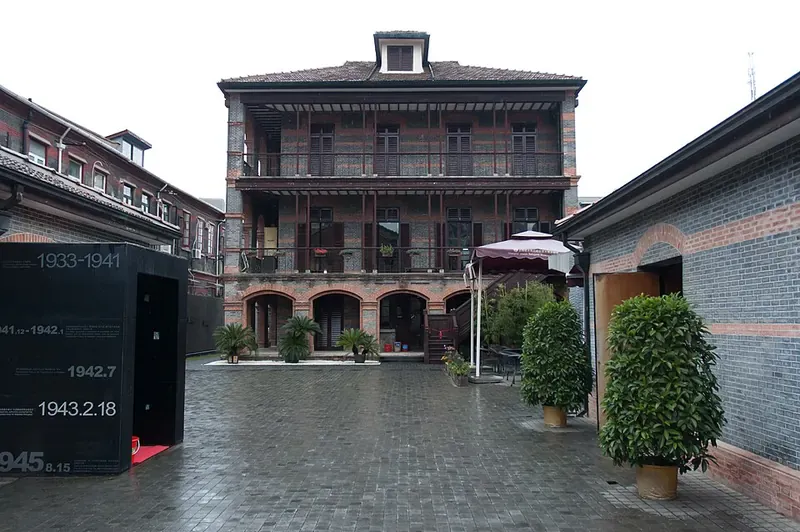
The museum tells the story of European Jewish refugees who came to Shanghai in the 1930s and 1940s while fleeing Nazi persecution. Its setting is part of the story: the former Moshe Synagogue was built in 1927 by Russian Jews and served as a place where Jewish refugees gathered and held religious ceremonies during the Second World War. The museum was established around the synagogue in 2007; it interprets the building as a historic site as well as presenting a broader account of refugee life.
After a December 2020 expansion, the museum covered more than 4,000 square metres. It describes its interpretation as including nearly 1,000 historical objects and materials, more than 160 personal stories and over ten recreated scenes. Those elements make this more than a stop for synagogue architecture: look for how the displays place an individual experience alongside the wider movement of people and the neighbourhood’s wartime history.
What to look for
The synagogue itself. Pause to read the former synagogue as a building with a continuing history, not just as a gallery container. The museum says it was built in 1927 and that the restored building remains its core. During the war it was a place for refugee gatherings and religious ceremonies.
The stories and recreated scenes. Give the interpretive displays time to connect historical materials with individual personal accounts. The museum reports more than 160 personal stories and over ten recreated scenes in its post-expansion presentation. These are curatorial choices for interpreting a difficult history; the recreated environments are not original rooms preserved intact.
The Wall of Names. End with the names rather than treating the memorial as a decorative backdrop. The wall was first unveiled in 2014 with 13,732 names; the museum added to it over time. At the unveiling of its latest addition on 21 October 2025, the official total reached 19,672. That date-specific figure supersedes both the 13,732 first version and the 18,578 count cited for the 2020 expansion.
A practical way to visit
Allow about 90 minutes to two hours as an editorial planning estimate for the museum displays, synagogue and Wall of Names; this is not an official duration. If you have less time, prioritize the synagogue, a focused reading of the personal accounts, and the names wall. If you want a longer Hongkou history walk, the museum identifies other refugee-era sites on nearby Zhoushan and Huoshan Roads, including the former American Jewish Joint Distribution Committee office, Huoshan Park and the former Roy Roof Garden site. They are separate neighbourhood locations. Do not assume they are open to visitors, part of the museum’s grounds, or covered by its admission; check each site independently before building a route around it.
Hours, tickets and identification
The museum’s visitor page, checked on 21 October 2026, lists opening from 09:00 to 17:00 Tuesday through Sunday, with entry and ticketing stopping at 16:00. It is closed on Mondays. The museum says statutory-holiday opening arrangements are announced separately, and it may announce a temporary suspension for special circumstances. Recheck the museum’s notices if visiting on a public holiday or close to a particular date.
The posted prices are CNY 20 for adults, CNY 10 for full-time students aged 23 or younger at undergraduate level or below, and CNY 15 for visitors aged 60 or older. Children no taller than 1.3 metres enter free when accompanied by an adult; each adult may accompany up to two such children. The museum also lists free admission for visitors with disabilities and specified service groups with valid documents. Valid identification is required for registration; the English visitor page gives a passport as an example. For free admission, the Chinese guide directs visitors to collect a ticket at the museum ticket window.
The official visitor pages list identification and prices but do not state whether advance individual booking is required. Do not assume a reservation is either mandatory or unnecessary based on that omission. For date-specific entry questions, including statutory holidays, contact the museum at 021-55133186 before travelling. The museum lists free scheduled Chinese explanations at 10:00 and 14:00, with times subject to adjustment according to visitor numbers. Groups of 20 or more can arrange a paid guided explanation by calling three to five working days ahead.
Getting there and leaving
The official address is 62 Changyang Road, Hongkou District. By Metro, take Line 12 to Tilanqiao Station and use Exit 1, as specified by the museum. From Exit 1, follow Changyang Road and the street address/signage to No. 62. The guide names the exit but does not publish a measured walk, compass direction or separate gate directions, so confirm the last block with current street signs or a live map.
The museum’s current Chinese visitor guide lists buses 13, 22, 134, 868, 875 and 934. A tourism directory gives nearby stop names for some of these: route 13 at Haimen Road–East Changzhi Road (海门路东长治路), route 134 at Haimen Road–Changyang Road (海门路长阳路), and routes 22, 868 and 934 at East Changzhi Road–Haimen Road (东长治路海门路). These stop names are not repeated in the museum’s official guide; check live service and direction-specific stops before boarding. No stop name was verified for route 875.
For a taxi or ride-hail, enter 上海市虹口区长阳路62号 as the destination. The museum identifies this street address but does not publish a designated taxi bay, vehicle approach, or a distinct curbside visitor entrance. Ask to be let out legally on Changyang Road by No. 62 and follow the museum entrance signs; do not assume a vehicle can enter the grounds. Nearby parking is limited, and the museum recommends public transport.
The public visitor information identifies the museum by its street address but does not describe a separate visitor exit or a one-way circulation route. Follow on-site exit signs and staff directions. Lockers and large-luggage storage are available, as is wheelchair rental with ID registration; the audio-guide device rental is listed at CNY 10.
Combine your visit
A suggested sequence linking the specific features of this visit.
-
Former Ohel Moshe Synagogue
Begin with the building that served the refugee community.
-
Refugee-history galleries
Connect documents and personal objects with individual experiences.
-
Memorial wall
Finish at the named commemoration of the refugees.
This order is editorial. Confirm access and any transfers between stops; it does not establish a walking route, same-day connection or common admission ticket.
Find Shanghai Jewish Refugees Museum
上海犹太难民纪念馆 · 虹口区
The pin marks the area, not the entrance.
More places nearby
Approximate straight-line distances between map pins, not travel distances.
Shanghai Ocean Aquarium 上海海洋水族馆
2 km awayShanghai Ocean Aquarium is an indoor aquatic attraction in Lujiazui. Its exhibits use geographic zones alongside an underwater tunnel sequence.
View guide →Oriental Pearl Tower 东方明珠
2 km awayThe Oriental Pearl Tower stands in Lujiazui on the eastern bank of the Huangpu, opposite the Bund. Its futuristic arrangement of spheres and supporting columns made it one of the city’s most recognizable television towers.
View guide →Shanghai Tower 上海中心大厦
2 km awayShanghai Tower rises beside Jin Mao Tower and Shanghai World Financial Center in Lujiazui. Gensler’s design divides the skyscraper into stacked zones for different uses, with public sightseeing spaces high above the river.
View guide →Sources & visit information
Sources checked on 21 October 2026. Hours, tickets, reservations and transport can change; confirm with the operator before you go.
- Shanghai Jewish Refugees Museum introduction ↗
- The Wall of Names of Jewish Refugees in Shanghai ↗
- Shanghai Jewish Refugees Museum visitor guide ↗
- Shanghai Jewish Refugees Museum plan your visit ↗
- Shanghai Jewish Refugees Museum official homepage ↗
- Hongkou District government museum visitor information ↗
- Meet99 Shanghai Jewish Refugees Museum visitor guide ↗
- OpenStreetMap API map data for Tilanqiao museum area ↗
- Wikidata item Q11078482 ↗
Image credits & notes (1)
- Courtyard view of the former Ohel Moshe Synagogue, photographed on 8 November 2014. The image predates the 2020 expansion and should not be read as a current floor plan. Photo: Difference enginePhoto: CC BY-SA 4.0