


Photo adjustments
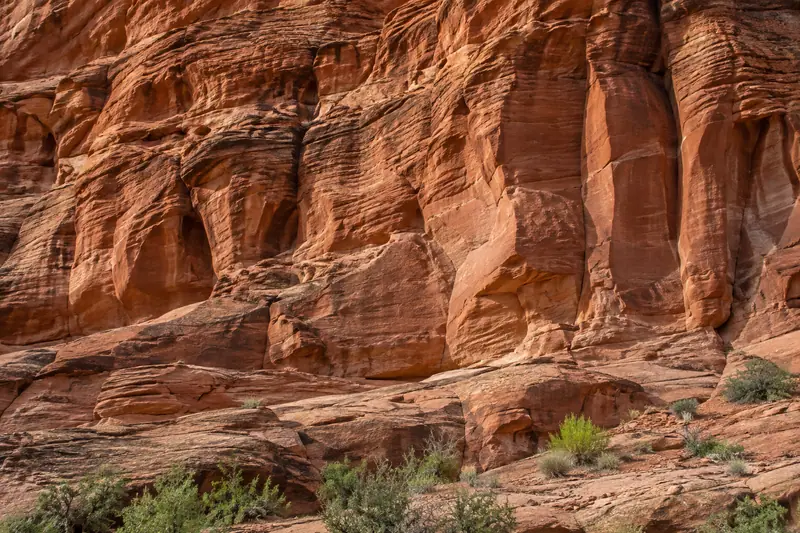
Full frame retained; EXIF orientation normalized, proportionally resized to at most 800 pixels and converted to WebP. No generated pixels or subject changes. Cards may crop the display.
Explore the region
About Douchuan Mountain
The mountain's name changed several times: before the Southern and Northern Dynasties it was called Yuanmen Shan for its many monkeys and gate-like twin peaks; when monks built a temple there in the Xiao Liang period its round, granary-like shape led to the name Dou (豆) Chuan Shan; and in the Tang dynasty, after the Zhangming county registrar Dou Ziming gave up office to practise Daoism there and was said to have ascended to immortality in daylight, later generations added the surname character 窦 to give it its present name. Li Bai visited as a young man and wrote of woodcutters and farmers moving as if within a painted screen. Xinhuanet's account of the scenic area says it once ranked alongside Emei Shan and Qingcheng Shan among Sichuan's famous mountains, and records the peak at 1,140 metres with forest covering about 315 hectares.
Yunyan Temple, which Xinhuanet's account calls a Buddhist-Daoist temple over 1,400 years old, holds the Feitian Zang in its west side hall: a revolving sutra cabinet built in 1181, in the Southern Song, using no iron nails and built entirely from precious nanmu wood. Octagonal, 10.8 metres tall and 7.5 metres across, it turns on a central wooden axle, and the Jiangyou county gazetteer records that as late as the 1970s the whole structure could still be turned by a single person's push; the temple was made a provincial protection unit in 1956 and a national key cultural relic protection unit in 1988. Between the east and west peaks' Douzhen and Dongyue halls, three peaks rise abruptly to about 1,100 metres, roughly 51 metres above the ground with a gap of more than 30 metres between them, linked by two suspended iron chains on which performers walk; the practice was listed as a provincial intangible cultural heritage item in 2018.
What to look for
- The Feitian Zang in Yunyan Temple's west side hall, an octagonal, nail-free revolving sutra cabinet of nanmu wood built in 1181, which Xinhuanet's account calls the only completely preserved Song-dynasty Daoist example of its kind in China.
- The suspended iron chains strung between the mountain's three peaks, on which performers walk in a feat listed as a provincial intangible cultural heritage item in 2018.
- The three peaks themselves, at about 1,100 metres above sea level and 51 metres above the ground, rising between the Douzhen and Dongyue halls on the east and west peaks.
- Yunyan Temple, a Buddhist-Daoist site over 1,400 years old and a national key cultural relic protection unit.
Location & getting there
Getting to Douchuan Mountain
Check weather, trail access and the last return service. A mountain or forest area is not one entrance, and a map’s central pin may be far from the trailhead.
- Search for 窦圌山 with 绵阳市 and 江油市.
Find Douchuan Mountain
窦圌山 · 江油市
No reliable map pin yet: search by the Chinese name.
Sources & visit information
The linked sources support the identity and background described in this introduction. Opening hours, admission, activity availability and exact arrival arrangements have not been comprehensively checked. Confirm current visitor information with the venue; the original catalogue locality and editorial review flag are retained.