

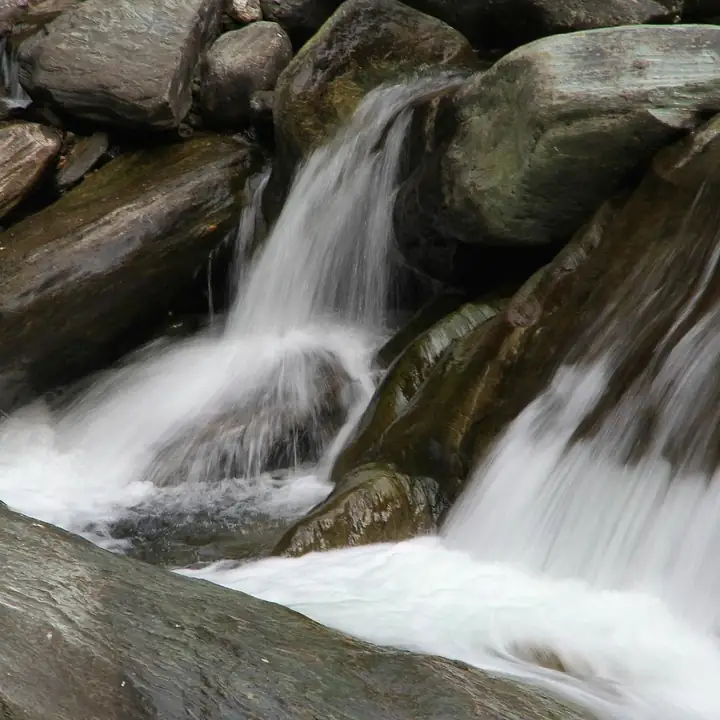
Photo adjustments
EXIF orientation normalized; resized without changing aspect ratio; converted to WebP. No subject edits.
Explore the region
About Tangjiahe Nature Reserve Visitor Area
The reserve covers 40,000 hectares of deep mountains and secluded valleys ringed by outliers of the Minshan range, with its highest point, Hongbenliu on the border with Gansu, at 3,864 metres and its lowest, Laofangzi in Guanhu township, at about 1,100 metres; its rivers, including the Tangjiahe itself and more than 170 tributaries, all drain this terrain. Surveys recorded by the National Forestry and Grassland Administration's reserve research centre count 2,416 plant species and 428 vertebrate species, including nationally first-class protected plants such as the ginkgo, dove tree and yew, and first-class protected animals including the giant panda, golden snub-nosed monkey, leopard, clouded leopard and white-tailed sea eagle.
Baixiongping station, deep within the reserve, is described in a China Green Times feature as one of the two earliest stations in China for international cooperative research on wild giant pandas, alongside Wolong's Wuyipeng, with the researcher Hu Jinchu beginning panda surveys there in 1975; the same feature calls Tangjiahe the mountain-forest reserve with the highest wildlife encounter rate in China, where visitors can readily see over a dozen mammal species and upwards of a hundred bird species, sometimes from inside a vehicle. It records a ten-li redbud valley, a magnolia flower sea and an azalea flower sea in spring, and names the Cailin slope and Motianling among Sichuan's ten best places to view autumn foliage.
What to look for
- Baixiongping station, the site of some of China's earliest cooperative wild giant panda research, beginning with Hu Jinchu's 1975 survey.
- The ten-li redbud valley, magnolia flower sea and azalea flower sea that bloom in spring.
- The Cailin slope and Motianling, named among Sichuan's ten best places to view autumn foliage.
- The reserve's extensive alpine meadow and primary forest, among the things the China Green Times feature lists under the scenery it calls magnificent.
- The wildlife itself: the same feature calls Tangjiahe the mountain-forest reserve with the highest wildlife encounter rate in China, where over a dozen mammal species and upwards of a hundred bird species can readily be seen.
Location & getting there
Getting to Tangjiahe Nature Reserve Visitor Area
Check the open visitor route and follow the site’s rules on distance, food and photography. Conservation areas may limit access beyond designated paths.
- Search for 唐家河自然保护区开放游览区 with 广元市 and 青川县.

Find Tangjiahe Nature Reserve Visitor Area
唐家河自然保护区开放游览区 · 青川县
No reliable map pin yet: search by the Chinese name.
Sources & visit information
The linked sources support the identity and background described in this introduction. Opening hours, admission, activity availability and exact arrival arrangements have not been comprehensively checked. Confirm current visitor information with the venue; the original catalogue locality and editorial review flag are retained.