

Entry & permits for Tibet (Xizang)
Foreign tourists need Tibet entry approval, commonly called a Tibet Travel Permit, and an organised visit arranged through a specialist travel agency in China. Confirm your approved route before booking transport. Requirements differ for Taiwan residents and for travellers using mainland or Hong Kong/Macao Chinese resident documents; check the document guide before you book.
Check the travel-document requirements →Policy scope verified: 2026-09-06. UK FCDO: China regional travel advice ↗ State Council Taiwan Affairs Office: Tibet entry approval ↗ Xizang Department of Culture and Tourism: Medog border permit notice ↗
Explore the region
About Boluo Guze Woodblock Carving Village
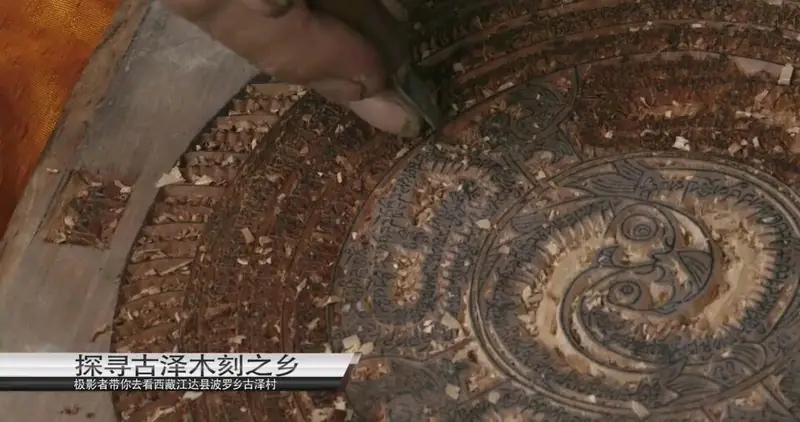
The craft stands on the national intangible cultural heritage register. The register entry, project number 430 under code Ⅷ-80, records that 藏族雕版印刷技艺(波罗古泽刻版制作技艺) was announced in 2008 in the second batch, classifies it as a traditional skill, marks it as an extension project, gives its reporting unit as 江达县 and its protecting unit as the county culture bureau, and lists 泽培 and 多吉登次 as its representative inheritors. The same entry says the craft originated in 1676, the fifteenth year of the Kangxi reign, at the initiative of 却吉•登巴次仁, the twelfth 德格 chieftain and sixth dharma king, and that it is mainly practised in 波罗乡; the register also records that 德格, 白玉 and 江达 were all under the 德格 chieftain at the time. A Xinhua dispatch of October 2023 adds that 波罗乡 was among the earlier places in Tibet to take up block printing and that its block-making goes back several hundred years.
The work is done on red birch. The city government's feature says the gorges of 波罗乡 produce a fine-grained red birch resistant to wear and rot, that craftsmen select knot-free lengths and put them through more than ten steps including cutting, dewatering, soaking and smoking before a block blank is ready, and that a 波罗 carver carries more than twenty kinds of knife, from coarse chisels to oblique blades as fine as a hair. The register sets out the sequence in detail: a noted Tibetan calligrapher writes the text, two or more people proofread it, the text is transferred to the board with a special liquid and dried in the sun, a carver traces and cuts it, and the block is then proofread strictly twelve more times before being brushed with butter broth, coated with cinnabar and soaked in water boiled from an insect-repelling plant. Xinhua quotes 泽培 on the same points — durable, crack-free red birch, every character matching its template, and the need to master Tibetan calligraphy, since one spoiled character ruins the whole work.
Both the register and the city government's feature tie the craft to the Dege Printing House: the register says more than 80 per cent of the printing blocks preserved there were made in 波罗乡, and the feature repeats that figure and says the printing house is one of the three great printing houses of the Tibetan region. Xinhua records that 外冲村, the main production site, had seen its transmission of the craft fall into difficulty through poor infrastructure, scattered and unorganised carvers and narrow sales channels, and that the local government then increased funding, a resident work team mobilised villagers to set up 木松民族手工艺公司, and China Huadian Corporation built a workshop of more than 1,400 square metres and helped find sales outlets. The city government's feature adds that young craftsmen were trained through intangible-heritage programmes, with 拥金卓嘎, a woman carver born in the 1990s, among 泽培's apprentices, and that the township has developed products beyond scripture blocks — Tibetan furniture, metal mandala sculpture and thangka decorative painting — and, with tourism, set up a 刻版体验工坊 where it says visitors can make a personalised woodblock souvenir. It also records that the local government built a valley-tour route around the 木刻古村, and that 波罗乡's visitor numbers rose 40 per cent year on year in 2023.
Three limits belong to this record. The catalogue's 木刻村 label is not a name the sources use for an administrative place: the sources call 波罗乡 a township and 外冲村 the village known as the 木刻古村, and no cited source treats the two as one settlement. The register entry describes the craft rather than the place, and no cited source gives a population, household count or area for either 波罗乡 or 外冲村. And the news accounts carry money and employment figures as of their own dates; the record carries none of them, and the 40 per cent visitor-growth figure is carried as the city government page's figure for 2023.
What to look for
- The twelve further proofreadings the national register records before a block is finished, after the calligrapher writes the text and the carver traces and cuts it
- The red birch of the 波罗乡 gorges, which the city government's feature says is fine-grained and resistant to wear and rot, and is selected knot-free for blocks
- The more than twenty kinds of knife the city government's feature says a 波罗 carver carries, from coarse chisels to oblique blades as fine as a hair
- The Dege Printing House, of whose preserved blocks the national register says more than 80 per cent were made in 波罗乡
- 外冲村, the main production site the Xinhua dispatch says is known as the 木刻古村, and the 刻版体验工坊 the city government's feature says has been set up with tourism in 波罗乡
Location & getting there
Getting to Boluo Guze Woodblock Carving Village
Identify the main visitor approach and any separately managed houses, museums or performances. Ask before entering residential spaces or photographing residents.
- Search for 波罗古泽木刻村 with 昌都市 and 江达县.
Find Boluo Guze Woodblock Carving Village
波罗古泽木刻村 · 江达县
No reliable map pin yet: search by the Chinese name.
Sources & visit information
The linked sources support the identity and background described in this introduction. Opening hours, admission, activity availability and exact arrival arrangements have not been comprehensively checked. Confirm current visitor information with the venue; the original catalogue locality and editorial review flag are retained.
Image credits & notes (1)
- Boluo Guze Woodblock Carving Village · 波罗古泽木刻村Photo: bilibili.comResized for the web; the photo itself has not been edited.