

Photo adjustments
Proportionally resized and converted to WebP without cropping, retouching or changing the photographed subject.
Explore the region
About Wangu Pavilion
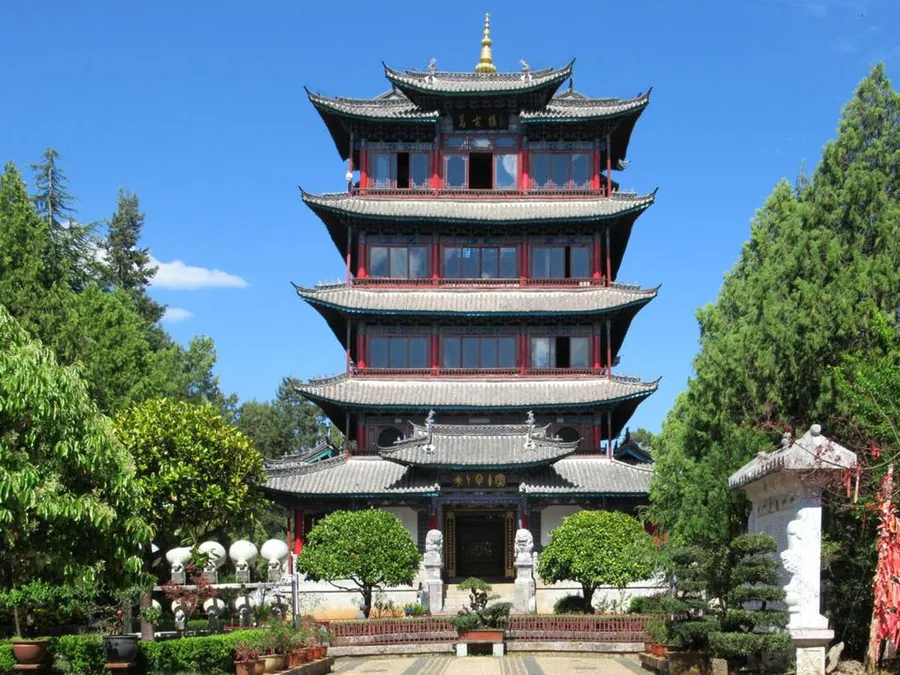
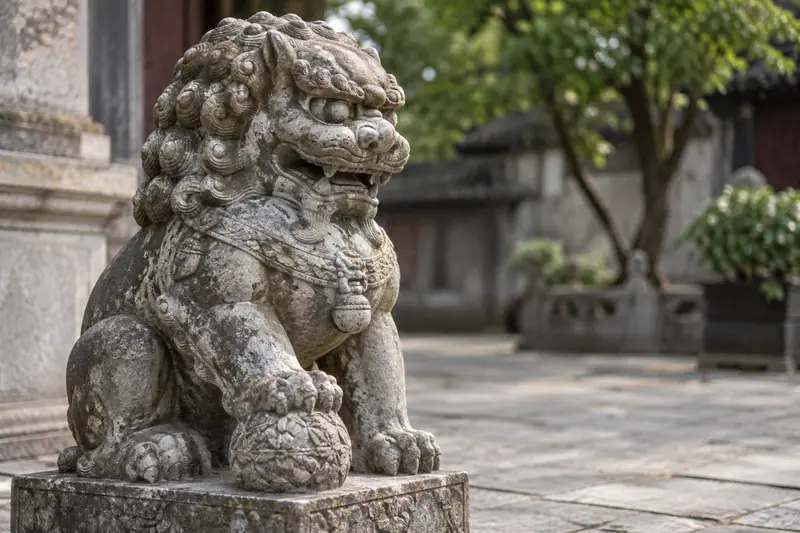
The reconstructed five-storey timber building uses tall columns, carved dragon decoration and surrounding stone lions to create a monumental lookout. Where upper-level access is available, the view extends over old-town roofs towards the wider valley and mountains. Look at the timber and decorative details before climbing, so the visit includes the building itself as well as the panorama.
The pavilion stands on sixteen columns, each 22 metres tall, set within parkland on Lion Hill. Four pairs of stone lions flank its four sides, and stone stairs lead up to the main entrance. An interior stairway opens onto each of the five floors and continues to the top level, from which views take in the Li Valley, including the Old Town of Lijiang and Jade Dragon Snow Mountain (玉龙雪山).
The building is decorated with 2,300 auspicious patterns representing the 23 ethnic groups living in Lijiang, and its walls are carved with 9,999 dragon patterns. A single additional dragon at the caisson ceiling would complete the figure of 10,000, pronounced 'wan' in Chinese, a number carrying the meaning of everlasting or eternal prosperity.
What to look for
- Tall timber columns and carved dragon patterns define the pavilion.
- Stone lions and the elevated old-town outlook add exterior and landscape subjects.
Background & history
Wangu Pavilion is located on Lion Hill, within the Old Town of Lijiang district, Yunnan, China. The wooden pavilion was reconstructed in 1997 as part of the Lijiang areas' declaration as a UNESCO World Heritage Site. Wangu Pavilion means 'the pavilion of everlasting clarity'.
Excerpt from Wikipedia: Wangu Pavilion · Wikipedia contributors · CC BY-SA 4.0. Selected introductory sentences; formatting simplified. Background information, not current visitor-service advice.
Location & getting there
Getting to Wangu Pavilion
Reach the Lion Hill Scenic Area above Lijiang old town and use its signed visitor entrance. Follow the managed uphill route to Wangu Pavilion; access and admission are separate from simply walking through the old-town streets.
Combine your visit
Suggested order for the visit:
-
Lion Hill approach
Read the pavilion above the roofs.
-
Pavilion base
Observe columns, lions and decoration.
-
Open upper level
See the old town and valley where access permits.
This is an editorial sequence of named spaces or places. It does not imply a verified walking connection or promise opening, ticket availability or a journey time.
Find Wangu Pavilion
万古楼 · 古城区
The pin marks the area, not the entrance.
More places nearby
Approximate straight-line distances between map pins, not travel distances.
Mu Palace 木府
Less than 1 km awayMu Palace is the reconstructed administrative and residential complex of Lijiang’s Mu rulers at the foot of Lion Hill. A long central axis links formal halls with side courtyards and upper buildings. The Assembly Hall introduces…
View guide →Dayan Sifang Square 大研四方街
Less than 1 km awaySifang Square is the central gathering place of Dayan Old Town, with lanes extending towards the surrounding bridges and courtyard streets. On its western side, Kegongfang rises as a three-storey gateway; east of the square…
View guide →Lijiang Old Town History and Culture Gallery 丽江古城历史文化展示馆北馆
Less than 1 km awayThe north branch of Lijiang Old Town’s history gallery uses digital displays to explain how the settlement developed. Its four themes trace the town’s origins, historical changes, cultural traditions and future. Multimedia…
View guide →Sources & visit information
The linked encyclopedia sources support background and place descriptions. Current opening hours, ticket prices, booking rules and transport schedules have not been independently verified for this guide. Confirm them with the venue or operator before travelling.
Visitor information adapted and edited from Wikipedia contributors, “Wangu Pavilion” · CC BY-SA 4.0. Source revision 1231747529.
Background paragraphs condensed from Wikipedia contributors, "Wangu Pavilion", English Wikipedia · CC BY-SA 4.0. Source revision 1231747529.