

Spicy Pickled Cabbage 辣白菜
Spicy Pickled Cabbage is featured among the local specialties of Heilongjiang.
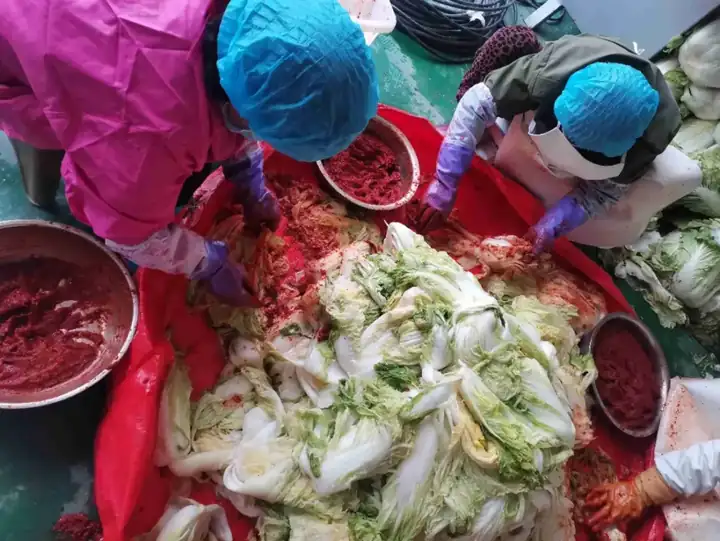
Image notes
Resized for the web; the photo itself has not been edited.
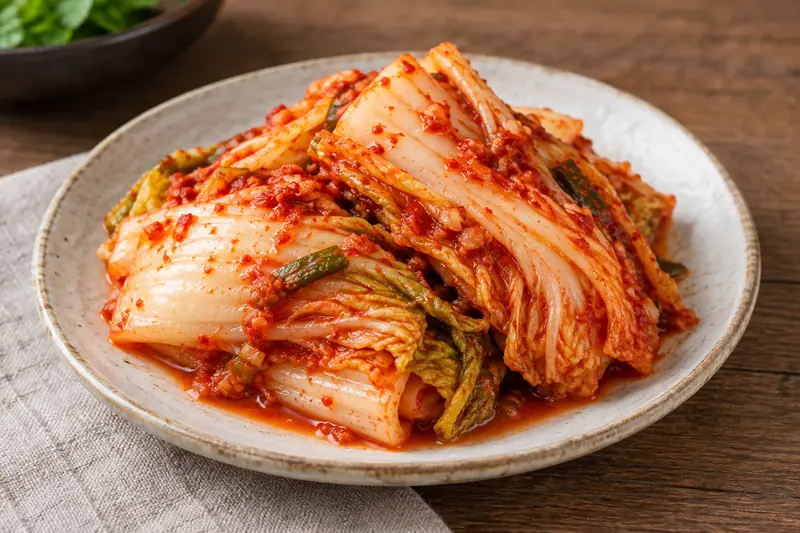
Spicy Pickled Cabbage (辣白菜) is the chilli-fermented cabbage of Heilongjiang’s Korean-ethnic kitchens, listed in Ning’an, Mudanjiang, among the local foods a visitor is pointed to first.
How it is made
Cabbage is the starting point: the leaves are salted first, left to soften and give up water, then rinsed and drained so the finished pickle stays crisp rather than limp. A paste of chilli, garlic, ginger, spring onion and a little sugar is worked between the leaves, and the cabbage is packed down to ferment.
Fermentation is the general principle that makes the dish what it is — the salted cabbage sours over days to weeks, at a speed set by the temperature of the room. Cooler weather slows it down and keeps the leaves crunchier; a warm kitchen pushes it sour faster. It keeps well, which is why it appears on tables through the winter.
Flavour and texture
Expect sour, salt, chilli and a background sweetness arriving together, with a firm, juicy crunch through the middle of each leaf. The paste is not a hot sauce — the chilli is fermented rather than fried, so it reads as a deep, slightly funky heat. Some versions are eaten fresh after a day or two, when the cabbage is still sweet, and some are left until sharply sour.
Where it is eaten in Heilongjiang
Ning’an, in Mudanjiang, presents its Korean-ethnic cooking as one of the city’s food traditions, and 辣白菜 is the first item the city lists among those dishes. It appears alongside iron-plate tofu, rice cake, seasoned vegetable wraps and blood sausage — a table of side dishes rather than a single signature plate.
That is the honest frame for it. In Mudanjiang, 辣白菜 is a regular side in Korean-ethnic restaurants and households rather than a rare regional speciality, and it is eaten with rice, with grilled meat, and as one of the small dishes set out before the main course.
What goes into it
Cabbage, salt, chilli powder, garlic, ginger, spring onion and a little sugar are the base. Korean-ethnic kitchens in the region also use salted shrimp or fish sauce for depth, which is the detail to check if you avoid seafood. The paste is the variable: some houses add pear or apple for sweetness, and some add glutinous rice paste to thicken it.
How to ask for it
Say 辣白菜 and it arrives as a cold side dish, usually in a small dish or as part of the spread of 小菜. It is not a main course, so order it alongside rice, a stew or grilled meat. If you want it less sour, ask for 新腌的; for the aged version, say 酸一点的. Ask about 虾酱 or 鱼露 if shellfish is a problem.
At the table
It is eaten cold and in small amounts through the meal, not as a dish to finish. In Korean-ethnic restaurants in Mudanjiang it comes out with the other side dishes before anything is ordered, and is refilled on request. It is also the standard accompaniment to grilled pork or beef, where a leaf is wrapped around the meat, and to plain rice when the rest of the table is rich.
More dishes to compare
Explore related local specialties and compare their names, preparation notes and ordering guidance.
Wild Mountain Vegetables 山野菜 →
山野菜 refers to the wild greens and shoots gathered in the forests of Daxing’anling and served in season, usually blanched and dressed simply. 辣白菜 is a made dish rather than a gathered one: the cabbage is cultivated, salted and fermented, so it is available all winter instead of for a few spring weeks. One tastes of the forest and the season; the other tastes of the pickle jar, which is why they sit in different parts of the table.
Questions before you order
Is 辣白菜 the same as kimchi?
It belongs to the same family of chilli-fermented cabbage, and in Mudanjiang it is the Korean-ethnic household version. Recipes vary by kitchen, particularly over whether seafood seasoning is used.
How sour is it?
That depends on age. Freshly made 辣白菜 is mild and slightly sweet, while one left to ferment longer turns sharply sour. Ask for 新腌的 if you prefer the younger version.
Sources & reading
The supplied food list supports this name and regional association. The culinary terms below are explained as menu vocabulary; a local recipe, origin story and venue availability have not been independently verified.