

Tanghulu 冰糖葫芦
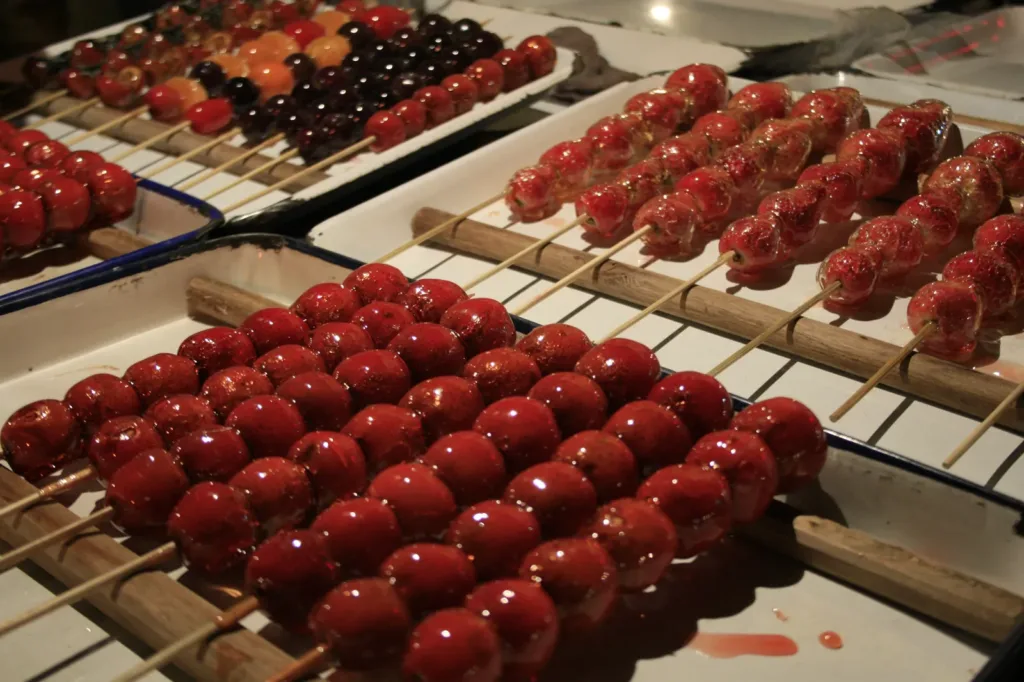
Tanghulu (冰糖葫芦) is a Beijing-associated street sweet, most recognizably made by threading tart hawthorn fruits onto a stick and coating them with a thin, clear shell of cooked sugar. The shell cracks sharply against the fruit’s lively sourness; other fruits and filled hawthorn versions offer different textures, so the classic hawthorn skewer is a useful first taste.
Tap any red Chinese text to hear it in Mandarin.
What it is
Tanghulu is fruit on a skewer sealed in a hard sugar coating. In Beijing, 冰糖葫芦 Bīngtáng húlu is a familiar name for the sweet, while 山楂 Shānzhā—Chinese hawthorn—is the classic fruit many visitors picture. It is strongly associated with Beijing and northern Chinese street and winter food culture, but it is not exclusive to Beijing. A Beijing tourism account describes it as a familiar snack at old Beijing temple fairs; a regional account also describes candied hawthorn as a northern winter treat.
The name should not lead you to expect an iced or frozen dessert. The defining contrast is fruit beneath cooled, hardened sugar: in the traditional hawthorn version, a skewer of bright red fruit is covered with a thin, transparent glaze. Earlier descriptions of the snack list several possible fillings and fruits, including hawthorn, crabapple, grapes, yam, nuts and bean paste. Today’s stalls may add strawberries and other fruits. Those are variations on the candied-fruit method, not a single fixed recipe.
How the shell is made
The fruit is washed and threaded onto a bamboo or wooden stick. Hawthorn may be cored first; some filled versions split or prepare the fruit differently. Sugar is heated into a syrup, and the skewer is quickly rolled or dipped through it so each fruit gets an even coat. As the syrup cools, it becomes the brittle outer shell. The craft lies in the syrup’s heat and thickness: too cool or thin and it will not cling properly; too hot or thick a coating can darken, taste bitter, or overwhelm the fruit.
Recipes and sellers differ on the sugar. One Beijing account describes heated sugar and discusses rock sugar, while a historical food account distinguishes transparent rock-sugar coatings from white-sugar and malt-sugar styles. The familiar name does not guarantee one exact formula, and a universal sugar-to-water ratio is not part of the dish’s identity.
What to expect when you eat it
Look for a glossy, glasslike coat over red fruit. A good thin shell snaps or fractures with a crisp crack rather than pulling at the teeth; beneath it, hawthorn is firm and distinctly tart, and its fruit flesh is less juicy than a strawberry or grape. Sugar softens that acidity without making the fruit taste like candy alone. The first impression is sweet crunch, followed by the sharper, slightly puckering hawthorn.
Hold the stick and bite a fruit at a time, or pull the fruit from the skewer if that is easier. Ask whether the hawthorn has been cored if you want to avoid seeds: coring is described in a Beijing preparation account, but the exact preparation can vary by seller. Filled or flattened hawthorn, yam, grapes, strawberries and other fruit change the balance—some are softer, juicier, or sweeter—so choose the red hawthorn version if you want the most recognizable sweet-tart contrast.
The coating is at its crispest when it has set and stayed dry. Warmth and moisture can make it tacky or soften its snap, so a freshly coated, dry-looking skewer is usually the more satisfying choice.
Ordering help
Show 冰糖葫芦 Bīngtáng húlu for the familiar name, or 山楂冰糖葫芦 Shānzhā bīngtáng húlu to specify hawthorn. Useful questions include:
- 这是山楂的吗? Zhè shì shānzhā de ma? — Is this hawthorn?
- 山楂去核了吗? Shānzhā qù hé le ma? — Have the hawthorn seeds been removed?
- 这是刚蘸的糖吗? Zhè shì gāng zhàn de táng ma? — Was the sugar coating made recently?
Where to eat it
You can find Tanghulu all over Beijing, so there is no need to seek out one particular restaurant. To find one near you, search for “冰糖葫芦” in Meituan (美团) or Amap (高德地图) and check recent reviews, distance and opening hours.
More dishes to compare
Explore related local specialties and compare their names, preparation notes and ordering guidance.
Sour-plum drink 酸梅汤 →
Smoked dried plums are simmered with sugar and ingredients such as hawthorn; recipes may also include licorice or dried citrus peel. The strained drink is usually cooled before serving. It combines smoky fruit, firm acidity and sweetness rather than tasting like ordinary fresh-plum juice. Different shops vary considerably in concentration and sugar.
Hawthorn in syrup 炒红果 →
Hawthorn fruit is cleaned, usually cored, and gently cooked with sugar and water until the syrup clings to it. Careful cooking keeps recognizable fruit pieces rather than turning everything into a jam. Its sweetness is balanced by pronounced hawthorn tartness, with soft flesh and a glossy coating. Chilled servings feel particularly refreshing after fatty dishes.
Sources & reading
Recipes and servings vary between kitchens.
Image credits & notes (1)
- A display of candied-fruit skewers, with red hawthorn-style tanghulu in the foreground. Photo: Popo le ChienPhoto: CC0 1.0