

Hutazi vegetable pancakes 糊塌子
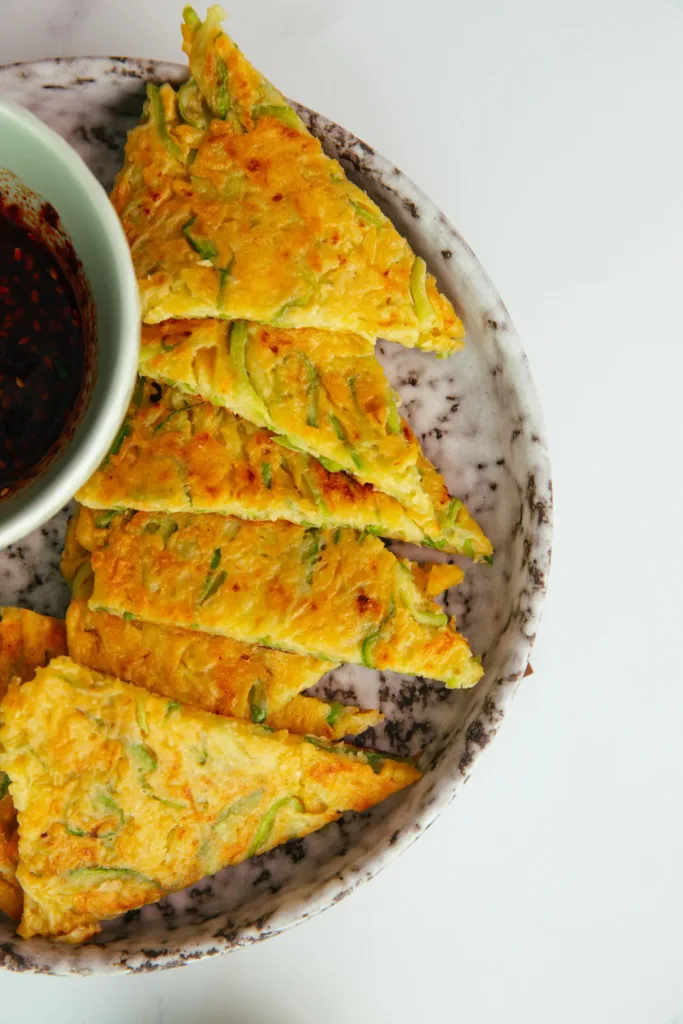
Hutazi (糊塌子) is a Beijing-associated home-style pancake made by binding shredded zucchini with egg and wheat flour, then pan-frying it until golden. The moist, tender center and lightly crisp edges pair well with a sharp garlic-and-vinegar dip; household and shop versions vary in thickness, seasoning, and accompaniments.
Tap any red Chinese text to hear it in Mandarin.
What hutazi is
Hutazi is a savory pan-cooked batter pancake, most often described in Beijing as a zucchini-and-egg dish. It is also called a zucchini pancake or xīhúlu bǐng (西葫芦饼). Beijing’s visitor-information food listing presents it as a local snack and a familiar home-table staple, while recipe writers also identify it with Beijing-style breakfast cooking. It is strongly associated with Beijing, but the name and vegetable-pancake format are not exclusive to the city.
The name refers to the soft pancake made from batter and vegetable rather than a stuffed pastry. Finely shredded zucchini is the central ingredient in the common Beijing-style version. Egg and wheat flour hold the strands together; scallion, salt, and sometimes pepper or other seasonings add flavor. Recipes do not share one fixed proportion: some use a loose batter, while others use just enough flour and egg to bind the vegetable.
From grated zucchini to the pan
The zucchini is washed and grated or cut into fine matchsticks. Salting it briefly draws out moisture; cooks may squeeze away some of that liquid, or use the vegetable’s released water to moisten the batter. Egg and flour are mixed through until the strands are lightly coated and the mixture can be spooned into a pan. This vegetable-first mixture is what gives hutazi a softer, more tender bite than a plain flour pancake.
A thin layer of oil heats in a flat pan. The batter is spread into one large round or several smaller pancakes and cooked on both sides until set and golden. The surface can develop toasted brown patches, while the inside remains tender and flecked with green zucchini. The exact thickness and browning depend on how much batter is used and how wet the zucchini is; the Beijing food listing and home recipes describe a range of home-style approaches, not a single standard.
Flavor, texture, and how to eat it
A well-browned hutazi looks yellow-gold with green strands showing through. Its aroma is mild and vegetal, with toasted flour and egg from the hot pan. The middle is soft and moist, and the thinner edges can be lightly crisp. Zucchini keeps the flavor fresh and gentle rather than strongly savory; scallion or pepper, when included, adds a more aromatic edge.
It is commonly eaten warm, often as breakfast or as a simple home meal. A garlic-and-vinegar dip is a particularly useful counterpoint: vinegar cuts through the pancake’s soft, lightly savory richness, while garlic gives each bite a pungent finish. Some cooks add a little soy, sesame oil, or chili to the dipping bowl, but the simple garlic-vinegar pairing is enough. Dip each piece as you eat rather than soaking the whole pancake.
The dish can be served as one broad pancake cut into wedges or as small individual rounds. More zucchini and less flour makes the interior more vegetable-forward and delicate; a thicker batter gives a more substantial, breadier center. Some recipes add scallion, pepper, or other vegetables, but those are variations rather than requirements for every Beijing-style serving.
Ordering and dietary notes
Show 糊塌子 or ask for xīhúlu bǐng (西葫芦饼). Useful questions include:
- 今天的糊塌子用西葫芦吗? Jīntiān de hútāzi yòng xīhúlu ma? — Is today’s hutazi made with zucchini?
- 面糊里有鸡蛋吗? Miànhù lǐ yǒu jīdàn ma? — Does the batter contain egg?
- 蘸料里有酱油或蚝油吗? Zhànliào lǐ yǒu jiàngyóu huò háoyóu ma? — Does the dipping sauce contain soy sauce or oyster sauce?
The usual batter contains wheat flour and egg. Soy sauce, sesame oil, and oyster sauce may appear in some dipping sauces or recipes, but they are not essential to every version. Ask about the specific pancake and dip; a vegetable name does not mean the dish is vegan or gluten-free.
Where to eat it
You can find Hutazi all over Beijing, so there is no need to seek out one particular restaurant. To find one near you, search for “糊塌子” in Meituan (美团) or Amap (高德地图) and check recent reviews, distance and opening hours.
More dishes to compare
Explore related local specialties and compare their names, preparation notes and ordering guidance.
Jiaoquan 焦圈 →
Small rings of wheat dough are deep-fried until dry and golden, with very little soft dough remaining inside. They are normally served ready to eat rather than filled. A jiaoquan shatters with a brittle crunch and leaves a toasted, lightly oily finish.
Bean-filled sesame pastries 蛤蟆吐蜜 →
Sweet bean paste is enclosed in sesame-coated wheat pastry and baked until the crust cracks, exposing some of the filling. The visible seam is part of its recognizable appearance. The shell is dry and crisp around a dense, sweet center, with toasted sesame adding fragrance.
Sources & reading
Recipes and servings vary between kitchens.
- 糊塌子 — Beijing Visitor Information food listing
- 老北京糊塌子的做法步骤 — 下厨房
- Zucchini Pancakes Chinese Style — China Sichuan Food
- Chinese Zucchini Pancake — Ying Chen
- 老北京糊塌子 — Sina Finance, reader essay
- About and picture-use permission — China Sichuan Food
- Zucchini Pancakes Chinese Style image — China Sichuan Food
- Local food reference
Image credits & notes (1)
- Zucchini hutazi cut into wedges and served with dipping sauce. See IMAGE-CREDIT.md. Photo: Elaine Luo / China Sichuan FoodPhoto: Used with attribution permission