

Liugou tofu brazier feast 柳沟火盆锅豆腐宴
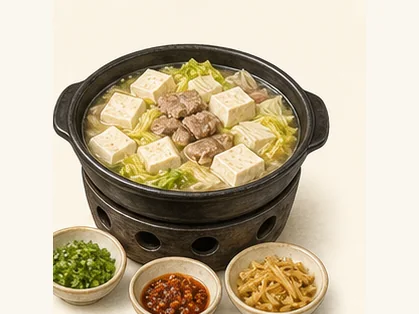
Liugou’s tofu brazier feast is a communal Yanqing meal built around an open-topped, simmering pot of fresh, frozen and fried tofu, cabbage, potato vermicelli and smoked pork. Its mild bean-curd textures take on a savoury meat-and-bone broth, while a larger farmhouse spread may add side pots, cold dishes and staple foods; the exact menu varies by restaurant.
Tap any red Chinese text to hear it in Mandarin.
What the name means
Show 柳沟火盆锅豆腐宴 (Liǔgōu huǒpénguō dòufu yàn) when asking for the meal. It is not one fixed tofu dish or a vegetarian banquet: it names a shared hot pot and the surrounding village-style meal associated with Liugou Village in Jingzhuang Town, Yanqing District, in Beijing’s outer northwest. Contemporary reports identify the village as the home of this food-tourism specialty and date the feast’s organized development to 2003.
What goes into the pot
The tofu is the centrepiece, with different forms adding different bites. Fresh soybean, black-bean and mung-bean tofu appear in local descriptions, alongside frozen tofu, fried tofu puffs and dried tofu. In a reported traditional assembly, chopped Chinese cabbage lines the bottom; fresh three-colour tofu, fried tofu, frozen tofu, potato vermicelli and sliced smoked pork are layered above it. A pork- and poultry-bone broth is poured in, then the uncovered pot is brought to a boil and kept hot over a brazier. The exact selection and sequence are a documented example, not a rule every restaurant follows.
One 2026 account describes the broth for that version as being simmered for six hours from pork bones, chicken and duck frames, and meat scraps. The tofu is set with naturally fermented acidic whey from tofu pressing: the whey is added gradually to hot soy milk until curds form, then the curds are pressed in a mould. That technique helps explain the fresh tofu’s tender, fine texture; it is a reported local method, not a universal specification for every batch or shop.
How it tastes and how to eat it
Expect a gentle, savoury pot rather than a sharply spiced stew. The broth carries the flavour of smoked pork and poultry bones. Fresh tofu is soft and delicate; frozen tofu has a more open, sponge-like structure that takes up broth; fried tofu puffs offer a more resilient, porous bite. Cabbage softens as it simmers, while potato vermicelli adds a slippery, chewy strand. A 2026 report describes the broth as mellow and savoury, the smoked meat as rich without feeling overly greasy, and the tofu as fragrant and tender. Frozen tofu’s pores are a result of freezing and let it absorb more cooking liquid.
The central pot is eaten communally as it stays hot, with the tofu and other layers served alongside the accompanying dishes. Traditional banquet descriptions add smaller side pots, bowls, cold dishes and staple foods, but the counts and contents differ by source and by updated restaurant menus. Some local venues now advertise variations such as Anhui-style, seafood or spicy fish versions, so ask which pot is being served rather than assuming every set is the classic pork-and-tofu one.
This is a meal to order for the table. Before choosing, ask how many diners a set serves, what dishes it includes, and whether the broth contains pork, poultry or other meat. The presence of several kinds of tofu does not make the traditional broth vegetarian. Soy is central; wheat may be present in accompanying foods, and restaurant kitchens may handle other allergens. Confirm the particular menu directly.
Where to eat it
You can find Liugou tofu brazier feast all over Beijing, so there is no need to seek out one particular restaurant. To find one near you, search for “柳沟火盆锅豆腐宴” in Meituan (美团) or Amap (高德地图) and check recent reviews, distance and opening hours.
More dishes to compare
Explore related local specialties and compare their names, preparation notes and ordering guidance.
Peking duck 北京烤鸭 →
The duck is seasoned, air-dried and roasted until its skin becomes lacquered and crisp. Carved slices are brought out with thin pancakes, scallion and a sweet bean sauce; cucumber is a common additional accompaniment. The pleasure comes from brittle skin against tender meat, with fresh vegetables cutting through the rich fat.
Zhajiangmian 炸酱面 →
Wheat noodles are boiled separately while diced pork is fried with fermented soybean paste into a thick sauce. Cucumber and other finely cut vegetables are arranged on top for mixing. The sauce is salty, deeply savory and oily; fresh vegetables lighten the mouthful while firm noodles supply chew.
Sources & reading
Recipes and servings vary between kitchens.