

Donglaishun-style sliced-lamb hotpot 东来顺涮羊肉
Donglaishun-style sliced-lamb hotpot (东来顺涮羊肉) is a Beijing-associated brand tradition of briefly cooking thin lamb slices in a clear, gently savory broth, then dipping them in a rich sesame-based sauce. Its craft also includes carefully selected lamb cuts, copper-pot service, pickled garlic and seasonal accompaniments; the technique is listed as a national intangible cultural heritage project.
Tap any red Chinese text to hear it in Mandarin.
The dish and the name
涮羊肉 (shuàn yángròu, instant-boiled lamb) is a broader northern Chinese hotpot style. Donglaishun is a specific Beijing restaurant tradition within that family, not the name for every lamb hotpot in the city. Its official intangible-heritage project describes a linked craft of lamb selection and preparation, slicing, hotpot and broth making, seasonings, pickled garlic and accompaniments. It was included in China’s national intangible cultural heritage list in 2008.
Donglaishun dates its beginnings to 1903. A Beijing district account says the business became a lamb restaurant after a fire at Dong’an Market and rebuilding; a Beijing Daily report dates this to 1912. An earlier cook recruited from Zhengyanglou helped shape its celebrated meat-cutting tradition. These are milestones in this restaurant’s history, not proof that it invented lamb hotpot.
What goes into the pot
Lamb. Donglaishun’s published craft description names five favored cuts: shàngnǎo (上脑), huángguātiáo (黄瓜条), dà sānjì (大三岔), xiǎo sānjì (小三岔) and módāng (磨裆). These local butchery names do not map perfectly to English retail labels; one report identifies huángguātiáo as a strip from the inner hind leg. The brand says its traditional slices are hand-cut, thin, even and folded on the plate.
The aim is a slice that cooks in a brief swish. A Donglaishun craft inheritor quoted by China News described hand-cut slices around 0.9 mm thick; that is a documented craft example, not a required thickness for every plate or branch. Thin slices turn opaque quickly and have a soft, tender bite, while the taste of lamb remains clear rather than buried under a heavy spice mixture.
Broth and heat. The traditional broth is clear rather than chili-red. Donglaishun lists dried shrimp, scallion, ginger and mushroom infusion among its broth ingredients. The brand also describes copper pots over charcoal as its traditional setup, while noting that fuel-oil and induction-heated pots are used in contemporary service. The copper pot and tall central chimney are part of the table’s recognizable look; they do not mean every current branch uses charcoal.
In the bowl, expect a light, savory broth with gentle mushroom and allium notes. Since it is not aggressively seasoned, the lamb and dipping sauce do most of the flavor work.
Sauce and accompaniments. The classic Donglaishun seasoning combines sesame paste and soy sauce, with pickled chive flowers and fermented bean curd for salty, tangy depth; a little shrimp oil and cooking wine add further savoriness, and chili oil is optional. These ingredients make a thick, beige-brown sauce that is nutty, salty and pleasantly pungent rather than a thin chili dip.
Pickled garlic (tángsuàn) brings a crisp, sweet-sour bite between pieces of lamb. Scallion, cilantro and seasonal pickled greens may accompany the meat. When the first plates are gone, traditional sides can include napa cabbage, frozen tofu and sesame flatbread; tofu and vegetables absorb the lamb-scented broth as the meal continues. Selections differ by restaurant and season.
How to eat it
Let the broth come to a steady boil, separate a slice with chopsticks, and move it through the bubbling water until cooked through. A very thin hand-cut slice needs only a short cook; avoid leaving it to simmer until it loses its tenderness. Dip it in a little sauce, then have a piece of pickled garlic or a fresh accompaniment to reset the palate. Add vegetables, tofu or bread later, when the broth has taken on more lamb flavor.
At ordering, look for 手切羊肉 (shǒuqiē yángròu, hand-cut lamb), ask which cuts are available, and confirm whether the broth is clear or spicy. The term 清汤锅底 Qīngtāng guōdǐ means clear broth. If shrimp is an issue, ask about both broth and sauce: dried shrimp can season the stock, and shrimp oil may be mixed into the dipping sauce. Sesame, soy and fermented bean curd are also ingredients to check.
Where to eat it
You can find Donglaishun-style sliced-lamb hotpot all over Beijing, so there is no need to seek out one particular restaurant. To find one near you, search for “东来顺涮羊肉” in Meituan (美团) or Amap (高德地图) and check recent reviews, distance and opening hours.
More dishes to compare
Explore related local specialties and compare their names, preparation notes and ordering guidance.
Lamb hotpot 涮羊肉 →
Thin lamb slices cooked at the table, often paired with sesame sauce.
Beijing iron-griddle barbecue 炙子烤肉 →
Thin slices of beef or lamb are cooked on a ridged iron griddle with scallion and coriander. The cooking surface, rather than a skewer or an oven, gives this Beijing meal its name.
Sources & reading
Recipes and servings vary between kitchens.
Image credits & notes (1)
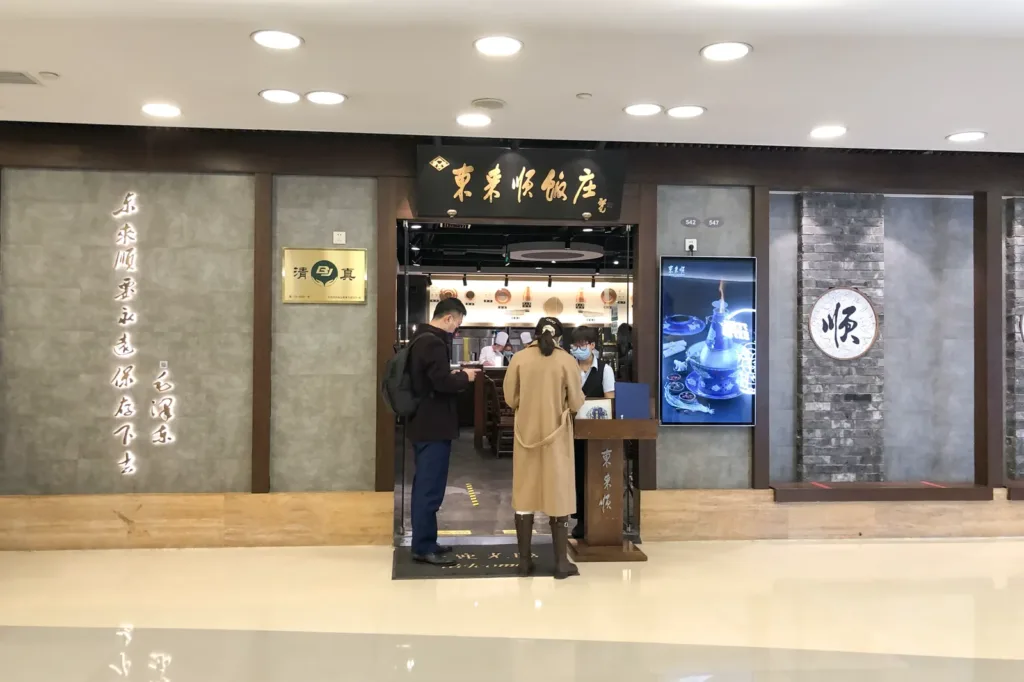
- The entrance of Donglaishun at Beijing apm, photographed in December 2021. The image shows the restaurant, not a serving of hotpot. Photo: N509FZPhoto: CC BY-SA 4.0