

Beijing iron-griddle barbecue 炙子烤肉
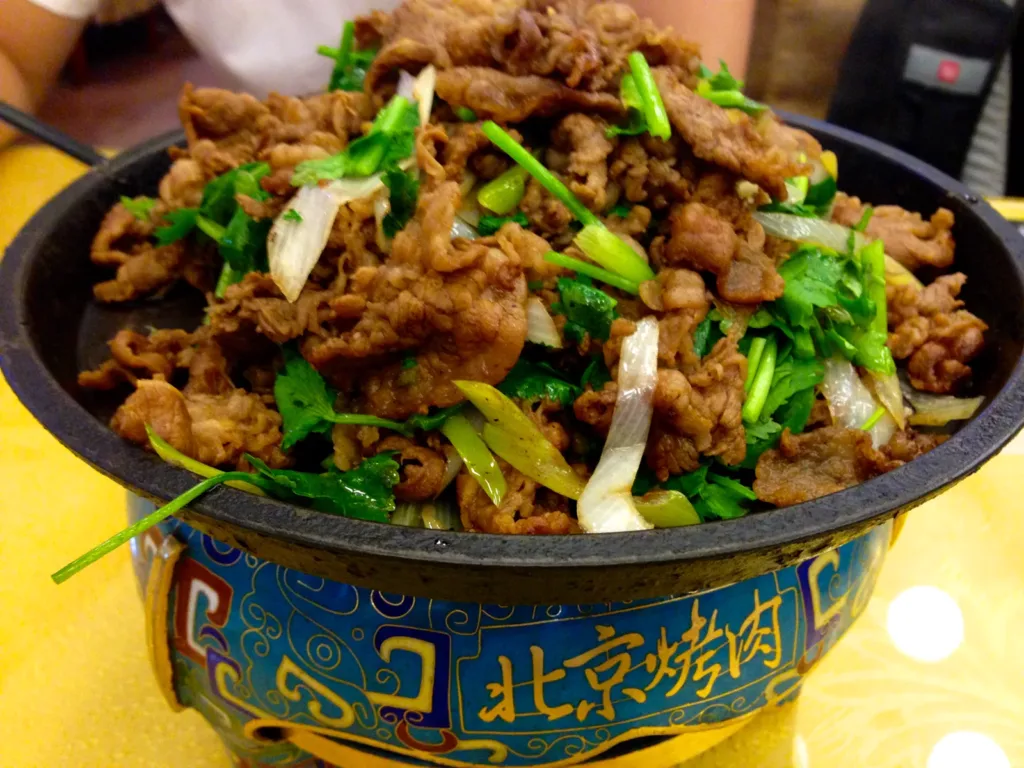
Beijing iron-griddle barbecue (炙子烤肉) is thinly sliced, seasoned beef or lamb cooked on a heated iron-bar griddle called a zhizi. In Beijing's best-known versions, beef and lamb are associated respectively with Kaorou Wan and Kaorou Ji; seasonings and table service vary, so expect a shared hot meat dish rather than one fixed recipe.
Tap any red Chinese text to hear it in Mandarin.
What makes it zhizi barbecue
The defining feature is the cooking surface, not a skewer. A zhizi is a round iron cooking frame assembled from metal bars, traditionally set over heat; meat cooks directly on its hot surface. The gaps between bars distinguish this tool from a smooth griddle, although the exact equipment and heating setup differ between restaurants and modern table-side versions.
The broader English label “Beijing barbecue” can refer to this local iron-griddle tradition. It should not be confused with skewered lamb kebabs: slices are laid on the heated frame and turned as they cook. Beijing’s named culinary heritage includes both Kaorou Wan’s beef and Kaorou Ji’s lamb traditions. The Beijing tourism portal says that Beijing Barbecue Preparation Techniques entered China’s national intangible cultural heritage list in 2008. That recognition is for a Beijing culinary craft; it does not make every restaurant’s recipe identical.
Meat, seasoning and the cooking process
Thin slices of beef or lamb are seasoned before they meet the hot iron. The heritage descriptions of Kaorou Ji emphasize selecting lamb and slicing it very thinly; the restaurant’s account describes its own seasoned sauce as a house practice, not a universal formula. Beijing tourism likewise describes the category as marinated beef or lamb cooked on a purpose-made zhizi. Individual kitchens may differ in cut, thickness, marinade and whether aromatics are cooked with the meat.
On the hot metal, the slices sear quickly. Their exposed surfaces turn brown while the interior stays juicy if the meat is turned and removed before it dries out. Rendered fat and meat juices mingle with the seasoning; when scallion or other aromatics are cooked alongside, they soften and release a sweet, savory fragrance. Expect a savory, browned edge, a tender center and the contrast of juicy meat with softened greens—not the smoky, dry crust of a long-roasted kebab. Heat and fat levels vary with the cut and the cook, so a lean beef portion and a richer lamb portion need not taste alike.
Beef, lamb and ways to eat
For a traditional point of comparison, Kaorou Wan is known for beef and Kaorou Ji for lamb. Those are useful Beijing reference points, not a rule that every shop serves only one meat. At the table, order the meat you prefer and ask whether the kitchen cooks it or whether diners use a tabletop zhizi. Some service styles bring cooked meat ready to eat; “武吃” describes a more participatory, self-grilling style documented at Kaorou Wan. The format is venue-specific.
Try the meat on its own first, then with a wheat flatbread or sesame flatbread if offered. A Beijing tourism guide specifically recommends tucking Kaorou Wan beef into a small baked bread and pairing Kaorou Ji lamb with sesame flatbread. These are satisfying accompaniments, not compulsory parts of every serving.
Useful questions to show or ask:
- 牛肉还是羊肉? Niúròu háishi yángròu? — Is it beef or lamb?
- 是店员烤好,还是自己烤? Shì diànyuán kǎo hǎo, háishi zìjǐ kǎo? — Is it cooked by staff, or do diners grill it themselves?
- 有烧饼或芝麻火烧吗? Yǒu shāobing huò zhīma huǒshao ma? — Do you have baked flatbread or sesame flatbread?
- 腌料里有什么? Yānliào lǐ yǒu shénme? — What is in the marinade?
Beef and lamb are the central meats described for Beijing’s named versions. Marinades are kitchen-specific; ask about soy, sesame, wheat-containing sauces or other ingredients if they matter to you. Do not infer a restaurant’s halal status or suitability for a dietary restriction from the dish name alone.
Where to eat it
You can find Beijing iron-griddle barbecue all over Beijing, so there is no need to seek out one particular restaurant. To find one near you, search for “炙子烤肉” in Meituan (美团) or Amap (高德地图) and check recent reviews, distance and opening hours.
More dishes to compare
Explore related local specialties and compare their names, preparation notes and ordering guidance.
Sweet yam-and-date rolls 糖卷果 →
Chinese yam and dates are combined into a substantial roll, cooked, sliced and finished with a sweet glaze. Additional nuts or other ingredients depend on the maker. The yam supplies a dense, soft body, while dates give deeper fruit sweetness and the glaze makes the surface sticky.
Peking duck 北京烤鸭 →
The duck is seasoned, air-dried and roasted until its skin becomes lacquered and crisp. Carved slices are brought out with thin pancakes, scallion and a sweet bean sauce; cucumber is a common additional accompaniment. The pleasure comes from brittle skin against tender meat, with fresh vegetables cutting through the rich fat.
Sources & reading
Recipes and servings vary between kitchens.
Image credits & notes (1)
- A serving of Beijing-style barbecue with browned meat and green aromatics. Photo: Zheng ZhouPhoto: CC BY-SA 4.0