

Zhangzhou four-fruit dessert soup 漳州四果汤
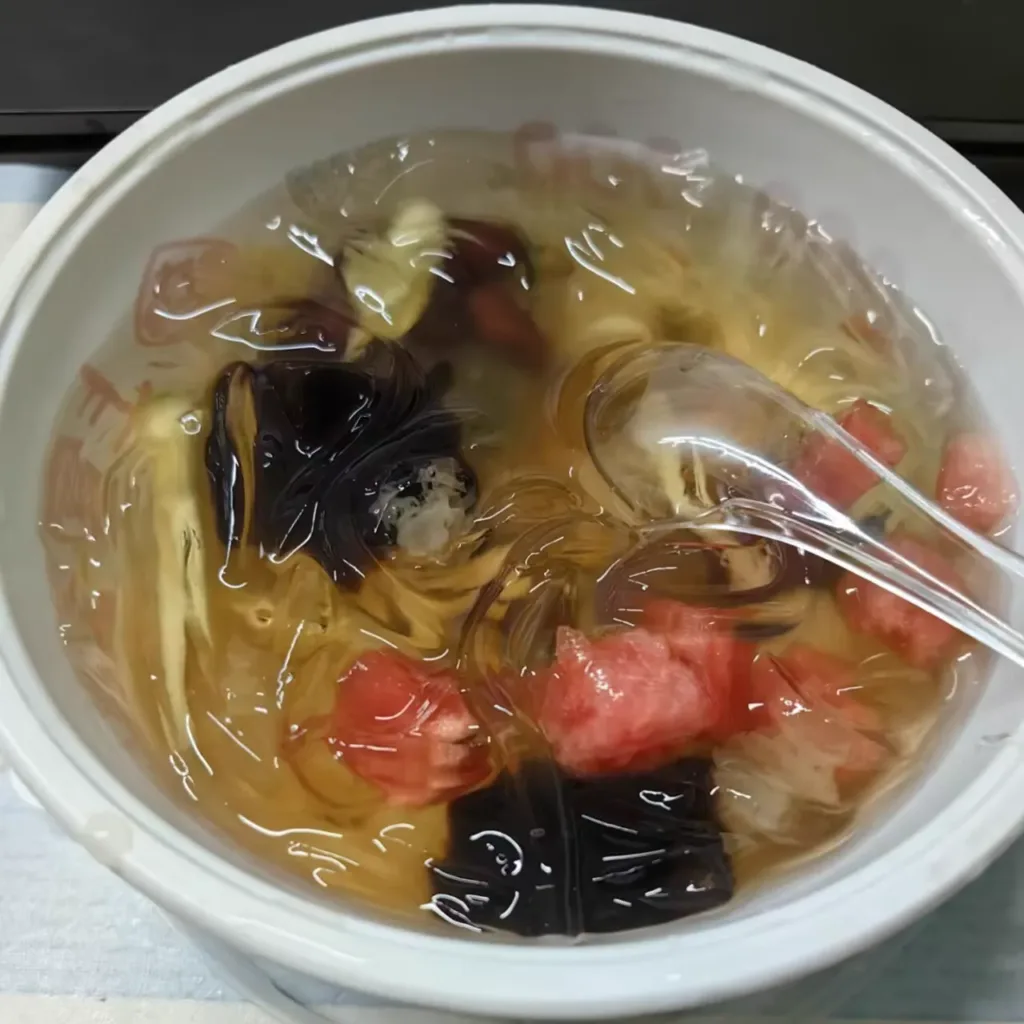
Zhangzhou Four-Fruit Dessert Soup (漳州四果汤, Siguotang) is a chilled Minnan sweet bowl built from shaved ice or a sweet liquid, a changing selection of beans, fruit, jellies and starch-based toppings. Its name does not guarantee four fixed fruits: the appeal is the contrast between tender cooked beans, slippery jellies, juicy fruit and chewy pieces, with a clear Zhangzhou identity and an everyday presence in neighbouring Quanzhou.
Tap any red Chinese text to hear it in Mandarin.
What the name means
The name is best understood as a traditional mixed-dessert idea, not a fixed recipe. An official food guide from Xiangcheng District in Zhangzhou describes a bowl of finely shaved ice with lotus seeds, white fungus, mung beans, Job’s tears, pineapple, watermelon, cassava-starch Adazi, grass jelly and candied fruit, finished with sugar water or honey. The list is a description of local practice, not a required menu.
That flexibility is part of the point. A traditional account reported by Fujian Daily names lotus seeds, Job’s tears, mung beans and white fungus as the original four ingredients, while describing later bowls with fruit, taro and other additions. Treat that history as a food tradition rather than a single proven origin story; the bowl you receive today may contain more than four components.
The bowl and its textures
The most useful way to taste it is by texture. Soft beans and grains bring a gentle, cooked bite; watermelon or pineapple add juice; Adazi—a chewy topping made from cassava starch—adds bounce; and grass jelly or stone-flower jelly contributes a cool, slippery or lightly crisp contrast. Ice, sugar water and sometimes honey bind the bowl together.
Stone-flower jelly is especially associated with the Quanzhou version. The Licheng District government describes its sea-grown raw material, shihuacao, being harvested, dried, soaked, boiled and filtered before it sets. In the same account, customers choose from many toppings around the jelly, which helps explain why the dish is assembled to order rather than served as one rigid formula.
Zhangzhou and Quanzhou
The name keeps Zhangzhou in view, but the dessert belongs to a wider Minnan food culture. In Quanzhou, it is not merely a dish copied from elsewhere: an official Licheng food feature records it as an active local street food and links it to the city’s old everyday foodways. This is a regional overlap, not a reason to claim that every Quanzhou bowl is identical to a Zhangzhou bowl.
A bowl can be a short afternoon stop after savoury snacks, especially in hot weather. Shop names, hours, prices, topping choices and even serving temperature change, so use the Chinese name 漳州四果汤 Zhāngzhōu sìguǒtāng and check the current menu at the place you choose.
Ordering and dietary checks
Ask which toppings are included and which are optional before the bowl is mixed. Start with a few contrasting ingredients if you want to understand the textures, and confirm the price of extras rather than assuming every tray item is included. The Chinese name is more useful than an improvised English translation when ordering.
Do not infer that a colourful bowl is vegan or free of allergens. Prepared toppings differ between kitchens, and local food businesses may handle peanuts, soy, wheat, egg and other allergens. If you have a serious allergy, explain it before ordering and ask what the actual stall can safely provide.
Where to eat it
You can find Zhangzhou four-fruit dessert soup all over Fujian, so there is no need to seek out one particular restaurant. To find one near you, search for “漳州四果汤” in Meituan (美团) or Amap (高德地图) and check recent reviews, distance and opening hours.
More dishes to compare
Explore related local specialties and compare their names, preparation notes and ordering guidance.
Fuzhou sweet taro paste 芋泥 →
Steamed taro is mashed or sieved, sweetened and worked with fat into a smooth paste. Lard is traditional in many versions, while toppings and alternative fats vary. The dessert is dense, silky and deeply taro-flavored, with richness that can be greater than its pale appearance suggests. It retains heat well.
Fuzhou sweet peanut soup 花生汤 →
Skinned peanuts are slowly simmered until tender and served in a sweet, pale liquid. Some shops offer additions, but the basic bowl highlights the peanuts themselves. The nuts become soft and creamy while still holding their shape, giving a gentle earthy flavor against the sweet soup.
Sources & reading
Recipes and servings vary between kitchens.
Image credits & notes (1)
- A bowl of Quanzhou four-fruit soup, showing sweet syrup, jelly-like toppings and watermelon. Photo: Newbamboo (Wikimedia Commons)Photo: CC BY-SA 4.0