

Fuzhou sweet taro paste 芋泥
Fuzhou’s 芋泥 (yuni) is a warm, smooth taro dessert associated with the end of a Fujian-style banquet. Look for a sweet paste made from cooked taro, sugar and often lard, and ask about the fat and toppings before ordering.
Tap any red Chinese text to hear it in Mandarin.
What it is
Fuzhou’s 芋泥 (yuni) is a warm taro dessert associated with the end of a Fujian-style banquet. Local Fuzhou references describe it as a traditional Min-cuisine sweet and as a dish that commonly appears near the end of a celebratory meal. It is best understood as a serving tradition rather than one fixed recipe: the essential idea is cooked taro worked into a smooth, sweet paste, then finished with fat and, in some versions, decorative toppings.
Fuzhou descriptions commonly point to 槟榔芋 (binlang taro), especially the soft, fragrant Fuding variety from northeastern Fujian. Fuding binlang taro is a named local cultivar with a starchy, easily softened flesh; the provincial agriculture department lists taro paste among the dishes made from it. This does not mean the taro was grown inside Fuzhou city, so read the ingredient reference as a regional Fujian connection rather than a claim of city-only origin.
How to read the texture
The core preparation is simple but not instant. The taro is steamed or otherwise cooked until tender, peeled, and mashed or pressed into a paste. Sugar and cooked fat are worked through it, and the mixture may be returned to the steamer so the sweetness and fragrance settle into the taro. The older Fuzhou food description also records a final steaming with toppings.
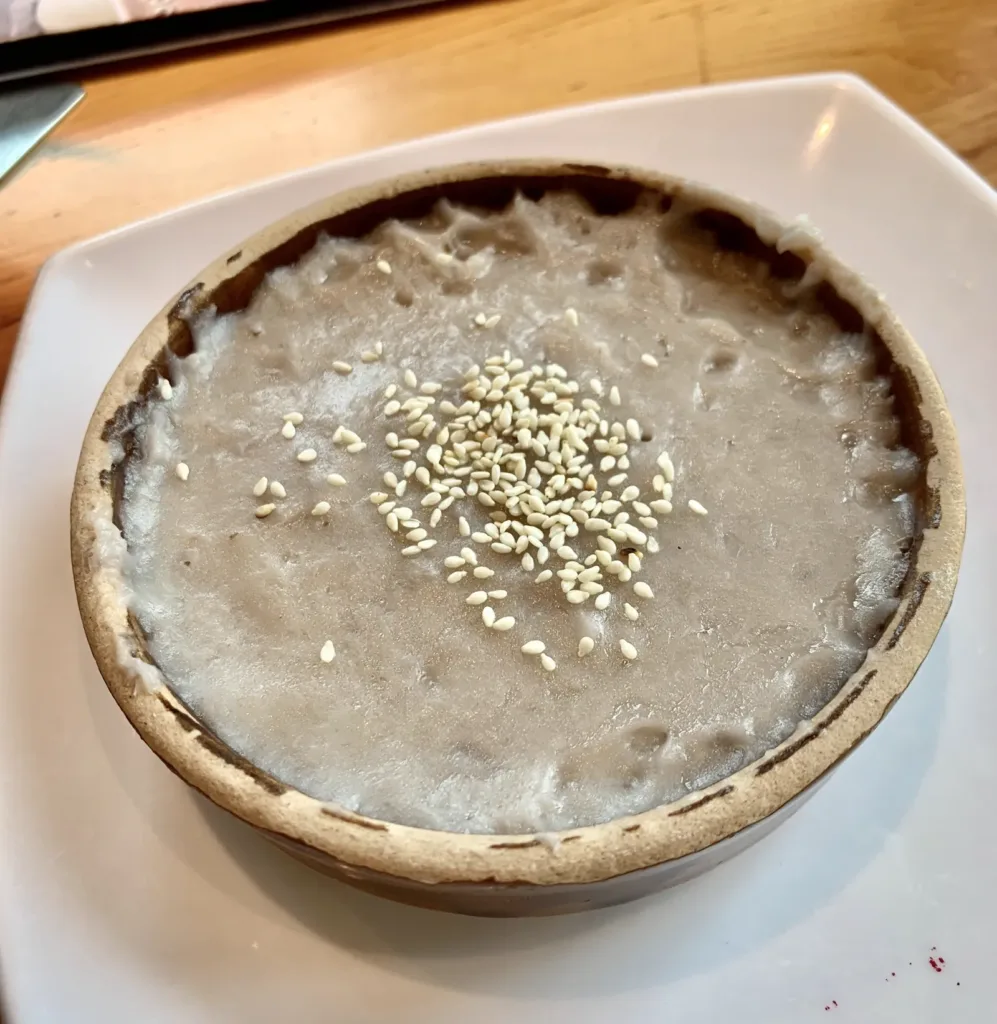
A good serving should feel dense, smooth and yielding, with a clear taro aroma rather than the loose texture of a watery pudding. Traditional versions can use 熟猪油 (cooked lard), which gives the paste a rounded richness; some kitchens use a different fat, so do not assume that a pale bowl is vegetarian. The surface may look calm because a thin layer of fat holds in heat. Take a small spoonful first and eat it slowly: local guidance specifically warns that the paste can be much hotter than it appears.
Variants and what to order
The plain name to show is 芋泥 Yùní. You may also see 太极芋泥 Tàijí Yùní, in which the paste is arranged in a Taiji pattern, or 八宝芋泥 Bābǎo Yùní, a more decorated presentation associated with sweet toppings such as red dates, sesame, winter melon candy or other preserved fruit. These are recognizable Fuzhou-style presentations, not proof that every kitchen uses the same garnish or proportion. The provincial account also records shaped dishes made from the same cooked taro paste, showing how far the base can be adapted without turning every presentation into a separate dish.
If you avoid pork, show 请问芋泥用什么油?(Does this use pork lard or another oil?) before ordering. Also ask about nuts, sesame and preserved-fruit toppings if you have an allergy. Neither the name nor the color guarantees a vegetarian, vegan or allergen-free serving.
Finding it in Fuzhou
芋泥 is a dish, not a single attraction or a fixed-address venue. Search 芋泥 Yùní on Meituan (美团) or Amap / Gaode Maps (高德地图) to find nearby current listings; add 福州 Fúzhōu if results are ambiguous. Check the menu, recent reviews, opening information and same-day availability before choosing. For the patterned versions, search 太极芋泥 Tàijí Yùní or 八宝芋泥 Bābǎo Yùní as well.
Because supply and addresses belong to individual venues, this entry does not invent one restaurant, metro station, bus line or return route. After choosing a current listing, verify its exact Chinese address, the applicable last-leg route and the way back in the live map or with the venue. The dish itself has no meaningful dish-specific entrance, exit or transport timetable.
More dishes to compare
Explore related local specialties and compare their names, preparation notes and ordering guidance.
Yongding taro dumplings 永定芋子包 →
The taro dough is shaped around the filling and cooked until the wrapper becomes cohesive and tender. The kitchen may serve the dumplings with soup or a dressing. The wrapper is softer and more yielding than a wheat dumpling skin, with a subtle taro flavour around the seasoned centre.
Fuzhou sweet peanut soup 花生汤 →
Skinned peanuts are slowly simmered until tender and served in a sweet, pale liquid. Some shops offer additions, but the basic bowl highlights the peanuts themselves. The nuts become soft and creamy while still holding their shape, giving a gentle earthy flavor against the sweet soup.
Sources & reading
Recipes and servings vary between kitchens.
Image credits & notes (1)
- A smooth serving of Fuzhou taro paste (yuni) topped with white sesame seeds. Photo: 三猎Photo: CC BY-SA 4.0