

Xiangxi Pounded Sticky Rice Cakes 湘西糍粑
Xiangxi Pounded Sticky Rice Cakes (湘西糍粑, Xiangxi ciba) are hand-shaped rounds of steamed glutinous rice, pounded while hot and eaten in both savoury and sweet forms. In Xiangxi, the food is closely tied to winter and New Year gatherings: its texture comes from shared pounding work, while roasting, frying, boiling and grain-mix variations keep it from being a single fixed recipe.
What it is
Xiangxi ciba is made from glutinous rice that is soaked, steamed and worked while still hot. Traditional accounts describe using a wooden rice steamer (木甑, mùzhēng), then transferring the cooked rice to a pounding trough or stone mortar. Two people alternate heavy wooden mallets: each strike lands beside the previous one so the other mallet can be lifted without tearing the sticky mass. Once the rice has become smooth, elastic and cohesive, portions are pinched off and pressed into flat, round cakes.
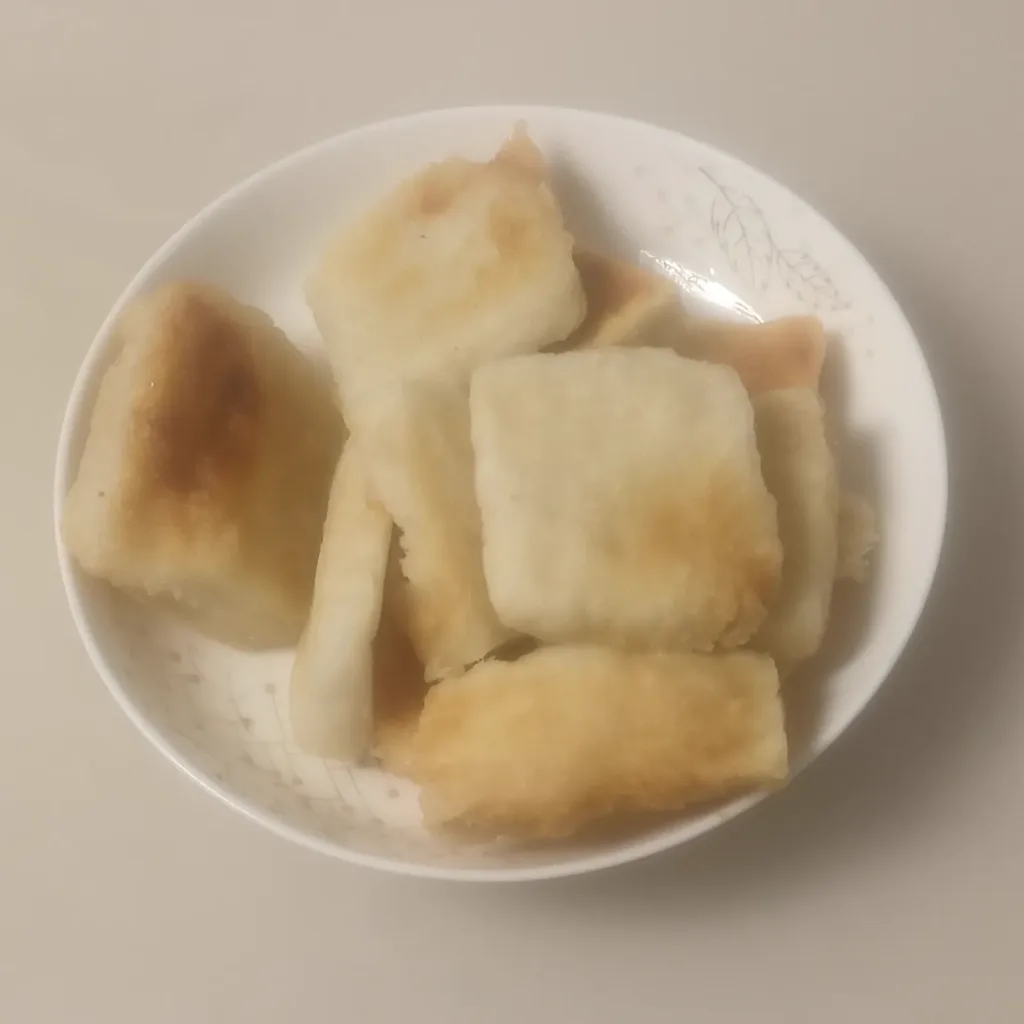
The method explains the texture better than the English label “sticky rice cake” does. Fresh ciba is soft, warm and stretchy; grilling gives it a browned skin and a swelling centre, while frying creates a crisp shell around a tender middle. The pounding is also a shared winter task rather than a private shortcut: local descriptions place it among New Year preparations and communal festival food-making in Xiangxi.
What makes the Xiangxi version distinctive
There is no single filling or finishing that defines every Xiangxi ciba. A local account records household versions made with glutinous rice mixed with millet, sorghum, maize or red bean, alongside plain white-rice cakes. These mixtures are regional and household variations, not a rule that every plate in Xiangxi will contain grains or beans.
The shape matters too. Round cakes are made for storing, sharing and giving, and local descriptions connect them with New Year visits and family gatherings. The flavour is deliberately adaptable: the same pressed cake can become a sweet snack, a savoury breakfast or a warming dish around a charcoal fire.
How to eat it
- Toasted: Warm a cake over charcoal or another grill until it browns and puffs. Sugar or chilli oil makes the contrast between the crisp surface and soft centre clear.
- Pan-fried: Fry it gently until both sides are soft and coloured, then season with chilli powder, wild scallion and salt for a savoury version.
- Deep-fried: Cut it into pieces, fry until golden and swollen, and add white sugar while it is hot.
- Boiled: Cut it into pieces and simmer it with Chinese cabbage or other greens; sweet rice wine is another recorded way to serve it.
Practical tips
Hunan’s official tourism material has listed it among Xiangxi products and has described seasonal ciba-making in village and Miao New Year programmes around Fenghuang and elsewhere in the prefecture. If you are staying in Fenghuang, keep the Chinese name handy and ask a stall, restaurant or village host whether the cake is freshly toasted, fried, boiled or sold as a preserved round before ordering.
The base is glutinous rice, but seasonings and mixed-grain versions vary. If you avoid sugar, chilli, scallions, sweet rice wine or particular grains, ask what has been added and how the cake was cooked; its appearance alone does not establish that it is vegetarian or free of allergens.
Where to eat it
You can find Xiangxi Pounded Sticky Rice Cakes all over Hunan, so there is no need to seek out one particular restaurant. To find one near you, search for “湘西糍粑” in Meituan (美团) or Amap (高德地图) and check recent reviews, distance and opening hours.
Sources & reading
Image credits & notes (1)
- Fried glutinous-rice cake pieces on a plate; a generic ciba serving photographed outside Xiangxi, included as a regional illustration rather than a claim about a Xiangxi vendor or recipe. Photo: Fumikas SagisavasPhoto: CC0 1.0