

Han Baozi Pork Buns 韩包子
A Chengdu bun-shop tradition known for soft, white wheat wrappers and carefully seasoned pork fillings. Its documented early-twentieth-century menu also included shrimp and ham buns; surviving recipes describe a distinctive mix of crisp-fried and fresh pork.
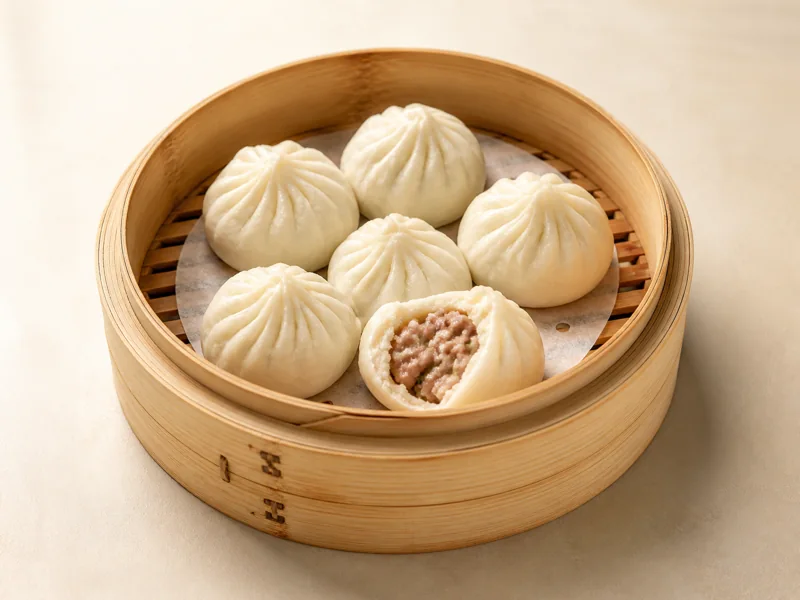
A Chengdu bun-shop tradition
Han Baozi is a named Chengdu shop tradition, rather than a single standardized bun sold everywhere. Local-history accounts place the original shop on Nan Dajin Street (南打金街) after the 1911 Revolution. One food-history account dates its opening to 1914 and says founder Han Yulong first ran Yulongyuan before the shop became known as Han Baozi. The Sichuan Provincial Local Gazetteers Office also recalls the shop’s shrimp buns, made with fresh river shrimp. Taken together, these accounts place the brand in early-twentieth-century Chengdu; the exact origin story and date are historical accounts.
The best-documented pork-bun method uses finely chopped pork with both lean and fat. One half is fried crisp in a wok, then mixed with the other half uncooked before seasoning. The recipe account lists soy sauce, ginger juice, Sichuan pepper, cooking wine, MSG, and chicken stock among more than ten seasonings. It describes the result as finely textured, tender, soft, and aromatic. This is a reported Han Baozi-style formula, not a verified recipe for every current outlet or a uniform Chengdu standard.
The steamed wrapper is described in the same account as thin, white, and pleated, with a soft bite; its richness contrasts with the savoury pork centre, where ginger and pepper add fragrance rather than making the bun a chilli-hot dish. Historical menu variations include fresh-pork, ham, and shrimp buns. The local gazetteer specifically records shrimp buns and crystal-clear shrimp buns.
How to try it
Order a freshly steamed pork bun and let it cool briefly before biting, since the moist filling can be hot. A Chengdu writer’s recollection pairs buns with rice porridge and Sichuan pickles as breakfast, but that is a remembered meal rather than a required serving ritual. If available, try a second filling such as shrimp or ham to compare the pork bun’s savoury richness with a seafood or cured-meat variation. Fillings, side dishes, and availability differ by outlet.
Where to eat it
You can find Han-style steamed pork buns all over Chengdu, so there is no need to seek out one particular restaurant. To find one near you, search for “韩包子” in Meituan (美团) or Amap (高德地图) and check recent reviews, distance and opening hours.
Sources & reading
Recipes and servings vary between kitchens.