

Changli Zhaojiaguan Dumplings 昌黎赵家馆饺子
Changli Zhaojiaguan Dumplings is featured among the local specialties of Hebei.
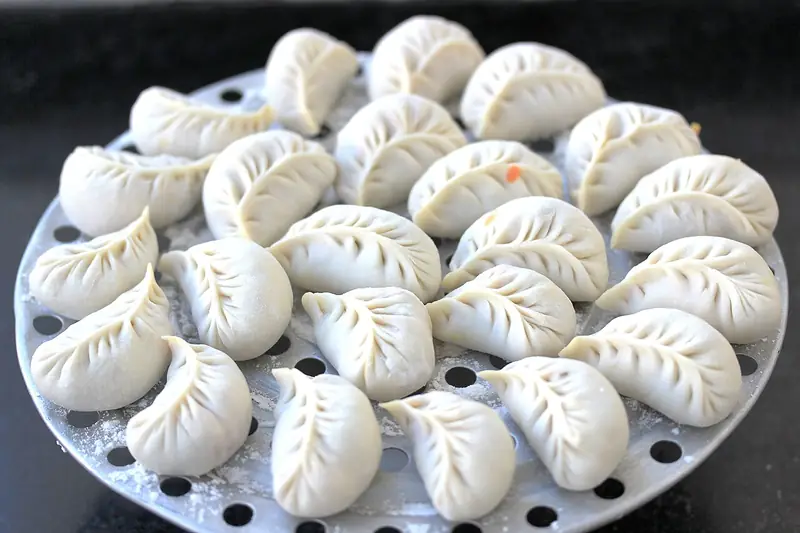

Photo adjustments
Full frame retained; EXIF orientation normalized, proportionally resized to at most 800 pixels and converted to WebP. No generated pixels or subject changes. Cards may crop the display.
Changli Zhaojiaguan Dumplings (昌黎赵家馆饺子) are the basket-steamed dumplings of the Zhaojiaguan (赵家馆) restaurant, whose main branch is on Gulou East Street (鼓楼东大街) in the county town of Changli (昌黎), Qinhuangdao, Hebei. The making craft entered the second batch of Hebei's provincial intangible cultural heritage list in 2007.
How it is made
Everything is made by hand. The dough is scalded with water at 100 degrees Celsius, pulled into pieces of even size, and each piece is rolled seven times, which gives a thin wrapper with some bite. The meat is only the front-shoulder cut of pork (猪前槽肉).
Zhao Zhiqiang (赵志强), who has run Zhaojiaguan since 1990 and is named as the inheritor of its craft, told Qinhuangdao News (秦皇岛新闻网) that the juiciness comes from the ingredients' own water, and that keeping it depends on small steps. Vegetables are washed quickly without soaking and chopped by hand rather than by machine, so their fibres stay intact. Meat, vegetables and seafood are kept apart until the wrappers are rolled and only mixed at the moment of wrapping, and salt goes in late so the vegetables do not weep.
Flavour and texture
A serving is fourteen steamed dumplings on a small round bamboo steamer tray, translucent with thin skins. Qinhuangdao News lists the flavours of the mixed filling as the savouriness of dried shrimp (海米), the light sweetness of zucchini (角瓜), the freshness of Chinese chives and the richness of pork, and says each bite releases juice, like a southern soup dumpling. Unlike dumplings built around a ball of meat, the filling here is loose; Zhao's phrase is "馅儿散而味鲜" (a loose filling with a fresh taste). The skin is described as thin but not sticky, and the dumplings as fragrant without being greasy.
Ingredients
At first the house made only two steamed fillings: mixed (什锦) and a vegetarian "three delicacies" (素三鲜). It now has more than twenty, including fennel, donkey meat, prawn, Spanish mackerel, scallop, mantis shrimp, ark clam, octopus and even pufferfish. Zhao chose his dried shrimp from a small fishing village in Yingkou (营口), Liaoning, after trying the northern coast; the octopus and mackerel come from the Bohai Gulf and the shrimp meat from Xiamen. Seasonal fillings are sold for short spells: a spring filling of noodlefish (面条鱼), one whole roe-carrying fish per dumpling, runs for about 20 days, and a fish-roe filling of Zhao's own devising for 10.
Where it comes from
Older Changli people call them "赵老二的饺子" (Zhao the Second's dumplings) after the founder, Zhao Fuyuan (赵福元), Zhao Zhiqiang's grandfather. He began with a small food stall selling boiled dumplings, took fixed premises and the name Zhaojiaguan later, and turned the thin-skinned, loose-filled boiled dumpling into the round-basket steamed version. Qinhuangdao News reports that in the 1950s the dumplings won the top prize for filled foods in a national catering competition, and that the name is known across eastern Hebei, Beijing, Tianjin and the northeast.
More dishes to compare
Explore related local specialties and compare their names, preparation notes and ordering guidance.
Hei Family Dumplings 黑家饺子 →
Another named family dumpling house in Hebei; Zhaojiaguan's are steamed in round bamboo baskets with a deliberately loose filling rather than boiled.
Sources & reading
Written from the linked sources and checked sentence by sentence against quoted extracts by a separate reviewer on 2026-09-24. Recipes and servings vary between kitchens.