

Paluda Iced Dessert Drink 帕露达
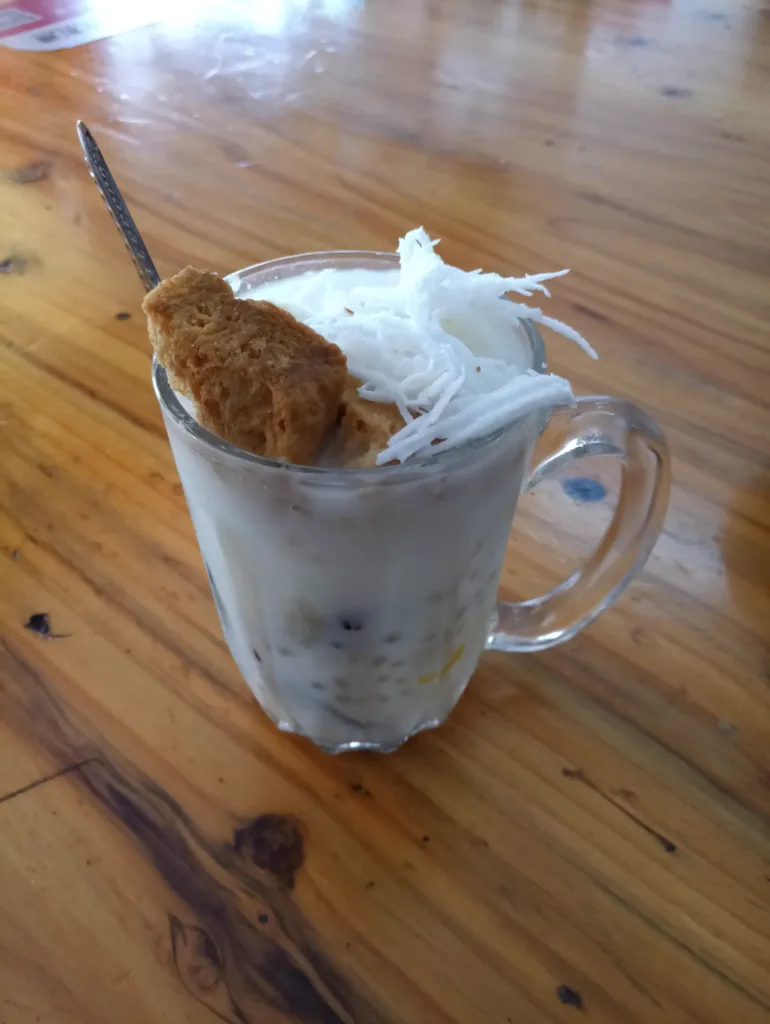
Paluda (帕露达, also written Paoluda 泡鲁达) is a cold Yunnan dessert drink built around milky or coconut-milk liquid, ice, shredded coconut and crisp dried bread. In Xishuangbanna, it is a Dai-associated sweet often sought at cold-drink stalls and night-market food stands, but recipes vary by maker.
Tap any red Chinese text to hear it in Mandarin.
What it is
Paluda is a local Yunnan name for a cold, layered dessert drink rather than one fixed recipe. The most recognizable build is a milky or coconut-milk base with ice, shredded coconut and toasted or dried bread; makers may add sweetened condensed milk and sago, while some regional versions include purple rice or fruit. A food explainer notes that the ingredients vary, but the bread, milk or coconut milk, and coconut remain the usual core. A Yunnan cultural-tourism feature describes the same bread, coconut, condensed milk, milk or coconut mixture and ice, with purple rice and sago as possible additions in a Dehong version.
The bread is not just a garnish. In the cup, it takes on the sweet milky liquid and shifts from a dry, crisp bite to a softer soaked texture. That contrast between cold liquid, creamy sweetness, coconut aroma and a changing bread texture is the point; the balance depends on the stall and its recipe.
The name is worth keeping in Chinese. Sources use both Paluda and Paoluda, while Chinese menus may show 帕露达 or 泡鲁达. In Xishuangbanna, it belongs to the wider Dai-associated food culture of the prefecture, rather than being a dish with one exclusive shop or a single fixed formula.
A cross-border dessert family
Paluda makes more sense as a local adaptation than as a recipe with one uncontested birthplace. NPR describes the wider falooda family as a cold dessert with Persian roots that travelled through South Asia, and records a Myanmar version sold by street vendors with its own ingredients and memories. A Yunnan account connects the borderland version to Myanmar and notes that the Xishuangbanna form uses a local pronunciation. You may also encounter Chinese sources repeating a Thai-origin story; the practical conclusion is not to look for one canonical recipe, but to expect related Southeast Asian forms adapted to local tastes.
How to order and taste it
Ask for 帕露达 (Paluda). When the cup arrives, taste a small piece of the bread before fully stirring it, then sip the cold base and try the softer pieces that have absorbed the liquid. If the cup contains sago, purple rice, fruit or jelly, take them separately first so the textures do not disappear into one sweet mouthful.
The drink is usually sweet and may contain milk, coconut milk, condensed milk and several starch or fruit toppings. If you need to avoid dairy, coconut, or a particular topping, ask the stall directly in Chinese before ordering; a pale or clear appearance does not guarantee any dietary or allergy condition. Recipes and ingredient lists vary between sellers.
Where to eat it
You can find Paluda Iced Dessert Drink all over Yunnan, so there is no need to seek out one particular restaurant. To find one near you, search for “帕露达” in Meituan (美团) or Amap (高德地图) and check recent reviews, distance and opening hours.
Sources & reading
Image credits & notes (1)
- A glass of paoluda (泡鲁达), photographed in Mangshi, Dehong, Yunnan; a regional example rather than a photo of a specific Jinghong stall. Photo: 瑞丽江的河水Photo: CC BY-SA 4.0