

Hulu chicken 葫芦鸡
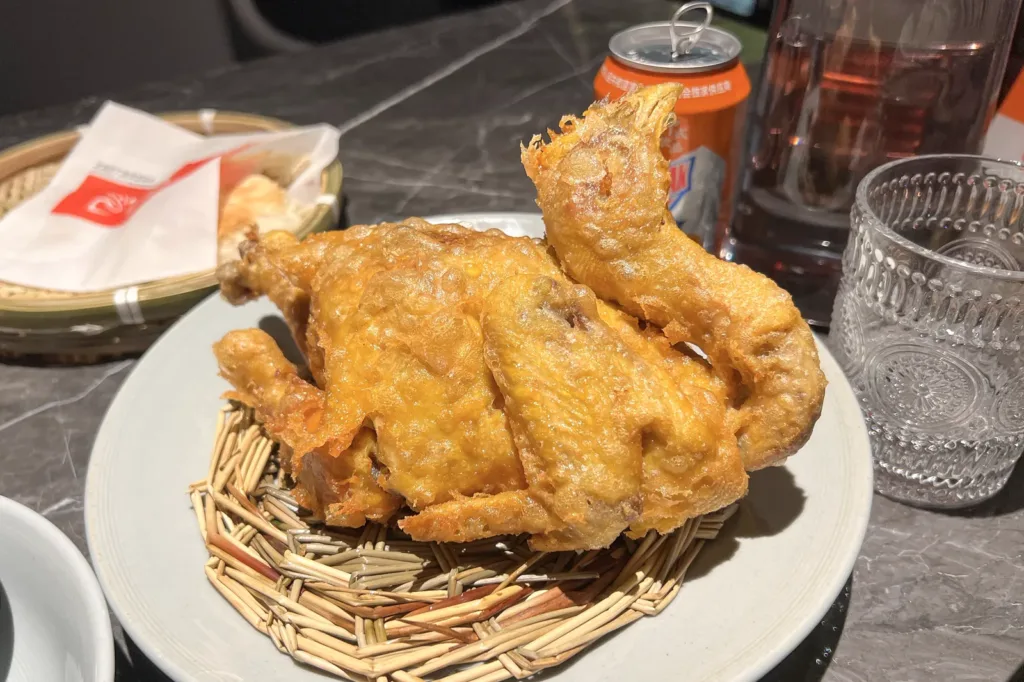
A celebrated Xi’an-associated Shaanxi dish: a whole chicken is tied to keep its shape, gently cooked until tender, then deep-fried until its skin is golden and crisp. Order it as 葫芦鸡; seasoning and exact method vary by kitchen.
Tap any red Chinese text to hear it in Mandarin.
Hulu chicken is closely identified with Xi’an, where it is part of the city’s best-known banquet cooking, but it is also described as a Shaanxi or Qin-cuisine classic—not a dish exclusive to the present-day city boundary. Its name is commonly linked to the intact, gourd-like shape of the tied chicken, not to gourd as an ingredient.
How it is made and tastes
The central ingredient is a whole chicken, traditionally a young bird. In a documented traditional method, the cook ties it with fine string to help it hold together, simmers it, then steams it with stock, soy sauce, salt, scallion, ginger, star anise, cassia and cooking wine. A quick final deep-fry turns the outside a glossy golden color while the earlier gentle cooking leaves the meat very soft. The three-stage pattern—boil, steam, fry—is widely repeated, though some current kitchens add a blanching or scalding stage and use longer seasoning with a larger blend of spices. One Xi’an restaurant account describes such an elaborate version; it is an example, not a universal recipe.
Expect a rich, savory aroma from the chicken and warm spices, a crisp skin against moist, tender meat, and a deeper, gently seasoned flavor than a simply roasted bird. The bird may arrive whole for the table or be portioned by the kitchen. Pepper-salt (椒盐) is a traditional accompaniment: taste the chicken first, then add a little if you want extra peppery, salty bite. Serve it promptly so the fried skin keeps its crispness. Restaurant platings and seasoning strength differ.
The oft-repeated Tang-court origin story credits a cook in the household of the official Wei Zhi with developing the tied, multi-stage method. Treat that as culinary tradition rather than a securely established recipe record; the preparation is more dependable guidance than the story.
![A whole golden Hulu chicken served at Chang An G in Beijing. This illustrates the dish, not a Xi’an restaurant or Xi’an-specific location.]
Practical tips
Show or say 葫芦鸡 húlu jī (“húlu jī”) when ordering. It is commonly presented as a sharing dish, so ask 请问有葫芦鸡吗? Qǐngwèn yǒu húlu jī ma? (“Do you have Hulu chicken?”) and check the portion size with the restaurant.
Where to eat it
You can find Hulu chicken all over Xi’an, so there is no need to seek out one particular restaurant. To find one near you, search for “葫芦鸡” in Meituan (美团) or Amap (高德地图) and check recent reviews, distance and opening hours.
More dishes to compare
Explore related local specialties and compare their names, preparation notes and ordering guidance.
Osmanthus persimmon cakes 黄桂柿子饼 →
Ripe persimmon pulp is mixed into dough, wrapped around a sweet filling and fried into small round cakes. Nuts, sugar and osmanthus flavoring may be used in the center. The exterior is lightly crisp while the persimmon-rich dough remains soft and sticky. The filling adds concentrated sweetness and sometimes a nutty crunch.
Beef or lamb paomo 牛羊肉泡馍 →
Firm flatbread is broken into small pieces and cooked in beef or lamb broth with meat and other additions. In traditional shops, diners may break the bread themselves before the kitchen finishes the bowl. The bread becomes tender but retains bite, absorbing a rich broth; meat and optional starch noodles add further texture.
Sources & reading
Recipes and servings vary between kitchens.
Image credits & notes (1)
- A whole golden Hulu chicken served at Chang An G in Beijing; illustrative of the dish, not a Xi'an venue. Photo: N509FZPhoto: CC BY-SA 4.0