

Roujiamo 肉夹馍
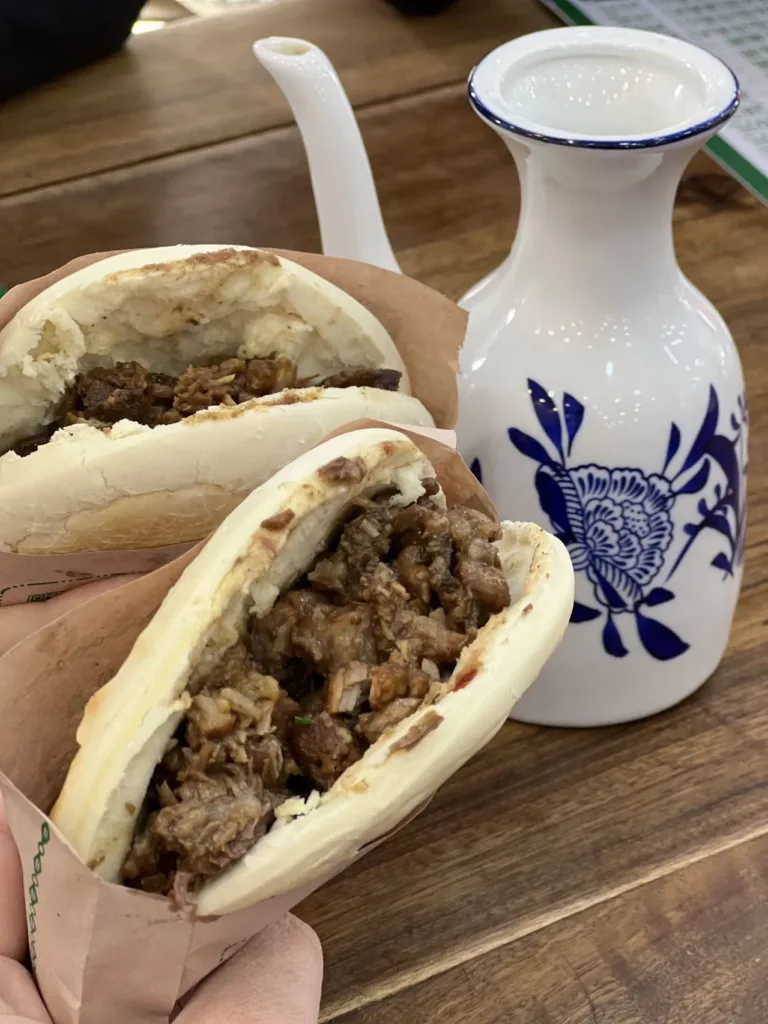
Xi’an is closely associated with roujiamo, a wheat flatbread split around chopped, richly braised meat. The classic pork-filled style is one Shaanxi expression of a food now eaten well beyond the province, with distinct regional and shop-by-shop variations.
Tap any red Chinese text to hear it in Mandarin.
What it is and where it belongs
The name is literal: “meat in a mo” (肉夹馍). Xi’an is one of the dish’s best-known homes, but roujiamo is a Shaanxi and Guanzhong food tradition that has spread across China—not a dish exclusive to today’s Xi’an municipality. The most familiar Xi’an-style version pairs braised pork with baijimo (白吉馍), a round wheat-flour bread.
Meat, bread and the bite
For the classic pork filling, cooks simmer pork—often fatty belly cuts—in a seasoned braising stock called lazhi (腊汁). Ginger, star anise, cassia and Sichuan pepper are among the aromatics used in documented versions; recipes and shop blends vary. The meat cooks until tender, then is chopped or shredded and moistened with a little of its broth. Coriander (cilantro) and onion or scallion may be mixed in, depending on the cook.
Baijimo is made from wheat dough that is only partly leavened. Traditionally it was baked against the wall of a hot oven; modern versions may be cooked in a very hot pan. The result is a compact round bread with a toasted, crisp surface and a softer inside that takes up some meat juices without immediately falling apart. The cook opens it with a cut, packs in the hot meat, and serves it while the bread still has a little crust.
Expect a savory, aromatic filling, with pork fat lending richness and broth keeping the chopped meat moist. Fresh coriander can add a sharp, green note. Chili oil is an optional addition in some preparations, not a required feature of every roujiamo. Hold the bread with both hands and take small bites over a plate or wrapper: a well-filled one can spill juice and meat from its sides.
Variations to recognize
Roujiamo is not one standardized recipe. In Xi’an, a familiar non-pork option is cured, braised beef (腊牛肉), associated with the city’s Muslim food culture; beef and lamb fillings are also sold by some cooks. Ask which meat is used rather than assuming the filling.
Tongguan roujiamo (潼关肉夹馍) is a different bread style: dough is rolled and folded into layers, making the bun notably flaky and crisp rather than the more compact baijimo. Its name comes from Tongguan, which is administered by Weinan, not Xi’an. Tongguan-style buns are also found in Xi’an, so the style can be part of a Xi’an meal without making Tongguan itself a Xi’an location.
Practical tips
Show the name 肉夹馍 ròujiāmó when ordering. Ask whether the filling is pork, beef or lamb; for pork, you can ask whether the shop offers a leaner or fattier mix. Practices differ, so neither meat choice nor a specific fat ratio is guaranteed everywhere.
Where to eat it
You can find Roujiamo all over Xi’an, so there is no need to seek out one particular restaurant. To find one near you, search for “肉夹馍” in Meituan (美团) or Amap (高德地图) and check recent reviews, distance and opening hours.
More dishes to compare
Explore related local specialties and compare their names, preparation notes and ordering guidance.
Stone-baked flatbread 石子馍 →
Thin wheat dough is baked among or against hot pebbles, which leave characteristic depressions on the surface. Seasoning and added fat vary by producer. The bread is dry and crisp, with toasted wheat flavor and uneven crunchy ridges. It is intended for breaking into bites rather than folding around a filling.
Beef or lamb paomo 牛羊肉泡馍 →
Firm flatbread is broken into small pieces and cooked in beef or lamb broth with meat and other additions. In traditional shops, diners may break the bread themselves before the kitchen finishes the bowl. The bread becomes tender but retains bite, absorbing a rich broth; meat and optional starch noodles add further texture.
Sources & reading
Recipes and servings vary between kitchens.
Image credits & notes (1)
- Roujiamo 肉夹馍, a split wheat bun filled with chopped braised meat. Photo: Senqi YePhoto: CC BY-SA 4.0