

Sanyuan Coiled Noodles 三原疙瘩面
Sanyuan Coiled Noodles is featured among the local specialties of Shaanxi.
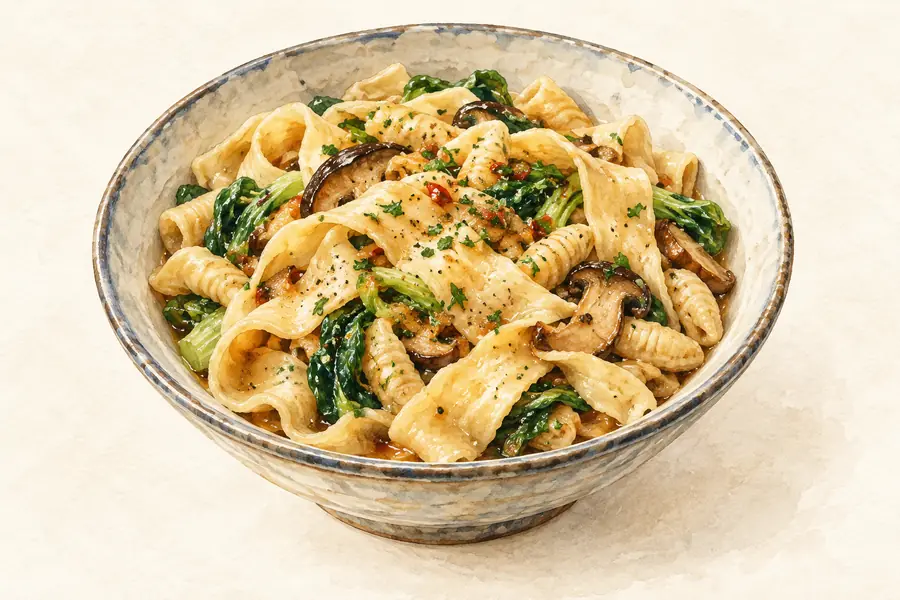
Sanyuan Coiled Noodles (三原疙瘩面) come from Sanyuan County (三原县) in Xianyang (咸阳), on the central Guanzhong Plain (关中平原) of Shaanxi. The noodles are long and fine, and after cooking they are gathered into tight clusters; in Shaanxi dialect, geda (疙瘩) is the word for anything wound into a lump, which gives the dish its Chinese name.
Where it comes from
A story retold by Wu Shumin in Shaanxi Workers' Daily (陕西工人报) credits the dish to Li Shansi (李善思), nicknamed Maogai Li (帽盖李), a young assistant at the Yuelai Guan (悦来馆) noodle shop in Sanyuan town during the Guangxu reign of the Qing dynasty. He is said to have worked it out using the county's plentiful wheat, and the shop's trade picked up. Today the noodles are one of the Lao Huang family (老黄家) snacks of Sanyuan, alongside thousand-layer oil cakes and bubble oil cakes; the Sanyuan County government lists the family's local food culture as a municipal-level intangible heritage item.
How it is made
The dough is kneaded stiff, rolled thin and cut with a large chopping knife into long noodles described as fine as dragon whiskers. They are lifted out as soon as the water boils, cooled in boiled water and formed into clusters for the bowl. The sour soup is made from Shanxi aged vinegar and pork bones, and the topping, saozi (臊子), is chopped pork belly cooked with star anise, fennel, ginger and more than ten seasonings in all.
How it is eaten
A serving comes as four bowls and a dish: sour soup, the pork topping (or a meat-free version), the noodle clusters, an empty bowl, and dried chilli flakes over which hot oil is poured at the table. Diners first sip a few spoonfuls of the soup. Wu describes three ways through one serving: dry-mixed (干拌), a cluster shaken loose in the empty bowl with topping; crossing the bridge (过桥), a cluster dipped in the hot soup, then mixed with topping; and the last cluster eaten in the sour soup. Each cluster has to be lifted and shaken loose, and waiters once sang a rhyming blessing while guests did it.
Sources & reading
Written from the linked sources and fact-checked against them on 2026-09-24. Recipes and servings vary between kitchens.