

Yongshou Angongqiao Giant Fried Dough Twist 永寿安宫桥大麻花
Yongshou Angongqiao Giant Fried Dough Twist is featured among the local specialties of Shaanxi.
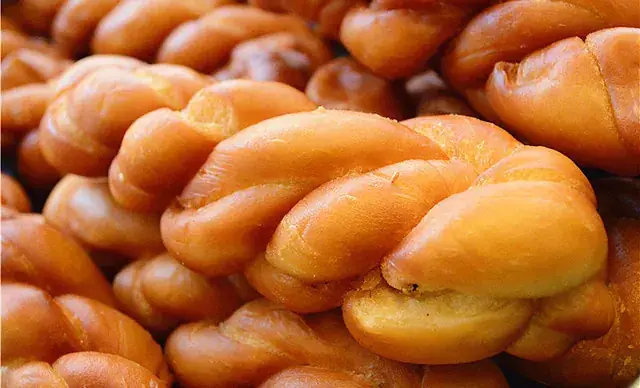
Photo adjustments
EXIF orientation normalized; resized without changing aspect ratio; converted to WebP. No subject edits.
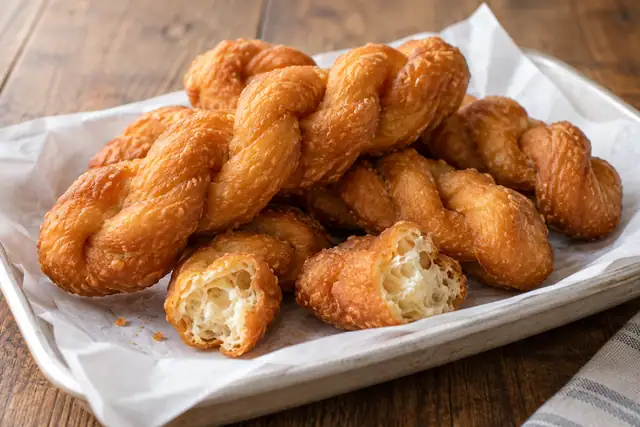
永寿安宫桥大麻花 (Yongshou Angongqiao Giant Fried Dough Twist) is a large hand-twisted fried dough from Yongshou in Xianyang, Shaanxi, where strips of dough are plaited and fried until the coil is crisp and golden.
Reading the long name
The name works from the back: 麻花 is the twisted fried dough most Chinese bakeries sell, 大 says this is the large version, 永寿 is the county in Xianyang, and 安宫桥 adds a local landmark to the label. Names like this usually grew out of one shop or one stretch of road and then became a way of describing a style once several bakers made it. Fried twists are street and shop food, eaten with tea, congee or soy milk.
Twisting by hand, frying by eye
The dough is mixed, rested and cut into strips. The maker takes several strips, twists them together and stretches the plait as it is laid down, which creates the open, rope-like structure; a tight twist gives a denser bite and a loose one gives more crisp edges. The twists are fried at moderate heat so the inside cooks before the outside darkens, then drained and often stood upright so the trapped oil runs out.
Crisp now, soft later
Fresh from the fryer the twist shatters pleasantly and the inner strands stay tender. Within a few hours it begins to soften and the oil becomes more noticeable, which is why freshness matters more here than with a biscuit or a cake. The flavour is either plainly savoury with a little salt or lightly sweet, and sesame adds a roasted edge where it is used. Choose a twist that feels light for its size and sounds hollow when tapped.
What to check before buying
Expect wheat flour, water, oil, salt or sugar, and often sesame; some recipes add a leavening agent, a little yeast or an egg. Because the dough is fried, the oil quality affects the result as much as the recipe does, and reused oil gives a flatter taste and a greasier feel. Ask 甜的还是咸的 to establish whether the batch is sweet or savoury, and 有芝麻吗 if sesame is a problem. Anyone avoiding gluten should skip the dish.
Buying 大麻花
Ask for 麻花, and specify 大麻花 if there is a smaller twist on the same tray. Say 一个 or 两个 to set the number of pieces, and 多少钱一个 if the price is per piece rather than by weight. Asking 刚炸的吗 tells you whether the tray is fresh or has stood since the morning. For a bag to travel with, ask whether the shop packs the twist airtight and how long it keeps.
Eating and storing it
Break the twist into short lengths rather than biting through the whole coil, which keeps the crumbs manageable and lets you share it. It goes well with plain tea, warm soy milk or a thin rice congee, since those lighten the fried weight; eaten with a heavy braise it can feel like too much starch at once. Stored airtight it keeps for a day or two, and a low oven revives some crispness without restoring the fresh texture.
More dishes to compare
Explore related local specialties and compare their names, preparation notes and ordering guidance.
Braised Three Delicacies 烧三鲜 →
烧三鲜 is a braised Shaanxi dish that gathers three main ingredients in one sauce, and it shares little with a fried twist except the province and the kind of plain shopfront where both are sold. The pairing is worth thinking about when ordering: 大麻花 is a starchy snack that works best beside something light and wet, while 烧三鲜 is the rich, saucy centre of a meal. A twist as a starter and a braise as a main is a sensible division.
Questions before you order
Is 大麻花 sweet or salty?
Both styles exist. Ask 甜的还是咸的 at the counter, since two batches on the same tray can differ and the look of the twist will not tell you.
How long does it stay crisp?
Only a few hours. A fried twist softens quickly and the oil becomes more noticeable, so buy it for the same day rather than as a long-keeping souvenir.
Sources & reading
The supplied food list supports this name and regional association. The culinary terms below are explained as menu vocabulary; a local recipe, origin story and venue availability have not been independently verified.