

Sweet Almond Drink 杏仁茶
Xingren cha (杏仁茶), often translated as Sweet Almond Drink, is a thick, sweet Chengde drink made from apricot kernels rather than the snack almond. Local Chengde descriptions say the kernels are treated to remove bitterness before they are simmered into a fragrant drink; an osmanthus version has been documented in the Mountain Resort’s afternoon-tea setting.
Tap any red Chinese text to hear it in Mandarin.
What is in the cup?
The Chinese name to show is 杏仁茶 (xingren cha). The English word “almond” can mislead: in this context, xingren means an apricot kernel, not the nut sold as a snack almond. A food explainer distinguishes the two and notes that sweet and bitter apricot-kernel varieties are handled differently.
A local Chengde scenic-area page gives the broad method rather than a single fixed recipe: locally grown kernels are treated to remove their bitterness, then simmered into a thick, sweet drink with a pronounced almond-like aroma. Kitchens can change the sweetness, thickness and finishing fragrance, so look for a pourable drink rather than assuming every bowl follows one formula.
Why it belongs to Chengde
The connection is both regional and culinary. A Chengde municipal-government report on the 17th Chengde International Tourism and Culture Festival listed Chengde almond tea at the Shuangqiao District display, alongside other local foods. A 2023 report from International Online described an osmanthus almond tea served at Chunhaoxuan, a courtyard inside the Chengde Mountain Resort, as part of an afternoon-tea offering shaped around the resort’s culture.
That setting does not make every modern cup a palace recipe. The broader ingredient link is practical: a 2025 report published through the National Forestry and Grassland Administration described Chengde’s large mountain-apricot sector and its kernel-processing industry. It supports the region’s raw-material association, not one universal recipe or a guaranteed brand.
Practical tips
Use or show the Chinese name 杏仁茶 Xìngrénchá when asking about the day’s drink.
Ingredient and dietary note
Apricot kernels are not interchangeable with raw snack almonds. The food explainer notes that bitter kernels require proper washing and heating treatment, and an English culinary reference likewise identifies Chinese “almond tea” as an apricot-kernel drink whose thickness can range from a drinkable tea to a thicker dessert soup. If you have an allergy or need to avoid a particular ingredient, ask the vendor what is in that batch rather than relying on the English name or the pale appearance.
Where to eat it
You can find Xingren cha all over Hebei, so there is no need to seek out one particular restaurant. To find one near you, search for “杏仁茶” in Meituan (美团) or Amap (高德地图) and check recent reviews, distance and opening hours.
Sources & reading
Image credits & notes (1)
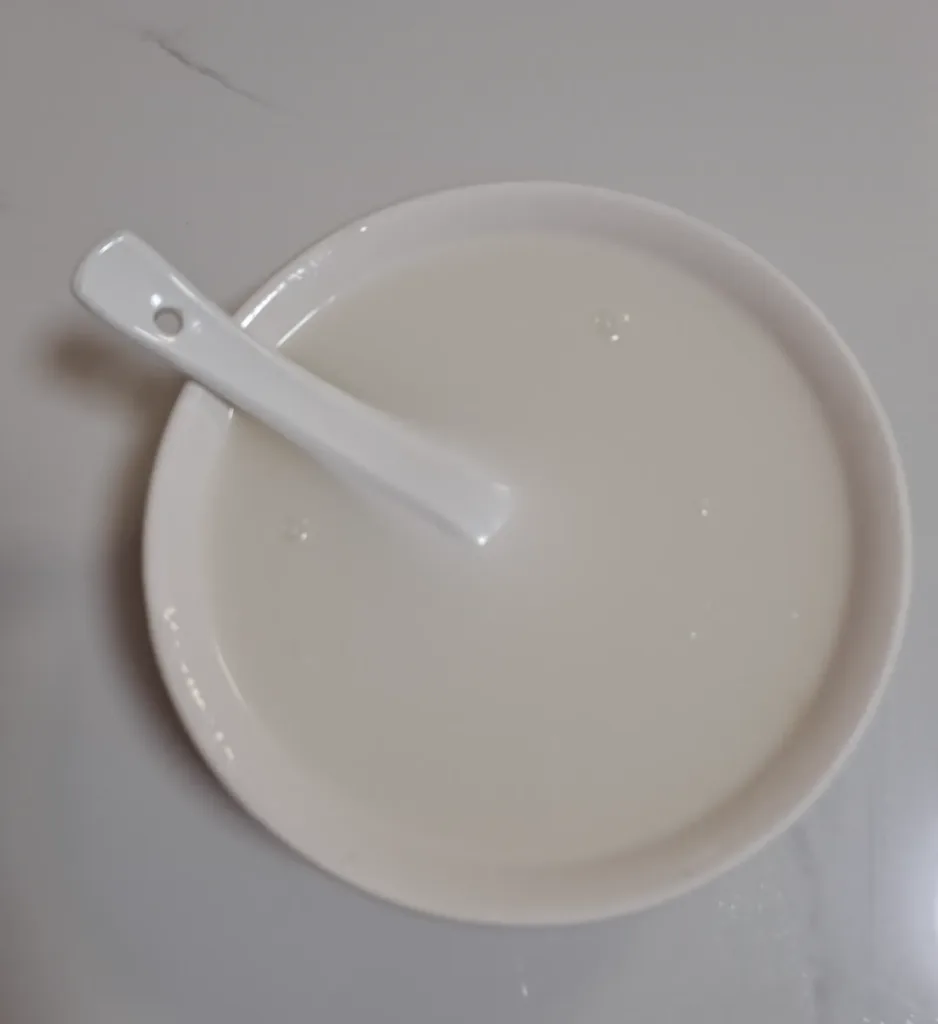
- A serving of Chengde xingren cha (apricot-kernel drink) in a white bowl with a ceramic spoon. Photo: H2v5o68zPhoto: CC0 1.0