

Peppery Braised Lamb Trotters 胡辣羊蹄
Peppery Braised Lamb Trotters is featured among the local specialties of Gansu.
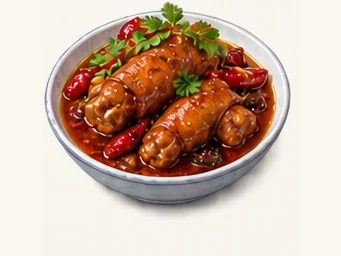
Peppery Braised Lamb Trotters (胡辣羊蹄) is a north-west Chinese trotter braise — lamb or mutton feet simmered in spiced liquor until the skin is soft and clinging, then eaten by hand — and a standard night-market dish in Gansu, Ningxia and Xinjiang.
How it is cooked
The work starts with the trotter itself. The Yinchuan-published feature describing the method sets out the sequence: singe the fresh trotter over a strong flame until the skin blisters and blackens, soak it in warm water, scrape it clean, cut away the hoof, then blanch it in cold water with scallion, ginger and a strong spirit. The chef quoted says the harder you singe and the cleaner you scrape, the less smell remains.
Then comes the braise: oil heated with doubanjiang until it turns red, aromatics, stock, and a cloth bag of a dozen or more spices — Sichuan pepper, pepper, dried chilli, cardamom, star anise and cassia among them — with soy sauces, rock sugar and a piece of dried tangerine peel. The trotters simmer gently for at least two and a half hours, and the sauce is finally reduced so it clings. The chef rejects the pressure cooker because the skin can fall away while the tendon stays hard.
Flavour and texture
The reference entry sums the dish up as 味辣筋道,汤汁香浓 — spicy, springy, richly sauced — and notes the name comes from that heat. The feature adds 糯 and 缠: a sticky softness and a clinging quality, because the sauce is reduced around collagen rather than poured over it.
In the mouth that means skin that comes away easily, a tendon with some chew left, and heat that builds rather than stinging at the first bite: 辣而不燥,麻而不木 in the feature's words. It is a rich, messy dish; napkins are part of the experience.
Local roots
Trotters were once 下水, the parts of an animal that were easy to overlook, and the source describes north-western cooks, especially in Xinjiang and Ningxia, turning them into a night-market staple through patient singeing, cleaning and long braising. Ningxia's place on the old Silk Road is given as part of why its cooks specialised in beef and mutton offal.
In Gansu the dish appears on street-food and skewer menus rather than banquet lists, and 嘉峪关 is the city recorded for it; the sources read here do not establish a Gansu origin. Treat it as a north-west dish you can meet in Gansu and ask the shop about its own version.
Ingredients and dietary needs
The main ingredient is lamb or mutton trotters. The braise includes doubanjiang, soy sauce, rock sugar, dried tangerine peel and a long spice list, so expect salt, chilli and a little sweetness; the feature names Sichuan pepper from 汉源 and white pepper from 海南 in the version it documents. Ask 辣不辣, 有没有不辣的, 放不放糖 and 是羊蹄还是牛蹄, and say so if you avoid soy, wheat or MSG. This is not a dish for anyone avoiding offal.
How to order 胡辣羊蹄
Point at the pot and ask 多少钱一个 rather than ordering by weight — trotters sell singly. Say 一个 or 两个, and ask 多浇点汤 for a wetter version or 干一点 for the reduced one.
Other phrases that help: 热的吗, 能不能帮我掰开, 有手套吗, 湿巾有吗 and 可以打包吗. Since trotters sell out on busy nights, ask 还有吗 before settling in, and ask whether 宽粉 or 馕 can be added to the same sauce.
How to eat it and plan a meal
Eat it with your hands: grip the tip, pull the trotter apart, suck the marrow, then work through the tendon — the feature's instruction is to avoid chopsticks entirely. As a meal, one or two trotters per person with skewers, a cold vegetable and 馕 or 宽粉 is the usual night-market order, with beer in summer. Because the braise is rich and salty, add a plain or vinegary side to reset the palate, and finish with tea.
More dishes to compare
Explore related local specialties and compare their names, preparation notes and ordering guidance.
Dongxiang hand-served lamb 东乡羊肉手抓 →
东乡羊肉手抓 in Gansu is boiled lamb served in large bone-in pieces and eaten with the fingers, with salt or a light dip doing most of the work. 胡辣羊蹄 takes the least substantial part of the same animal and gives it the longest treatment: singeing, scraping, blanching, then two and a half hours with a spice bag, doubanjiang, soy and rock sugar. Order both where a kitchen serves them and the lesson is the contrast — one dish is judged on the meat, the other on how far the spicing has penetrated the collagen.
Questions before you order
Is 胡辣羊蹄 a Gansu dish?
The sources read here document it in Xinjiang and Ningxia as a north-west braise, and 嘉峪关 is the destination recorded for it. Ask the shop about its own recipe.
Why is it soft and sticky?
Trotters are collagen-rich and the braise runs at least two and a half hours before the sauce is reduced, so the skin softens and the liquor thickens around it.

Sources & reading
The supplied food list supports this name and regional association. The culinary terms below are explained as menu vocabulary; a local recipe, origin story and venue availability have not been independently verified.