

Tokxun mixed noodles 托克逊拌面
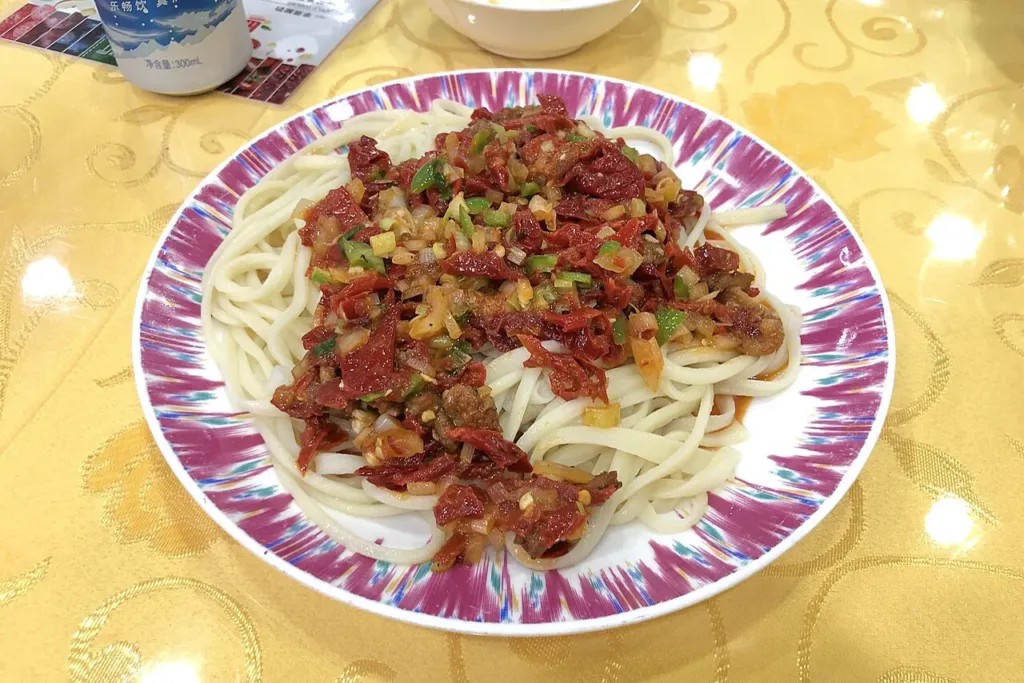
Hand-pulled wheat noodles from the Tokxun tradition are served with a separately stir-fried meat-and-vegetable topping, combining springy strands with a glossy, savoury sauce.
Tap any red Chinese text to hear it in Mandarin.
Why this dish belongs to Tokxun
Tokxun County sits on the western edge of the Turpan Basin. Local accounts connect its mixed noodles with the road-stop economy along National Highway 312: travellers crossing the dry basin wanted a filling meal that could be cooked quickly and served generously. That background matters more than the promotional nickname sometimes attached to the dish. It is a practical regional noodle tradition, not a single restaurant or a fixed national ranking.
A 2024 China Tourism News report hosted by the Ministry of Culture and Tourism describes noodle-making demonstrations and tasting events in Tokxun County, and quotes local diners describing the combination as chewy noodles with a savoury poured-over topping. That is a useful clue to the dish’s place in everyday local food culture, but it does not turn a festival menu into a year-round guarantee.
What arrives in the bowl
The basic structure is two-part. Fresh dough is kneaded, rested and pulled into long wheat noodles; a separate pan of meat and vegetables is stir-fried, then spooned over the noodles. A local description summarises the craft as kneading, coiling, pulling and stir-frying. At the table, mix the topping through the noodles so the oil and sauce reach the strands.
Lamb is a common choice, while local descriptions also mention beef and a changing list of vegetables. Peppers, celery, garlic shoots, aubergine, cowpeas, bok choy and chives are among the examples given in regional food coverage. An guo-you-rou version, in which the meat is the main feature of the topping, is also commonly highlighted. These are useful patterns, not a compulsory recipe: the available meat, vegetables, chilli and amount of sauce can change from one kitchen to another.
Texture, flavour and how to eat it
The noodles should give a springy, substantial wheat bite. The topping is the counterpoint: hot, savoury and often oil-rich, with vegetables adding moisture and a different texture. The local account describes the plate as generous and strongly seasoned; the Ministry report similarly records the appeal of chewy noodles with a savoury topping.
Ask what topping is available that day before ordering. If you want more noodles, ask whether 加面 (jia mian, extra noodles) is available and whether it costs extra. If meat, stock or cooking oil matters to you, ask the staff directly what is used. The appearance of a noodle dish cannot establish that it is halal, vegetarian or free of an allergen.
Finding it without choosing a shop for you
Keep the Chinese name 托克逊拌面 Tuō Kè Xùn Bàn Miàn on your phone. In Turpan or Tokxun, search that exact name in Meituan (美团) or Amap/Gaode Maps (高德地图). Use the results only as a shortlist: check the current menu, recent reviews, opening status and whether the topping is available that day. This guide does not endorse a brand, ranking or individual restaurant, and the dish has no single official address.
Transport and practical limits
This is a dish rather than a venue, so it has no entrance, ticket, reservation desk, metro station or dish-specific bus stop. If you make a dedicated meal trip to 托克逊县 Tuō Kè Xùn Xiàn, search the county name—not only the dish name—in Amap/Gaode to compare live intercity options from your actual base, or use a licensed taxi or ride-hailing service to a venue you have checked. Confirm the return plan before leaving. The G312 reference above explains the dish’s roadside history; it is not a current timetable or a promise that a particular restaurant remains beside the highway.
More dishes to compare
Explore related local specialties and compare their names, preparation notes and ordering guidance.
Mushroom noodle-piece soup 野蘑菇汤饭 →
Small pieces of dough are cooked in a soup with mushrooms and vegetables, with meat or other additions depending on the restaurant. The dough thickens the broth slightly as it cooks. Soft noodle pieces contrast with earthy, springy mushrooms and tender vegetables, creating a full meal in one bowl.
Xinjiang diced stir-fried noodles 新疆丁丁炒面 →
Noodle dough is formed into strands or strips, cut into small pieces and cooked, then tossed with the chopped toppings. Matching the size of the noodles and vegetables helps distribute flavour through the plate. Expect a chewy wheat bite with juicy tomato and savoury meat. It is generally less slippery than long laghman strands, while the vegetables add moisture and contrasting texture.
Sources & reading
Recipes and servings vary between kitchens.
Image credits & notes (1)
- Regional Xinjiang-style mixed noodles with a sautéed lamb-and-chilli topping, photographed at Bayingolin Jinsite in Beijing on 8 April 2021; illustrative only and not photographed in Tokxun. Photo: N509FZPhoto: CC BY-SA 4.0