

Iceberg Yogurt 冰山酸奶
Iceberg Yogurt is featured among the local specialties of Xinjiang.
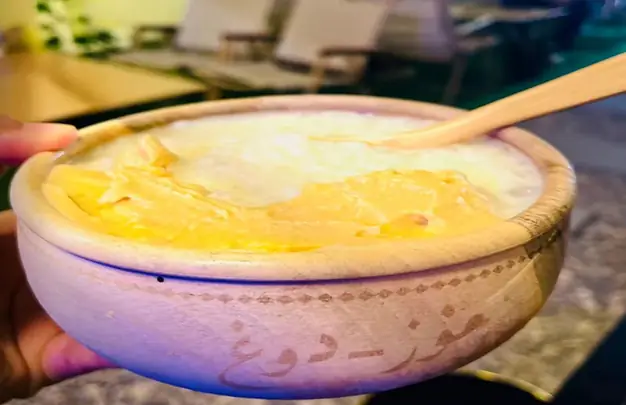
Photo adjustments
EXIF orientation normalized; resized without changing aspect ratio; converted to WebP. No subject edits.
Iceberg Yogurt (冰山酸奶) is a Xinjiang yoghurt sold under a picture-building name, and the two words to read carefully are 酸奶, which means soured milk, and 冰山.
What decides the texture
Yoghurt is milk fermented with a culture, and the result is settled by three things: how much water the milk retains, how long it ferments, and whether the curd is strained afterwards. A wet set gives a pourable yoghurt, while a strained one is thicker, richer-tasting and keeps longer. Because soured milk is acidic, it behaves in cooking like a mild acid and will split if it is boiled hard once the fat is in.
Tart, clean and not automatically sweet
Expect a tart, clean dairy flavour with more acidity than supermarket yoghurt and little or no added sugar unless the shop says otherwise. The texture runs from drinkable to spoonable, and a thicker version tastes richer because more water has been removed rather than because cream was added. It is normally eaten with bread, fruit or a heavy meat dish instead of as a dessert.
A product word and an image word
Soured milk has been a staple of the pastoral households of northern Xinjiang for as long as they have kept animals, and it still appears on tables beside roast meat and bread. The 冰山 in front, by contrast, is a marketing name rather than a protected place name in the way a county name is. One word describes the food; the other sells a picture of where it comes from.
Ingredients and what to ask
Milk and a culture are the essentials, with sugar, fruit, honey or nuts as additions, and some shops thicken the yoghurt by straining rather than by adding anything. Because the milk may come from cows, sheep or goats, the flavour moves with the herd. Ask 酸的还是甜的 (sour or sweet), 加糖了吗 (is sugar added) and 是稀的还是稠的 (thin or thick).
How to buy it
Yoghurt is sold by the bowl, the bottle or the tub, so ask 怎么卖 (how it is sold) and 多少钱一份 (how much a serving is). Ask whether sugar is already in it, since some shops sweeten by default, and whether it needs keeping cool. A large tub costs less per serving than single cups, but it spoils quickly once it has been opened.
Serving and cooking with it
Eat it cold with bread or fruit, or use it to cut the fat of a roast meat plate, which is how it usually appears on a Xinjiang table. If you are cooking with it, stir it in off the heat or at the end of a braise, because boiling will separate it. Keep it covered and cold, and use a clean spoon, since a live culture picks up flavours from whatever it touches.
More dishes to compare
Explore related local specialties and compare their names, preparation notes and ordering guidance.
Xinjiang Yogurt 酸奶 →
Xinjiang Yogurt (酸奶) is the plain name for soured milk, with nothing added to the label and nothing promised about where it comes from. Putting the two side by side is a useful exercise on a menu, because it shows how much of a name can be image: 酸奶 tells you what is in the bowl, while 冰山 tells you what the seller would like you to picture.
Questions before you order
Is 酸奶 always unsweetened?
No. Some shops sell it sweetened by default, so ask 加糖了吗 and 酸的还是甜的 before assuming it will be plain.
Can I cook with it?
Yes, but add it off the heat or at the very end, because boiling soured milk after the fat is in will make it separate.
Sources & reading
The supplied food list supports this name and regional association. The culinary terms below are explained as menu vocabulary; a local recipe, origin story and venue availability have not been independently verified.