

Pork trotter and snow-bean soup 雪豆蹄花
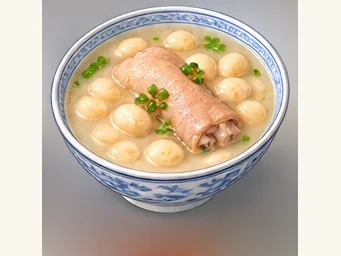
A slow-simmered Chengdu bowl pairs tender pork trotter with soft white beans in a pale, savory broth. Taste the soup first, then season individual bites with the restaurant’s dipping sauce; recipes and accompaniments vary by kitchen.
Tap any red Chinese text to hear it in Mandarin.
What to expect
雪豆蹄花 (xuedou tihua) is pork trotter cooked with beans; “snow bean” is the dish name, while published recipes commonly describe the beans as white beans or 芸豆. It is associated with Chengdu’s everyday restaurant food, but the evidence here does not establish a single inventor, origin story, or one city-wide canonical recipe. A 2024 recipe feature describes pork trotter and beans simmered together, with the beans soaked beforehand and the trotters blanched before the longer cook. That is one documented home recipe, not a rule followed by every restaurant.
A well-cooked bowl is pale to milky rather than chili-red. Expect savory pork aroma, a soft, gelatinous skin and tender meat around the bones, with beans that break down to a floury, almost creamy texture. Small beads of rendered fat may sit on the broth. The same recipe finishes with salt, white pepper and scallions, and offers a separate chili dipping sauce; in restaurants, the seasoning and sauce are house-specific. Try a sip of broth before dipping the meat. Use the sauce a little at a time, and watch for small bones.
There is no single required accompaniment or flavor profile. Local restaurant coverage has recorded versions and side options beyond the bean soup, including pickled-vegetable and yam variations at one shop; treat these as individual-menu choices, not universal Chengdu standards.
Practical tips
Show or say 雪豆蹄花 xuědòu tíhuā. Some menus use 老妈蹄花 (laoma tihua) for the restaurant’s pork-trotter soup, but names and recipes differ. Ask whether the serving includes beans and whether the dipping sauce is spicy; menus and daily availability vary.
Where to eat it
You can find Pork trotter and snow-bean soup all over Chengdu, so there is no need to seek out one particular restaurant. To find one near you, search for “雪豆蹄花” in Meituan (美团) or Amap (高德地图) and check recent reviews, distance and opening hours.
More dishes to compare
Explore related local specialties and compare their names, preparation notes and ordering guidance.
Twice-cooked pork 回锅肉 →
Pork is first simmered, cooled enough to slice and returned to the wok with chili-bean paste and aromatics. Garlic shoots or leeks are common partners, though cuts and vegetables vary. The slices develop browned edges while retaining soft fat, with a savory fermented-bean aroma and gentle-to-strong heat.
Sichuan sliced pig ears in chilli oil 红油耳片 →
The ears are cleaned and cooked until the skin is tender, then cooled and sliced thinly. Dressing is added for serving so that the slices remain distinct and the contrast between skin and cartilage is preserved. Expect soft outer tissue around crisp cartilage, with chilli aroma and savoury seasoning. The chewy-crunchy texture is central; it should not be described as tender boneless pork for readers who have never tried it.
Sources & reading
Recipes and servings vary between kitchens.