

Sichuan sliced pig ears in chilli oil 红油耳片
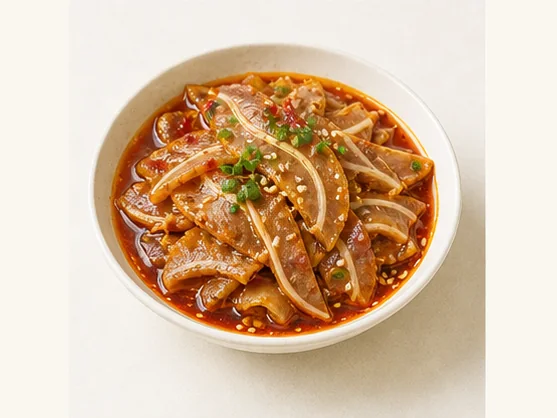
A Sichuan-style cold dish of thinly sliced cooked pig ear tossed with red chilli oil and aromatics. Its appeal is the contrast between yielding skin and springy, crisp cartilage, with a savoury, garlicky, chilli-led dressing.
What it is and how it is made
Hongyou erpian (红油耳片), also called red-oil pig-ear salad, is a cold Sichuan-style dish rather than a single Chengdu restaurant specialty. Pig ears are cleaned and cooked, then cooled so they can be cut into thin slices or strips that show the pale cartilage against darker skin and meat. One Sichuan-style recipe simmers the ears with ginger, scallion and Sichuan peppercorn; other home and restaurant preparations braise them more deeply with soy and warming spices. These are kitchen variations, not a single citywide formula.
The dressing centres on Sichuan red chilli oil. Garlic, soy sauce and Sichuan pepper are common partners; recipes may add a little sugar, black vinegar, sesame, chicken stock, scallion or cilantro. A home recipe dresses braised, chilled slices with chilli oil, soy, garlic, Sichuan-pepper oil, sugar, sesame oil, scallion and cilantro, while another Sichuan-style recipe uses a lighter ginger-scallion-peppercorn cooking liquid and a dressing with vinegar and sesame seeds. The balance and exact additions vary by cook and shop.
What to expect at the table
The chilli oil gives the dish its glossy red coating and fragrant, warming heat. Garlic and soy make it savoury; Sichuan pepper can add a citrusy, tingling edge, while a little sugar or vinegar may round or sharpen the dressing. The ear itself is mild. Its defining feature is texture: soft, slightly gelatinous skin and meat surround a firmer cartilage stripe that gives each thin slice a springy, crunchy-chewy bite.
It is usually served cool as a small dish at the start of a meal or alongside other dishes. Order 红油耳片 and, if you prefer, ask whether the sauce can be served separately or made less spicy; spice level and garnish are venue-dependent. Some versions include cilantro, scallion, sesame or crushed peanuts, so ask about those ingredients if you have an allergy. This is a practical precaution, not a claim that every recipe contains them.
Where to eat it
You can find Sichuan sliced pig ears in chilli oil all over Chengdu, so there is no need to seek out one particular restaurant. To find one near you, search for “红油耳片” in Meituan (美团) or Amap (高德地图) and check recent reviews, distance and opening hours.
More dishes to compare
Explore related local specialties and compare their names, preparation notes and ordering guidance.
Lizhuang paper-thin pork 李庄白肉 →
Pork is cooked until tender, then cut into unusually broad, very thin slices. A garlic-rich sauce is served separately or alongside so diners can control the coating. The slices combine tender lean meat and soft fat, with a delicate texture that contrasts with the sharp garlic and savory dip.
Twice-cooked pork 回锅肉 →
Pork is first simmered, cooled enough to slice and returned to the wok with chili-bean paste and aromatics. Garlic shoots or leeks are common partners, though cuts and vegetables vary. The slices develop browned edges while retaining soft fat, with a savory fermented-bean aroma and gentle-to-strong heat.
Sources & reading
Recipes and servings vary between kitchens.