

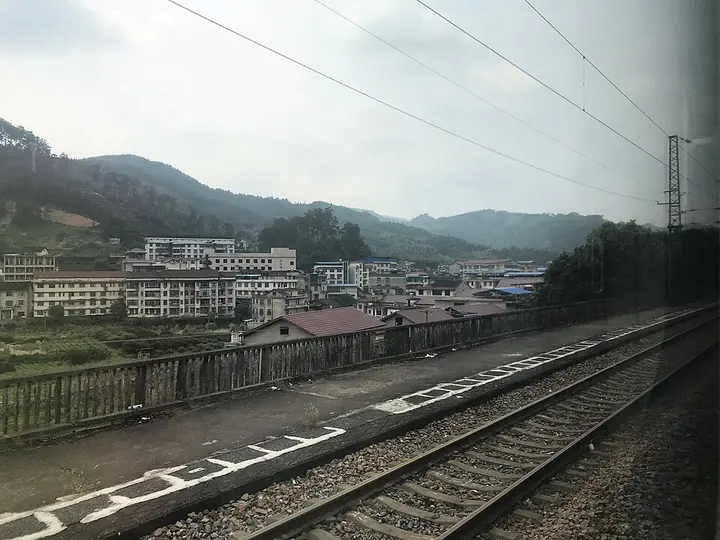
Photo adjustments
Full frame retained; proportionally resized and converted to WebP. No retouching or changes to the photographed subject. Card displays may crop the view.
Explore the region
About Anhua County
The tea-horse paths around Gaocheng show the overland side of a trade that also depended on boats, while living tea production gives the history a present-day context. This is a county-wide theme rather than one enclosed scenic stop. Choose a village-and-tea visit with a confirmed host, distinguishing a public shop tasting from access to a working factory or a scheduled craft demonstration.
The Anhua area was anciently known as Meishan (梅山), the heartland of a distinct Meishan culture. Its indigenous peoples fought the state of Chu in the Spring and Autumn period before coming under Chu control in the Warring States period, and later belonged to Changsha Commandery under the Qin and to Yiyang County from the Western Han to the mid-Northern Song. Anhua County was established in 1072, taking a name meaning 'return to peace and virtue' (归安德化).
Anhua lies in the northern part of the Xuefeng Mountains, in the middle reaches of the Zi River (资水), close to the geographic centre of Hunan. It borders Taojiang and Ningxiang to the east, Lianyuan and Xinhua to the south, Xupu and Yuanling to the west, and Taoyuan and Changde's Dingcheng District to the north, covering 4,950.25 square kilometres, the third-largest county in Hunan. Mountains cover 82 percent of the county, and the Zi River's Zhexi (柘溪) section holds Hunan's first large hydropower station, forming the Zhexi Reservoir.
Anhua has historically influential figures including the Qing-dynasty viceroy Tao Shu (陶澍) and the calligrapher Huang Ziyuan (黄自元). It remains a core area of Meishan culture (梅山文化) and is known as a hometown of badminton, having produced several badminton players and world champions.
What to look for
- The tea-horse-route landscape around Gaocheng Village.
- Anhua dark tea and the connection between mountain production and trade.
Location & getting there
Getting to Anhua County
For the tea-horse-route area, arrange transport to Gaocheng Village in Jiangnan Town, Anhua. Dongping is the county seat and a separate base; do not assume a county-centre arrival places you beside the old trail.
Combine your visit
A suggested order for exploring this place and its immediate setting.
-
Gaocheng Village高城村
Begin with the settlement shaped by tea transport.
-
Open tea-horse-path section茶马古道开放路段
Walk a permitted section and look for surviving route features.
-
Confirmed local tea visit预约茶文化体验点
Finish with a hosted tasting or production explanation where available.
Check access to the individual stops. A suggested sequence does not imply a combined ticket or guaranteed transfer.
Find Anhua County overview
安化 · 益阳市
The pin marks the area, not the entrance.
More places nearby
Approximate straight-line distances between map pins, not travel distances.
Ziquejie Rice Terraces 紫鹊界梯田
78 km awayZiquejie’s rice terraces follow steep slopes around Shuiche, with water moving through a long-established gravity-fed irrigation landscape. The fields are working farmland, so their appearance changes between flooded planting…
View guide →Bailu Temple 白鹿寺
101 km awayBailu Temple rises on White Deer Hill beside the Zi River in Yiyang. The name is linked to a legend of a white deer listening to Buddhist recitation, while the temple’s evening bell became a remembered city soundscape. The…
View guide →Yiyang Museum 益阳市博物馆
102 km awayYiyang Museum’s current building opened in the civic cultural centre in 2023. The regional-history exhibition is complemented by three distinctive subjects: excavated documents from the old city, Ho Feng-Shan’s visa work that…
View guide →Sources & visit information
The sources below support the place-specific description and arrival information. Suggested combinations are editorial planning ideas; confirm current opening, entry arrangements and transport services for your date.
- Anhua County ↗
- Yiyang government — Gaocheng and living tea heritage ↗
- Yiyang government — river and packhorse tea-trade routes ↗
- Chinese Wikipedia: 安化县 (revision 86325080, 2025-03-04) ↗
Visitor information adapted and edited from Wikipedia contributors: Anhua County · CC BY-SA 4.0. Source revision 1371410836.
Background paragraphs translated and condensed from Wikipedia contributors, "安化县", Chinese Wikipedia · CC BY-SA 4.0. Source revision 86325080.