

Explore the region
Why this museum is worth the stop
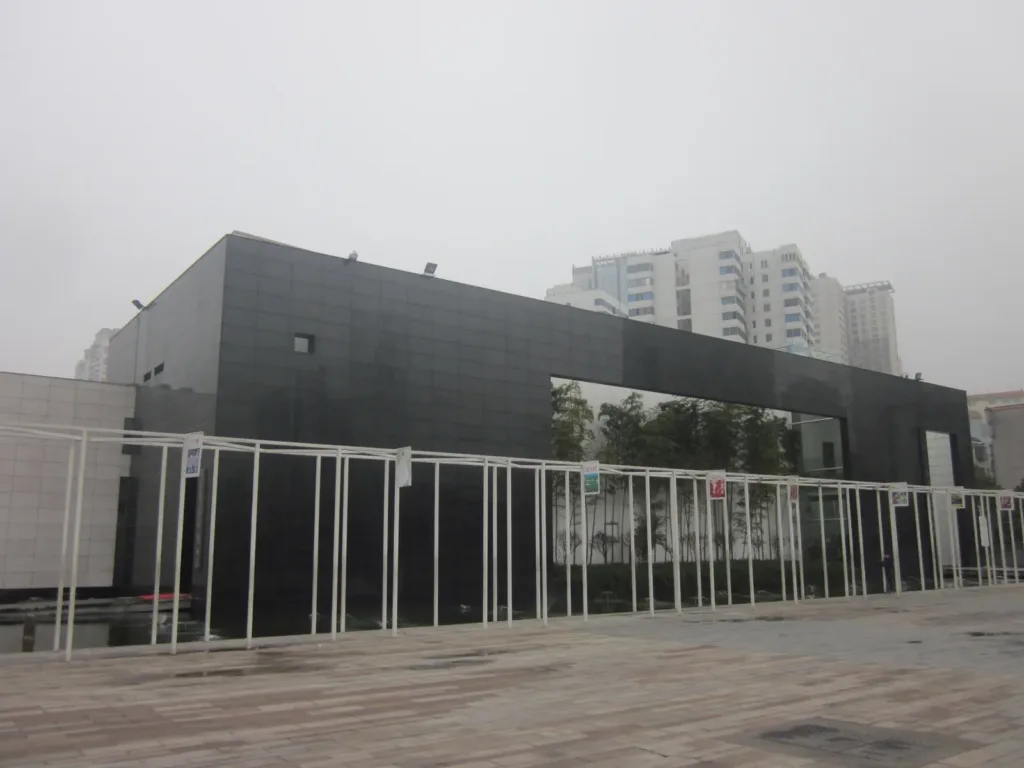
Changsha Bamboo Slips Museum is not simply a room of delicate strips covered in calligraphy. It is a focused place to see how writing worked before paper became dominant. The museum is at No. 92 Baisha Road in Tianxin District, in a grey-and-white building organized around a courtyard; its official introduction describes a 14,500-square-metre main building with exhibition halls, collections, research and public-education spaces.
Start on the first floor with The Road of Civilization — Changsha Bamboo Slips Museum Basic Exhibition. Its four sections move from the museum’s own Three Kingdoms Wu slips to the wider history of Chinese slips, writing materials used around the world, and the development of Chinese slip calligraphy. The Wu-slip section is especially useful because it foregrounds practical subjects—taxation, registers, judicial records, household registration, official posts and dates—rather than treating the objects as decorative curiosities. It also uses reconstructions and digital interpretation to explain how slips were made, found and studied.
Look for the large wooden Jiahe limin tianjia bie tablets, usually translated as Jiahe household land-tax contracts. The museum’s explanation describes examples about 50 centimetres long that record a tenant’s fields, harvest or drought damage, tax rice, cloth and cash, payment dates and the officials who handled them. A tablet was made in matching halves: the same mark was written across the top before the board was split, so the two parts could later be checked against each other. This is a concrete way to understand why a written agreement could be called a “contract,” not an invitation to imagine that every slip was a literary text.
Continue upstairs if the exhibition is open. Xiang River Flowing — Excavated Slips from Hunan places the Changsha material in a broader regional sequence, following discoveries associated with the Xiang, Zi, Yuan and Li river systems and periods from the Warring States era through the Wei and Jin. The museum describes the exhibition as containing 366 sets of slips and related objects, including楚, Qin, Han, Three Kingdoms Wu and Jin material. It is a different purpose from the first-floor display: here the point is the archaeological and historical landscape of Hunan, not only the Zoumalou cache.
Practical visit
The museum’s service page describes public admission as free. Its regular schedule is Wednesday to the following Monday, 09:00–17:00, with admission ending at 16:30; it lists Tuesday, Lunar New Year’s Eve, and the first two days of the lunar New Year as closure days. Holiday notices can alter that pattern, so check the museum’s latest notice before setting out. Security screening applies, and the museum asks visitors not to use flash photography in the galleries.
For groups of 10 or more, the official booking page specifies online team booking 1–3 days before the visit. It says that the third day’s quota is released daily at 17:00, that team bookings are not accepted by telephone or at the door, and that each booked member—including the group leader—must bring the original identity document used in the booking. The page does not state a current passport or individual-visitor procedure in English. International visitors travelling independently should therefore confirm the applicable booking and identification rules through the official site or by calling 0731-85425680 or 0731-85425676 rather than assuming that the team process applies to them.
The address to give a driver is 长沙简牍博物馆,长沙市天心区白沙路92号. The Hunan government’s heritage profile identifies Changsha Metro Line 1, Nanmenkou Station (南门口站) as a rail approach and describes the walk from the station as about 700 metres; it does not establish an exit number, so do not guess one. The museum’s own service page lists buses 122, 130, 167, 171, 311, 402, 406, 803 and 908 for Changsha Bamboo Slips Museum stop, buses 2, 143, 145, 358, 803, 804 and 901 for Tianxin Pavilion West Gate stop (天心阁西门站), and bus 139 for Shiziling / Baisha Road Antique City stop (识字岭〔白沙路古玩城〕站). Verify the live route and the entrance on the day. For the return, reverse the same Line 1 or bus journey from the named station or stop, leaving time before the 16:30 admission cut-off.
Tianxin Pavilion is a sensible separate stop in the same central area, but it is not another gallery of this museum. Check its own opening and admission arrangements if you combine the two; the museum’s own booking or closing notice does not guarantee entry to the pavilion.
Combine your visit
A suggested order for exploring this place and its immediate setting.
-
Excavation introduction走马楼简牍发现背景
Begin with the well deposits and document preservation.
-
Wu-period records走马楼吴简
Read what the records reveal about people and administration.
-
Contract-tablet interpretation嘉禾吏民田家莂
Look for the explanation of divided agreements before the onward city walk.
Check access to the individual stops. A suggested sequence does not imply a combined ticket or guaranteed transfer.
Find Changsha Bamboo Slips Museum
长沙简牍博物馆 · 长沙市
The pin marks the area, not the entrance.
More places nearby
Approximate straight-line distances between map pins, not travel distances.
Tianxin Pavilion 天心阁
1 km awayTianxin Pavilion stands on a surviving section of Changsha’s old city defences, with a central tower and connected side pavilions overlooking the modern streets. The present pavilion was rebuilt in the 1980s after the earlier…
View guide →Orange Isle 橘子洲
2 km awayOrange Isle is a long island within the Xiang River, offering views towards both central Changsha and Yuelu Mountain. The monumental sculpture of the young Mao Zedong near its southern end gives the riverside walk a clear…
View guide →Hunan Embroidery Museum 湖南湘绣博物馆
3 km awayHunan Embroidery Museum introduces Xiang embroidery through stitches, thread, pictorial design and surviving textile objects. Close viewing reveals how shading and fine detail can be built with thread rather than paint, while…
View guide →Sources & visit information
Sources checked on 24 October 2026. Hours, tickets, reservations and transport can change; confirm with the operator before you go.
Image credits & notes (1)
- Exterior of Changsha Jiandu Museum (Changsha Bamboo Slips Museum), photographed in 2017. Photo: Huangdan2060Photo: CC0 1.0