

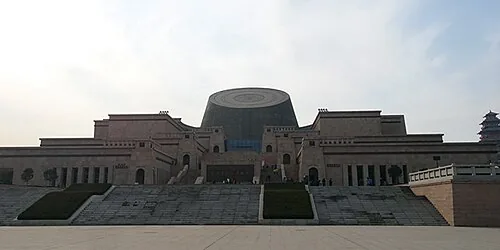
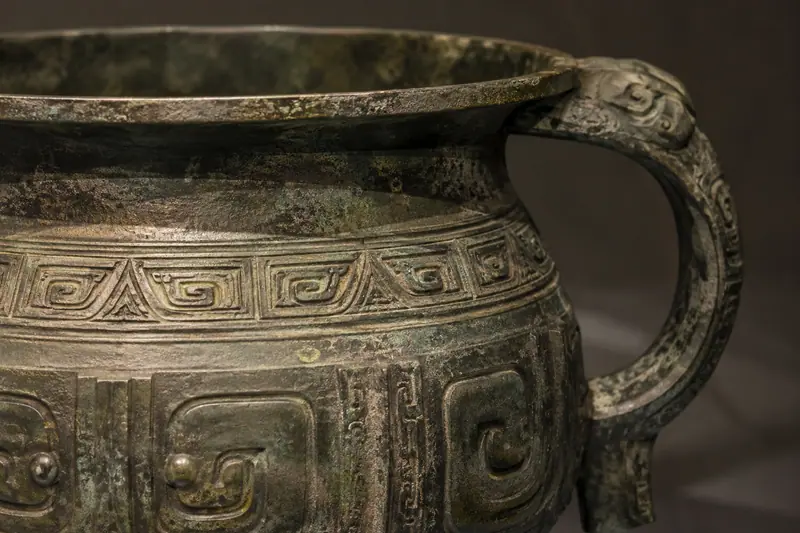
Photo adjustments
Proportionally resized and converted to WebP without cropping, retouching or changing the photographed subject.
Explore the region
About Baoji Bronze Ware Museum
Its collections explain why the Baoji area is so important to the archaeology of the Zhou and early Qin. The bronze vessels reward close looking: their animal designs, casting and inscriptions record ceremonies, gifts and family histories. Galleries move from local discoveries to Zhou ritual and the rise of Qin, making this more than a room of decorative metalwork.
The museum's predecessor was the 1956 Baoji Historical Relics Exhibition Hall (宝鸡市文物历史陈列室), renamed the Baoji Museum (宝鸡市博物馆) in 1958 and housed at Jintai Guan (金台观). Construction of a dedicated bronze-ware museum began in 1990, and it opened on September 8, 1998, as China's first museum named for bronze culture. A new building in the Chinese Stone Drum Park opened on September 28, 2010, when the museum took its present name.
The museum's building covers a floor area of 34,800 square meters. Its collection holds more than 487,000 pieces of relics, including bronzes, pottery, jade, gold, stone and bone objects, with Shang and Zhou dynasty bronzes the most representative; many bear inscriptions bearing on Western Zhou political institutions, noble families, land tenure and ritual practice.
The museum is a national first-class museum, approved in the third such batch in 2017, and has been named a National Science Popularization Education Base and a China Overseas Chinese International Cultural Exchange Base. About 3,245 items in the collection are classed as precious relics, more than 100 of them first-class; representative pieces include the He Zun (何尊), the Lai Pan (逨盘) and the Qin Gong Bo (秦公镈).
What to look for
- The He Zun and other inscribed bronzes, with labels explaining the historical information carried inside vessels.
- The Zhou ritual and Qin-history galleries, which connect vessel types with their ceremonial use.
- Casting and decoration displays showing how bronze objects were produced.
Location & getting there
Getting to Baoji Bronze Ware Museum
Go to the Chinese Stone Drum Park on the eastern section of Binhe Avenue in Baoji’s Weibin District.
- Check the museum’s current reservation instructions before travelling to the hilltop museum.
Combine your visit
Suggested order within this visit:
-
Local bronze discoveries gallery
Begin with the excavated groups from the Baoji area.
-
Zhou ritual gallery
Read the vessels and inscriptions within their social setting.
-
Bronze technology displays
Finish with the casting and decoration process.
This sequence is an editorial suggestion based on the features described in the sources. Access to individual buildings or areas should be checked locally; no travel time or shared admission is implied.
Find Baoji Bronze Ware Museum
宝鸡青铜器博物院 · 宝鸡
The pin marks the area, not the entrance.
More places nearby
Approximate straight-line distances between map pins, not travel distances.
Zhouyuan 周原遗址
61 km awayZhouyuan preserves the archaeological landscape of the early Zhou homeland around Fufeng and Qishan. For a practical introduction, start at Baoji Zhouyuan Museum in Zhaochen Village. Its excavated bronzes show the ritual and…
View guide →Famen Temple 法门寺
65 km awayFamen Temple combines an older pagoda-centred monastery with a much larger modern Buddhist complex. Excavation below the pagoda in 1987 revealed a Tang-period underground chamber containing offerings and a relic venerated as a…
View guide →Mount Taibai 太白山
68 km awayMount Taibai rises through several vegetation zones to the high Qinling summit of Baxiantai. The mountain’s character changes markedly with elevation: wooded lower slopes give way to colder high-country habitats and landforms…
View guide →Sources & visit information
The sources below support the place-specific description and arrival information. Suggested combinations are editorial planning ideas; confirm current opening, entry arrangements and transport services for your date.
- Wikipedia: 宝鸡青铜器博物院 ↗
- Wikivoyage: Baoji ↗
- English Wikipedia: Baoji Bronzeware Museum (revision 1363275776, 2026-07-09) ↗
Visitor information adapted and edited from Wikipedia contributors · CC BY-SA 4.0. Source revision 94136140.
Visitor information adapted and edited from Wikivoyage contributors · CC BY-SA 4.0. Source revision 5205128.
Background paragraphs translated and condensed from Wikipedia contributors, "宝鸡青铜器博物院", Chinese Wikipedia · CC BY-SA 4.0. Source revision 94136140.
Background paragraphs condensed from Wikipedia contributors, "Baoji Bronzeware Museum", English Wikipedia · CC BY-SA 4.0. Source revision 1363275776.