


Explore the region
About Chaiwopu Lake
Chaiwopu Lake (柴窝堡湖) is a freshwater lake in Dabancheng District (达坂城区), 45 km south-east of Urumqi (乌鲁木齐), between Tiangeer Peak (天格尔峰) of the Tianshan (天山) to the south and Bogda Peak (博格达峰) to the north. Xinjiang Daily describes it as the largest freshwater lake around Urumqi.
The lake sits at 1,091.6 m in a shallow, roughly round basin with a flat floor. No main river feeds it: several streams come down from the north slope of Tiangeer Peak and the south slope of Bogda, and groundwater and springs also feed it. Most of the water leaves by evaporation, and a little drains east to the Great and Little Salt Lakes. Because the lake stands more than 10 m above the Urumqi salt lake, it has stayed fresh.
Its surface stayed above 29 km² until 2009. From 1993 the Urumqi waterworks pumped groundwater north of the lake, and from 1999 to the west as well, while more than 400 wells were sunk around it for farms and homes. In 2014, according to the wetland park administration, it shrank to only 0.18 km². Restoration followed: from 2014 some 20,000 mu of nearby farmland was taken out of cultivation and 24 farm wells were closed, a diversion from the Urumqi River supplied 28 million m³ over two years from 2019, and more than 3,000 mu of windbreak willow, poplar and oleaster was planted along the shore. The average area was back to 20.92 km² in 2020. The lake and its surrounding wetland and grassland opened as Urumqi's first national wetland park in May 2016, and the Xinjiang forestry bureau listed it as a regional important wetland in January 2025.
Wide stands of reeds grow in the wetland, flocks of egrets gather on the water of the marsh on the east side, and goitered gazelles live in the grass to the west. The wetland is a stopover for migrating birds: common and demoiselle cranes appear in the migration seasons, and since the restoration 50 to 80 whooper swans and about 1,000 mallards winter here. In April 2026 a black-necked crane turned up among the common cranes, the first record of the species in northern Xinjiang. In the 1970s Shanghai youths sent to the area introduced Chinese mitten crabs, which were later sold as "Tianshan snow crab" (天山雪蟹).
What to look for
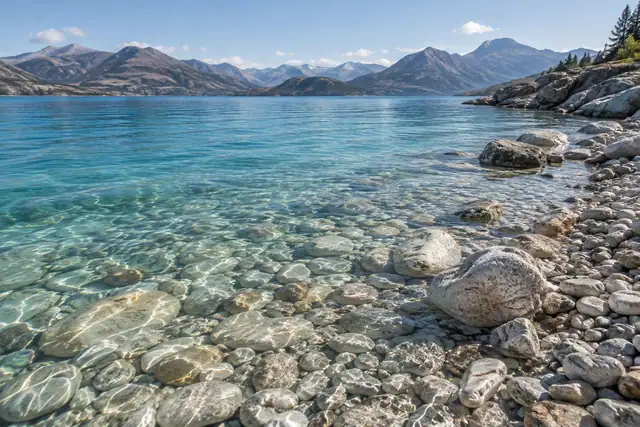
- The view across the still lake to the snow-capped Tiangeer Peak (天格尔峰), reflected in the water
- The marsh on the east side, where flocks of egrets and other waterbirds gather
- Whooper swans and mallards wintering at the lake
- Common and demoiselle cranes in the migration seasons
- Goitered gazelles in the grass west of the lake
- The windbreak belt of willow, poplar and oleaster planted along the lake since 2017
Location & getting there
Getting to Chaiwopu Lake
- Search for 柴窝堡湖 with 乌鲁木齐市 and 达坂城区.
Find Chaiwopu Lake
柴窝堡湖 · 达坂城区
No reliable map pin yet: search by the Chinese name.
Sources & visit information
Written from the linked sources and fact-checked against them on 2026-09-23. Opening hours, admission and access arrangements are not covered; confirm current visitor information with the site.
- 柴窝堡湖 - 维基百科,自由的百科全书 ↗
- “高原精灵”黑颈鹤首现柴窝堡湖湿地 ↗
- 新疆维吾尔自治区林业和草原局_关于发布第三批自治区重要湿地名录的通知 ↗
- 【“两山”理念的新疆实践】柴窝堡湖变身记-天山网 - 新疆新闻门户 ↗
Some facts checked against Wikipedia contributors, "柴窝堡湖" · CC BY-SA 4.0.