

Explore the region
About Beiting Ancient City Ruins
The site's core area covers 1.5 square kilometres and consists of two walled cities, an inner one and an outer one of different sizes. Both are complete, each with walls, a moat and gates; the walls carry mamian (马面) at intervals of about 60 metres, and the middle of each wall section has a tall command platform combined with one of them. Excavation has shown that the city was largely built over the 150-odd years of Tang central-government rule in the Western Regions, through institutions represented by Tingzhou and the Beiting Protectorate.
The inner city was first built as Tingzhou in the reign of Tang Taizong, and the outer wall enclosing it was added when the Beiting Protectorate was established under Empress Wu Zetian. Excavation in 2016 found a Tang Kaiyuan Tongbao coin at the south gate of the outer wall, which established that the main body of the surviving outer wall is Tang work. Work in 2019 identified the inner city as that first Tingzhou and later as an important area of the Beiting Protectorate, the summer capital of Gaochang Uyghur and, in the Yuan dynasty, of the Xuanwei Bureau and the Commandant's Office.
Conservators working in the restoration room of the Silk Road Beiting Ancient City Site Museum have conserved 110 objects of various kinds from the site. Finds there include a potsherd inscribed 悲田寺 and a bronze official seal reading 蒲类州之印, among other objects.
What to look for
- The two walled cities — an inner city and an outer one of different sizes, each complete with walls, a moat and gates
- The mamian (马面) set at intervals of about 60 metres along the walls, and the tall command platforms where they meet the middle of each wall section
- The south gate of the outer wall, where the 2016 excavation found a Tang Kaiyuan Tongbao coin
- The site museum's conserved objects, including the potsherd inscribed 悲田寺 and the bronze official seal reading 蒲类州之印
Location & getting there
Getting to Beiting Ancient City Ruins
Check which interiors and courtyards are accessible. Active places of worship and protected monuments may have different visitor rules.
- Search for 北庭故城 with 昌吉回族自治州 and 吉木萨尔县.
Find Beiting Ancient City Ruins
北庭故城 · 吉木萨尔县
No reliable map pin yet: search by the Chinese name.
Sources & visit information
The linked sources support the identity and background described in this introduction. Opening hours, admission, activity availability and exact arrival arrangements have not been comprehensively checked. Confirm current visitor information with the venue; the original catalogue locality and editorial review flag are retained.
Image credits & notes (1)
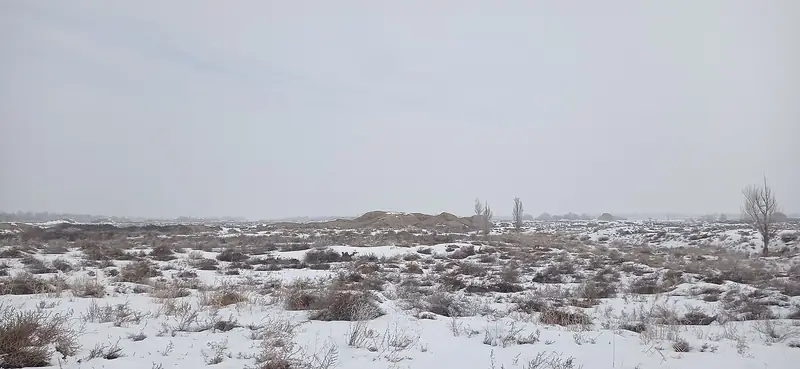
- Beiting Ancient City Ruins (北庭故城), Jimsar County. Photograph: "Landscape in the inner city".Photo: Kerdipole · CC BY-SA 4.0Resized for the web; the photo itself has not been edited. Thumbnails may show a cropped view.
