

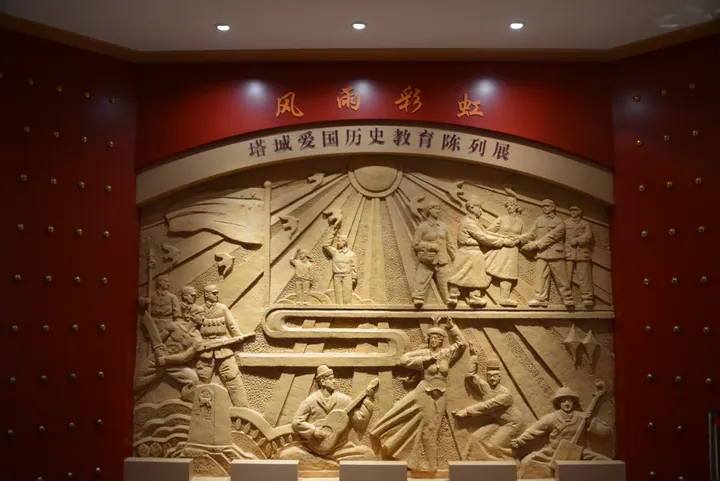
Photo adjustments
Full frame retained; proportionally resized and converted to WebP. No retouching or changes to the photographed subject. Card displays may crop the view.
Explore the region
About Tacheng Red Building Museum
The building takes its name from the rust-red colour of its street-facing wall. The city's culture and tourism bureau records a Russian architectural style, with patterned ceilings, floors, door frames and window lattices and a green sheet-metal roof, and describes the museum as Tacheng Prefecture's only comprehensive museum.
The bureau records that the Kazan Tatar merchant Rehmazan Kannishev (热玛赞·坎尼雪夫) came to Tacheng to trade, chose the triangular plot north of the city, engaged Russian designers and supervisors together with local craftsmen, and built the structure between 1910 and 1914: 2,043 square metres over two storeys and 16 rooms. A Xinhua photo report describes the building as originally an office block in Russian style, later converted into a museum; the record reports both accounts without choosing between them.
The museum holds 8,070 objects and sets, including six first-grade, 21 second-grade and 22 third-grade national cultural relics.
What to look for
- The rust-red street facade, green metal roof and patterned ceilings, floors, door frames and window lattices of the 1914 building
- The museum's collection of 8,070 objects (sets), including six first-grade national cultural relics
Location & getting there
Getting to Tacheng Red Building Museum
Confirm the venue or campus, reservation channel and exhibition calendar. A museum name may cover more than one building.
- Search for 塔城红楼博物馆 with 塔城地区 and 塔城市.
Find Tacheng Red Building Museum
塔城红楼博物馆 · 塔城市
No reliable map pin yet: search by the Chinese name.
Sources & visit information
The linked sources support the identity and background described in this introduction. Opening hours, admission, activity availability and exact arrival arrangements have not been comprehensively checked. Confirm current visitor information with the venue; the original catalogue locality and editorial review flag are retained.