

Explore the region
Read the gardens as spaces, not just displays
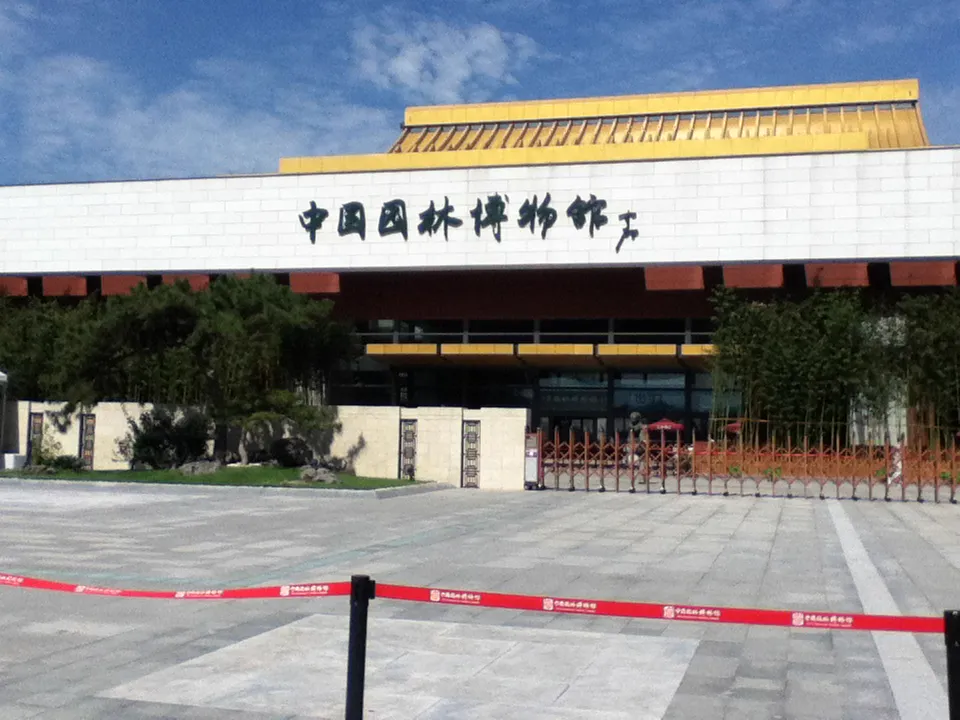
The China Garden Museum opened in May 2013 as China’s first national museum devoted to gardens. It is in Fengtai District, at the foot of Eagle Mountain and near the Yongding River. Rather than a single hall of objects, the complex brings together a main museum building, indoor exhibition gardens and outdoor garden areas.
Its permanent galleries introduce ancient and modern Chinese gardens, garden culture and construction techniques, alongside displays on world gardens and interactive interpretation. These exhibits help explain how garden design joins architecture, water, rocks, plants and views into a sequence that visitors experience by moving through space.
The most distinctive indoor visit is through three full-scale garden reconstructions: Suzhou’s Chang Garden (畅园), Yangzhou’s Pianshi Mountain House (片石山房) and Guangzhou’s Yuyin Mountain House (余荫山房), a Lingnan garden. They are not interchangeable miniature rooms. Chang Garden is arranged around a pond, with rooms and covered edges framing changing views; Pianshi Mountain House uses rockwork, water and reflected images to make a compact space feel layered; Yuyin Mountain House is noted for detailed carved wooden doors and the way its architecture reflects Lingnan traditions. The enclosed route lets you compare how different regions shape courtyards, thresholds and outlooks without travelling between those cities.
Outside, three named settings show different ways to work with northern terrain. Half-Mu Pavilion (半亩轩榭) re-creates part of a traditional Beijing private garden in a level courtyard. Dyeing-Cloud Mountain Retreat (染霞山房) follows the slope of Eagle Mountain, so the changing ground and planting become part of the composition. Pagoda-Shadow Villa (塔影别苑) uses water, bridges, banks and a boat-shaped pavilion against the hill backdrop. Walk slowly enough to notice how the view changes as you cross a bridge or turn along a path; these are designed landscape sequences, not merely photo points.
A useful first visit is to begin in the main building with the galleries, continue through the indoor garden loop, and finish outdoors, where the contrasts between flat ground, hillside and water are easier to read. Allow about 2–3 hours as an editorial planning estimate, not a museum guarantee; slow looking, a temporary exhibition or weather may change the pace. The named permanent displays are a guide to the collection, not a promise that every room or garden is open on every date. Check the museum’s current notices and visitor map before setting out.
Entry, hours and getting there
The current Beijing tourism listing describes admission as free and requires real-name registration. It lists booking through the China Garden Museum’s official WeChat account and on-site registration using specified mainland Chinese identity cards. Because the published on-site options do not explain how every foreign passport is handled, overseas visitors should confirm the accepted document and booking process with the museum’s ticket service centre before travelling. The listing gives 010-63915017, staffed daily from 09:00 to 17:00.
The same listing gives regular hours as Tuesday–Sunday, 09:00–17:00, with last entry at 15:30; indoor areas close at 16:30 and outdoor areas at 17:00. The museum is normally closed on Mondays except statutory public holidays. Holiday schedules, special programmes and temporary closures can alter this pattern, so check the latest museum notice on the day you plan to go.
The address is No. 15, Shejichang Road, Fengtai District, Beijing. One practical public-transport approach is Metro Line 14 to Garden Expo Park station, followed by a surface transfer to bus 55, 115 or 903 for the China Garden Museum stop. The current local visitor guide also lists buses 327 or 951 to Lujing stop, followed by a walk of about ten minutes. These are surface connections rather than a metro station at the museum; check live service and stop information before departure, and do not rely on an unverified station-exit letter.
Find China Garden Museum
中国园林博物馆 · No. 15, Shejichang Road, Fengtai District, Beijing
The pin marks the area, not the entrance.
Sources & visit information
Sources checked on 21 October 2026. Hours, tickets, reservations and transport can change; confirm with the operator before you go.
- Beijing tourism listing: China Garden Museum ↗
- Beijing Municipal Forestry and Parks Bureau: China Garden Museum ↗
- Beijing Daily: Experiencing classical Chinese garden culture at the China Garden Museum ↗
- Visit Beijing: Museum of Chinese Gardens and Landscape Architecture ↗
- Beijing Local Guide: 2026 Mid-Autumn and National Day visitor guide ↗
- China Garden Museum official homepage ↗
Image credits & notes (1)
- The entrance to the China Garden Museum (中国园林博物馆) beside the Beijing Garden Expo Park, photographed in August 2013. Photo: QinyongrPhoto: CC BY-SA 4.0