

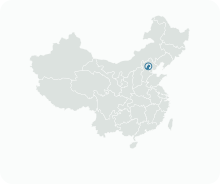
Get to know Fengtai District

- Administrative area
- District · 市辖区
- Part of
- Beijing
- Chinese name
- 丰台区
- Local areas
- District guide
Area & population
- Area
- 306.00 km²
- Population · 2020
- 2,019,764
Source: English Wikipedia, as of the dates shown.
Fengtai stretches from Beijing’s built-up southwest into western foothills. The Yongding River crosses the district from north to south, separating eastern and western landscapes; the terrain slopes down from the northwest toward the southeast. Its 306-square-kilometre administrative area includes a broad urban plain as well as hills and open river-country, so “Fengtai” is not a useful single map pin or a promise of one walkable circuit. Choose a specific park, museum or neighborhood as your destination.

Lugou Bridge and Wanping Town: a heritage precinct to explore on foot
For Fengtai’s most coherent historic outing, set Wanping Town (宛平城) as the map destination and explore the town, the Museum of the War of Chinese People’s Resistance Against Japanese Aggression, the memorial sculpture park and Lugou Bridge (卢沟桥) as one precinct. The district government describes this as an integrated “museum–bridge–town–park” visitor area, reopened together after renovation in July 2025. The bridge is a short walk west of the walled town; once inside, follow the town’s main street and lanes before continuing to the museum and bridge rather than treating the whole area as a drive-by photo stop.
Lugou Bridge was built from 1189 to 1192 under the Jin dynasty. The 11-arch stone crossing is 212.2 metres long between abutments, with its approaches bringing the overall length to 266.5 metres. The bridge is as much a sculptural visit as an engineering one: carved stone lions perch on the balustrade posts, and the approach includes historic stonework and pavilions. Its name and strategic importance are tied to the Yongding River, historically also called the Lugou River. The bridge ceased carrying road traffic in 1985 to protect the heritage structure.
The eastern end of the bridge leads to a different layer of history. Wanping Town was established as a fortified settlement in the Ming period; its walls and gate frame the route into the 1937 history of the Marco Polo Bridge Incident and the wider war. The museum’s forecourt and exhibits add context that the bridge stones alone cannot provide. After its 2025 reopening, the district described a connected visit through the museum, town streets and sculpture park, including new small exhibition spaces in the town.
Suggested start: Wanping Town, using 宛平城 in a map app. Walk through the town and its exhibitions, continue to the museum, then cross to Lugou Bridge and return by the same precinct route. If you want the memorial sculpture park as well, leave room for it rather than squeezing the whole site into a quick stop. The museum is a separate indoor visit; confirm its current opening, admission and reservation arrangements with the museum before travelling. The district’s 2025 account confirms it reopened, but is not a standing timetable.
Yongding River: a greenway, not a cross-district shortcut
For a longer outdoor outing, follow the Yongding River Greenway from the east entrance of Green Embankment Park (绿堤公园) toward Wanping Lake’s observation deck, the Jingxiong Bridge viewing point and Beitiantang Park. Beijing’s municipal government described this route as about 13 kilometres along the river’s left bank in March 2026, with the greenway open around the clock at that time. It also warned that the route has no night lighting and advised against going far along it after 18:00. This is a linear river walk or ride, not a short connector between the town and every other Fengtai attraction.
The same official guide gives Wanpingcheng Station, Exit D, as a transit approach, followed by roughly a 10-minute shared-bike ride to the greenway; weekend parking at Green Embankment Park can become crowded after 10:00. Those are useful access cues from the March 2026 guide, but check local conditions before setting out. For an easier waterside break, use a shorter out-and-back section and turn around at a clear landmark rather than assuming there is a convenient return bus along the whole route.
West of the river, Beijing Garden Expo Park (北京园博园) is a separate, expansive park visit, with garden displays and open landscapes beside the Yongding and Garden Expo Lake. It hosted the 2013 China International Garden Expo; Beijing’s parks directory classifies it as a specialized city park in Fengtai. The nearby greenway, lake and garden park make this a good area for a slower day outdoors, but the park’s entrances and its current ticket, reservation and operating arrangements should be checked through its official visitor notices before travel. Do not assume that the greenway route is a park entrance or that the two sites share the same admission rules.
Lianhuachi and Jinzhongdu: an urban history stop
In eastern Fengtai, Lianhuachi Park (莲花池公园) offers a compact urban outing with a longer historical frame. The district government links the pond system to the early settlement of Yan and to Beijing’s origins; this is a place to understand the landscape’s historical role, not a preserved ancient city that can be read intact on the ground. A separate Jinzhongdu heritage thread follows the remains of Beijing’s Jin-dynasty capital and its later archaeological and park interpretation. Fengtai’s cultural planning identifies Lianhuachi–Jinzhongdu as a distinct cultural area, separate from the riverfront memorial precinct.
Suggested start: Lianhuachi Park. Visit the waterside park first, then choose a clearly mapped Jinzhongdu remnant or interpretation point if that is your main interest; the historical area is dispersed, so verify the specific site before walking between pins. This outing suits visitors staying around Beijing West Railway Station or the western urban core better than combining it on foot with Wanping Town or the Garden Expo.
Changxindian: railway and labor history
Changxindian (长辛店) lies farther west and belongs to another day’s plan. Its history includes the 1923 Beijing–Hankou railway workers’ strike, one of the defining episodes in early Chinese labor history. Fengtai’s cultural plan treats Changxindian with the Lugou Bridge–Wanping precinct as part of a wider heritage area, but the sites are not a single pedestrian route; use a specific heritage address as your destination and check which buildings or exhibitions are open before going.
Choosing your Fengtai day
Use the district as a set of separate outings rather than one sightseeing loop: Wanping Town and Lugou Bridge for architecture and war history; the river greenway and Garden Expo for open-air landscapes; Lianhuachi and selected Jinzhongdu sites for urban history; or Changxindian for railway-town heritage. A municipal spring guide also links parks in the southern district, including Nanyuan Forest and Wetland Park, the Garden of World Flowers, Huaxiang Park and Purple Valley Eden, but its flower displays and event offerings are seasonal rather than year-round guarantees.
Choose lodging or a rail connection by the actual first destination, not by “Fengtai District” as a whole. For every museum, park or seasonal attraction, check the operator’s current visitor notice for access, reservation, prices and hours; these are venue-specific and can change. The district’s large footprint and the river dividing its western and eastern landscapes make route planning by named place much more reliable than a single distance-to-center estimate.
Guide sources
- Fengtai District Geographic Environment
- Wanping Town Reopens After Renewal
- Have Fun at Fengtai's Yongding River Greenway
- Fengtai Cultural and Tourism Development Plan for the 14th Five-Year Period
- A History of Lugou Bridge
- Beijing Garden Expo Park
- Lianhuachi Park
- Four Flower-Viewing Routes in Fengtai
- Lianhuachi Park
Explore Fengtai District
Core places to explore, with English and Chinese names.
Marco Polo Bridge 卢沟桥
Museum of the War of Chinese People's Resistance Against Japanese Aggression 中国人民抗日战争纪念馆
Beijing Garden Expo Park 北京园博园
Beijing World Park 北京世界公园
Dabaotai Western Han Tombs Museum 大葆台西汉墓博物馆
Beijing Auto Museum 北京汽车博物馆
China Garden Museum 中国园林博物馆
Beigong National Forest Park 北宫森林公园
Beijing World Flower Garden 世界花卉大观园
Places to explore around Fengtai District
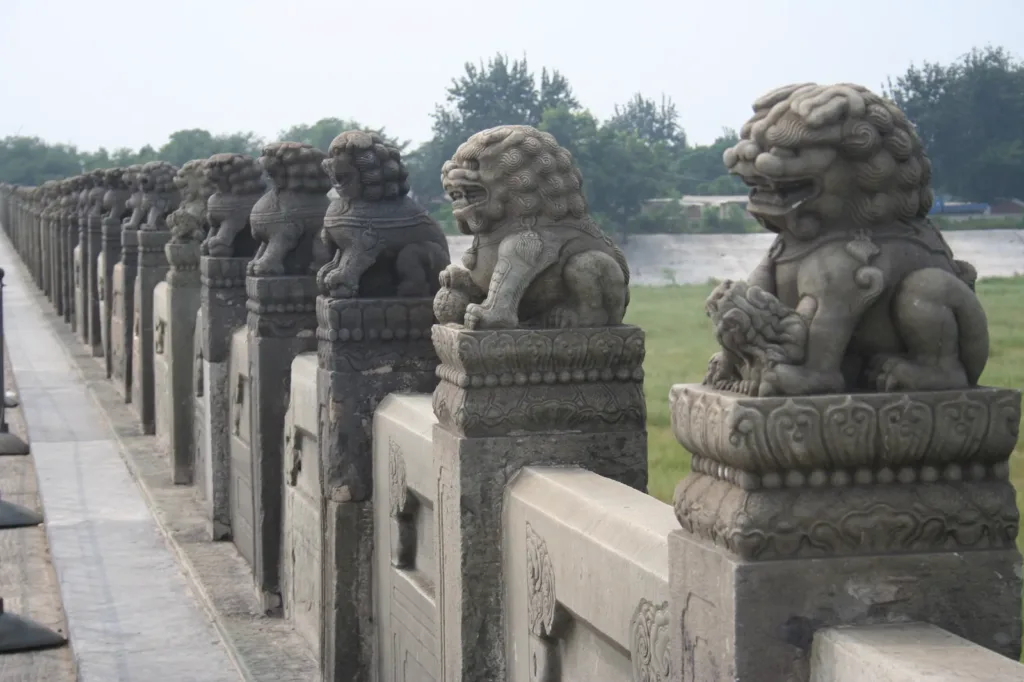 A view across the stone arches of Lugou Bridge. Photo: Fanghong; Commons derivative brightness/contrast adjustment by Tysto · CC BY-SA 3.0
Marco Polo Bridge卢沟桥
Lugou Bridge, better known internationally as Marco Polo Bridge, is a Jin-dynasty stone crossing over the Yongding River in Fengtai District. Its eleven arches, sculpted stone lions and association with the July 1937 fighting make it a place to read both medieval engineering and modern Chinese history in the landscape.
Read the place guide → The museum’s pale-stone façade and broad forecourt, in a photograph made on 15 May 2016. Photo: 三猎 (San Lie) · CC BY-SA 4.0
Museum of the War of Chinese People's Resistance Against Japanese Aggression中国人民抗日战争纪念馆
Inside Wanping Fortress beside Lugou Bridge, this museum presents the history of China’s resistance to Japanese aggression through original documents, photographs, objects and immersive reconstructions. Admission is free and the Museum’s visitor notice says individual visitors do not need to book; allow separate time for the galleries and for exploring the fortress and bridge outside.
Read the place guide →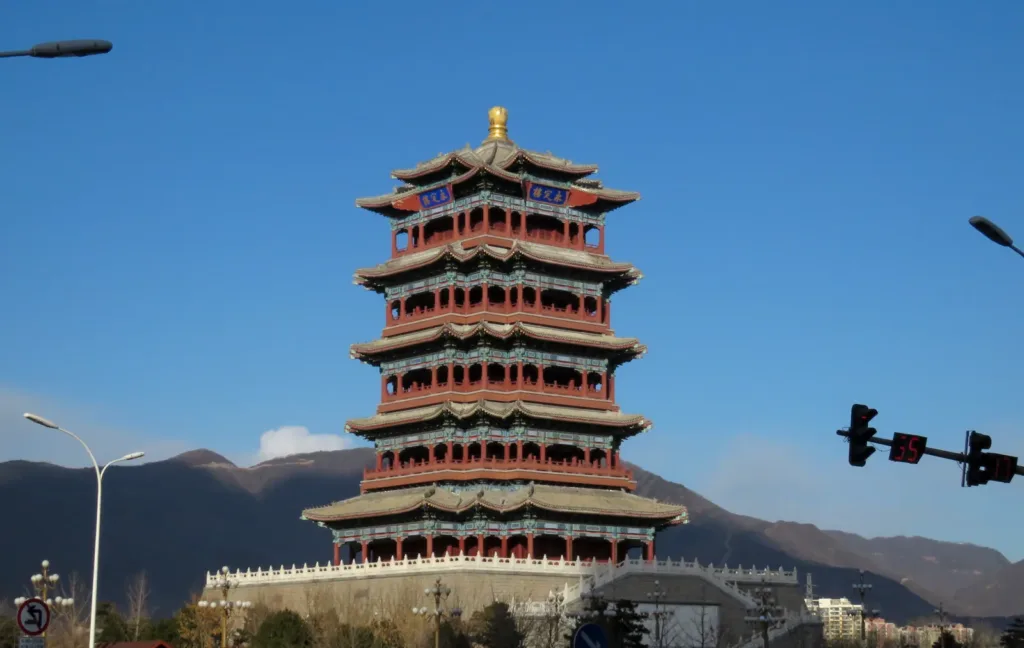 Yongding Tower on Ying Hill, seen from the road in January 2018. Photo: N509FZ · CC BY-SA 4.0
Beijing Garden Expo Park北京园博园
On the west bank of the Yongding River in Fengtai, Beijing Garden Expo Park gathers 69 themed gardens across a vast lakeside landscape. Choose a small cluster rather than trying to cover the 267-hectare exhibition grounds and 246-hectare lake in one visit: Gate 6 is the practical start for Yongding Tower and Memory of Jiangnan Garden, while Gate 3 is the closer approach to Lingnan Garden.
Read the place guide → The Eiffel Tower replica at Beijing World Park. Photo: Techyan · CC BY-SA 4.0
Beijing World Park北京世界公园
Beijing World Park in Fengtai arranges more than a hundred miniature landmarks from around the world across five continent-themed areas. Come to compare the replicas, from the Eiffel Tower to the Leaning Tower of Pisa and Red Square, and to enjoy the open-air park setting; admission is currently free through 31 December 2026, with real-name advance reservations required on weekends and public holidays.
Read the place guide → The huangchang ticou timber enclosure at Dabaotai, photographed on 19 March 2011, before the 2025 museum redevelopment. Photo: Yan Li (EXIF author metadata); Mlogic (Wikimedia Commons uploader) · CC BY-SA 4.0
Dabaotai Western Han Tombs Museum大葆台西汉墓博物馆
In Fengtai District, the Dabaotai site museum preserves and interprets the tomb of Liu Jian, a Western Han Prince of Guangyang. Its main draw is the timber-built “yellow-heart cypress” enclosure known as huangchang ticou, presented within Tomb No. 1, alongside objects and interpretation about the Han kingdom of Guangyang; a ground-level outline marks the location of Tomb No. 2 outside. Basic displays are listed as free and walk-in, while temporary exhibitions may require a separate ticket.
Read the place guide → The exterior of Beijing Auto Museum. Photo: Morio · CC BY-SA 4.0
Beijing Auto Museum北京汽车博物馆
Beijing Auto Museum in Fengtai traces the automobile from an engineering invention to a force that reshaped industry and everyday life. Its cross-brand displays connect global motoring history with China’s automotive development, while interactive exhibits invite visitors to look beyond the bodywork at how cars work and what they have changed.
Read the place guide →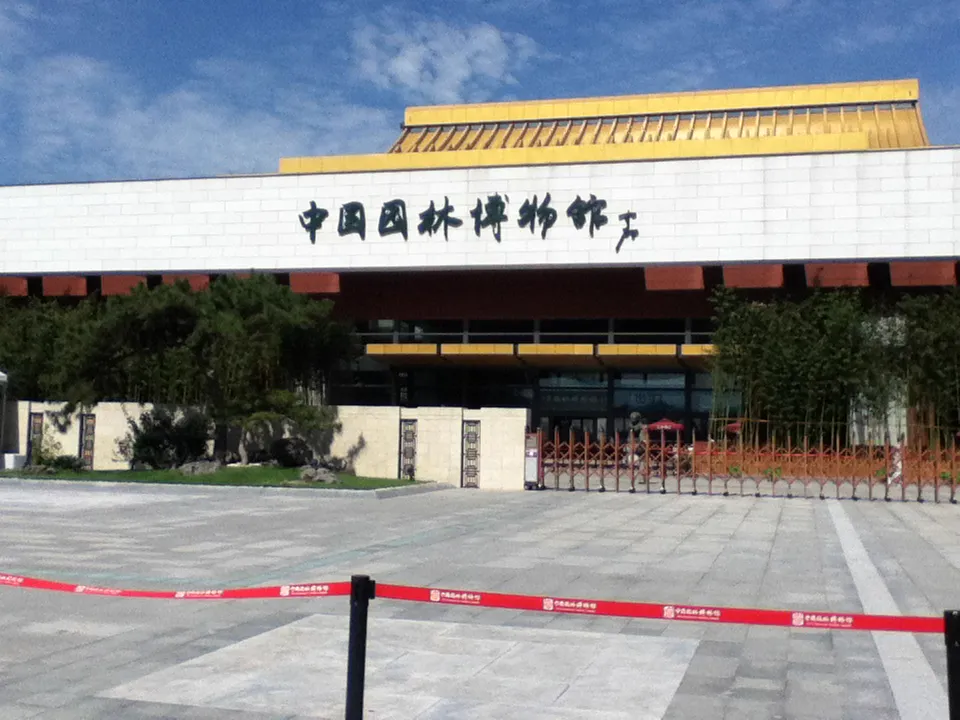 The entrance to the China Garden Museum (中国园林博物馆) beside the Beijing Garden Expo Park, photographed in August 2013. Photo: Qinyongr · CC BY-SA 4.0
China Garden Museum中国园林博物馆
In Fengtai District beside the Yongding River, the China Garden Museum combines galleries on garden history and design with full-scale indoor garden settings and outdoor landscape exhibits. Follow the permanent displays with a loop through the reconstructed gardens, then step outside to compare a level courtyard, a hillside garden and a waterside composition; admission is free, but real-name entry arrangements and current access should be checked before travelling.
Read the place guide →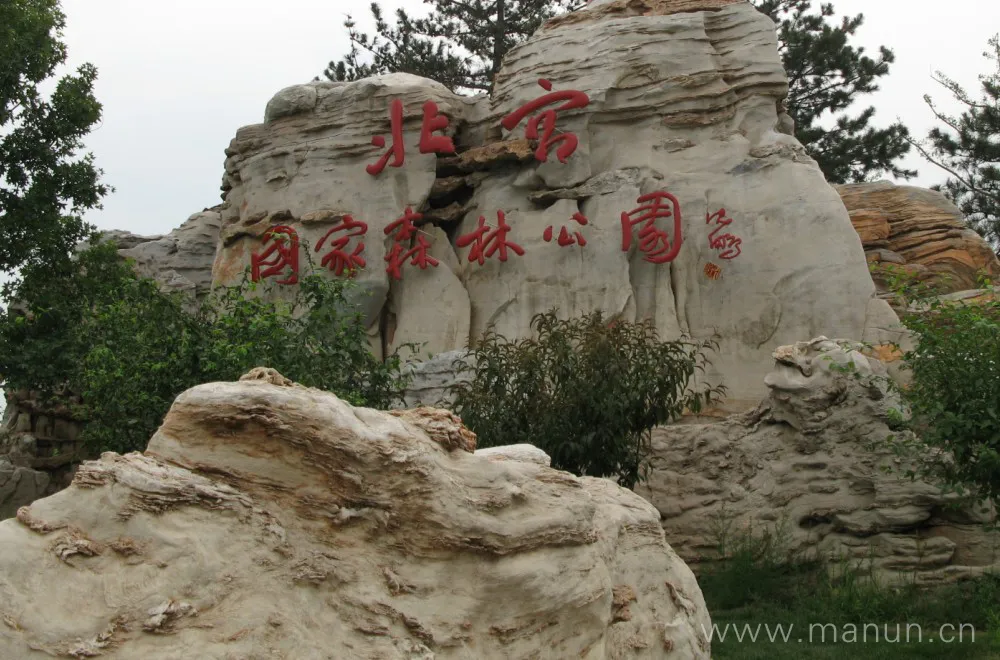 A stone park-name marker among rock formations and pines at Beigong National Forest Park. Photo: www.manun.cn · CC BY 3.0
Beigong National Forest Park北宫森林公园
Beigong National Forest Park (北宫国家森林公园) is a 200-hectare forest-and-hill park in northwestern Fengtai. Its appeal is the contrast between a small waterside garden at the south entrance, seasonal foliage and an uphill walk toward Wolf Slope Peak. A current ticket price and opening schedule could not be established consistently from the park’s published records, so check directly before setting out.
Read the place guide →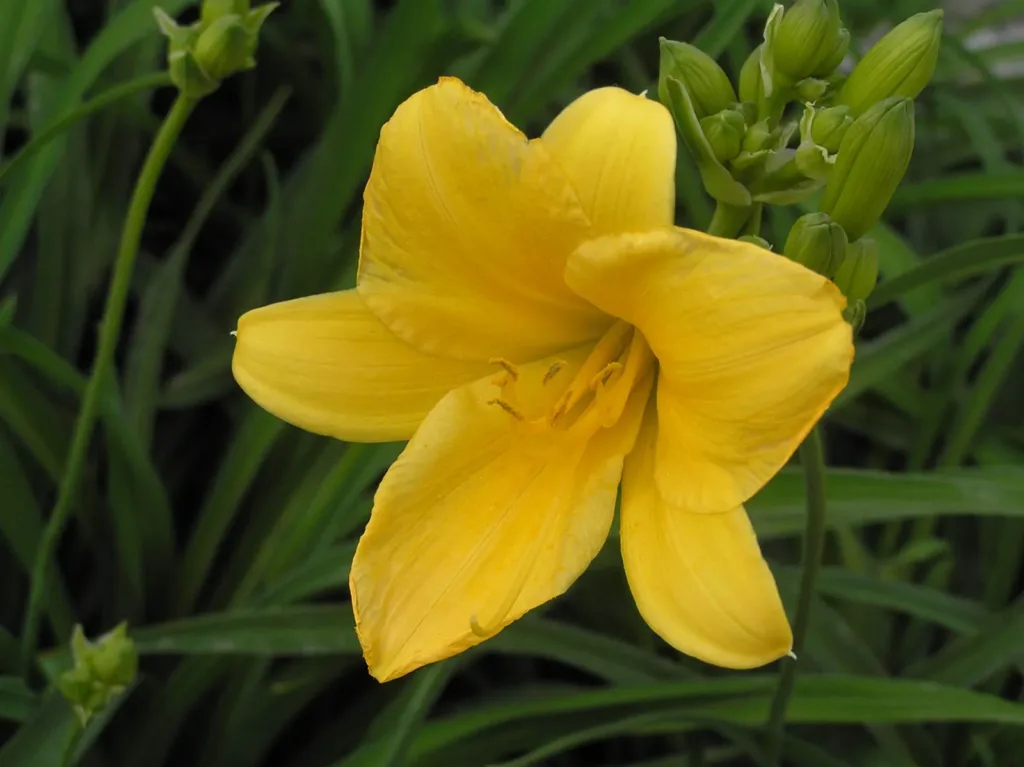 A Golden Doll daylily (Hemerocallis fulva 'Golden Doll') photographed in Beijing World Flower Garden on 27 May 2006. Photo: 阿橋 HQ; Commons identifies original Flickr poster as 阿橋花譜 KHQ Flower Guide · CC BY-SA 2.0
Beijing World Flower Garden世界花卉大观园
In Fengtai’s Huaxiang–Caoqiao area, Beijing World Flower Garden combines climate-themed greenhouses with outdoor gardens that draw on Chinese and international landscape styles. It is a useful half-day choice for seeing how tropical and desert plant collections, seasonal flower beds and designed garden spaces differ within one large site.
Read the place guide →Plan your visit
Getting there
Fengtai District is about 10 km (straight-line distance) from central Beijing. Search for 丰台区 in a map app to find stations and your accommodation.
Where to stay →Build your route
Marco Polo Bridge and Museum of the War of Chinese People's Resistance Against Japanese Aggression are about 1 km apart (straight-line distance). The linked place guides have entrance and visit details.
Continue with Beijing →More in Beijing
Sources & geographic information
Administrative names and parent areas: Official geographic directory (dmfw.mca.gov.cn) · Reference date 2026-09-06.
Background text adapted from Fengtai, Beijing — Wikipedia contributors, under CC BY-SA 4.0. Text has been shortened and reorganized; source revision 1372714000.
Map data © OpenStreetMap contributors. Pins mark approximate centres, not entrances or boundaries.
Image credits & notes (2)
- Luotuowan Street beside the Lize business district in Fengtai District, Beijing. Photograph date recorded by the source: 2020-11-06 16:20:11.Photo: N509FZ · CC BY-SA 4.0Resized for the web; the photo itself has not been edited. Thumbnails may show a cropped view.
- Lugou Bridge’s carved stone lions line its balustrade above the Yongding River. Photo: Chen Ying (陈鹰)Photo: CC BY 2.0
