

Explore the region
A museum inside the Temple of Agriculture
The museum is not a stand-alone modern building: it uses the historic Xiannongtan precinct at 21 Dongjing Road, Xicheng District. Founded in 1420, the altar was where Ming and Qing emperors offered rites to the God of Agriculture and ceremonially ploughed a field to affirm the state’s concern for farming. Today the museum collects, studies and interprets Chinese architectural history, craft and art alongside the site’s agricultural-ritual history.
Xiannongtan forms the western counterpart to the Temple of Heaven across Beijing’s central axis. Its inner precinct is organized around square ritual platforms and courtyards; the Temple of Heaven’s principal altars are round. That contrast makes the broader imperial landscape easier to read: the two complexes are related by the axis, but their architecture and rites are not interchangeable.
Look up, then read the grounds from north to south
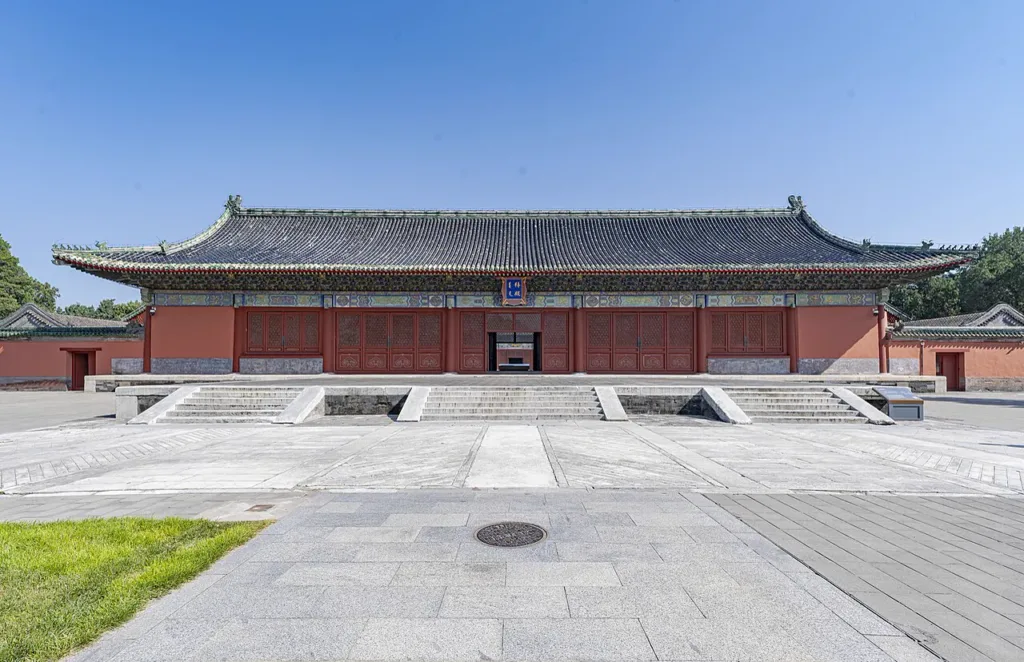
Begin in the Worship Hall courtyard. The hall’s central ceiling is the museum’s best-known object: a carved dragon caisson originally made for the Vairocana Hall at Longfu Temple. The wooden centerpiece dates to 1452. Look for the dragon descending from the centre, then compare the layered, geometric framing around it with the painted timber and tiled roof outside. The caisson is an architectural feature with a history of relocation, not a ceiling originally made for this hall.
Pair the hall with the museum’s architectural-history displays. The municipal government describes the permanent presentation as using photographs, objects and models to explain how Chinese building techniques developed and why the architecture has distinctive aesthetic qualities. This helps put roof forms, timber construction and decorative details in context before you continue outdoors.
Then walk south through the inner altar’s ceremonial sequence: the Taishui Hall group, the square altar of the God of Agriculture, the historic ploughing field and the Guan’geng observation platform. The emperor performed the ploughing rite in the field; the platform was where he watched officials continue the work. Side complexes served the ceremony too: the granary stood to the east, the ritual kitchen to the west, and the dressing hall to the south. Check the day’s signs and open-room notices as you go, since the precinct is a protected heritage site and not every historic room should be assumed accessible.
The separate Qingcheng Palace, once used as a fasting palace and for the ceremony after the emperor’s ploughing, was opened to the public in December 2024 according to Xicheng District. It is a distinct courtyard in the larger heritage setting; check the museum’s current map and entry arrangements to see whether it fits your visit on the day.
Allow about 1.5–2 hours for the Worship Hall, exhibition and main inner-altar route. This is an editorial planning suggestion, not a museum guarantee; add time if you want to study the grounds or include Qingcheng Palace.
Getting there and planning entry
Set your map to 21 Dongjing Road, Xicheng District and follow the museum’s current official entry directions. Xiannongtan has inner and outer precincts, so do not assume that an entrance at another edge of the historic site leads directly to the museum visit. The official pages consulted give the address but do not provide a current metro exit or a named public-transport stop; check a live route for your starting point rather than relying on an unverified line or exit.
The museum’s official guide asks visitors to book in advance through its WeChat account. It lists daily opening from 09:00 to 17:00, with last entry at 16:30, and closure on Mondays; other changes are announced separately. Its listed ticket-sales window ends at 16:30. Since the official page does not publish a current admission amount, confirm the fee and any timed-entry requirement in the live booking notice.
Find Beijing Ancient Architecture Museum
北京古代建筑博物馆 · 21 Dongjing Road, Xicheng District, Beijing
The pin marks the area, not the entrance.
Sources & visit information
Visitor details checked on 21 October 2026. The museum’s official visitor guide lists hours of 09:00–17:00, last entry at 16:30, and Monday closure. Advance booking is requested through the museum’s official WeChat account. The page does not state a current ticket price; check the booking page before travelling. [1]. Hours, tickets, reservations and transport can change; confirm with the operator before you go.
- Beijing Ancient Architecture Museum — official visitor guide ↗
- Beijing Ancient Architecture Museum — Xicheng District profile ↗
- Xiannongtan — Beijing Central Axis heritage site ↗
- Xiannongtan and the Beijing Ancient Architecture Museum — Beijing Municipal Cultural Heritage Bureau ↗
- The dragon caisson at Beijing Ancient Architecture Museum — China News Service ↗
Image credits & notes (1)
- The Worship Hall in the Taishui Hall courtyard at Xiannongtan, photographed on 13 August 2023. The image shows the exterior, not the interior dragon caisson. Photo: ScareCriterion12Photo: CC0 1.0