


Photo adjustments
The exact downloaded source bytes are separately retained and hashed. Prepared JPEG is proportionally reduced to a maximum 720-pixel long edge; full frame retained, no subject alteration. Final website rendition: full frame retained, proportionally resized to at most 720 pixels and converted to WebP. No additional retouching or subject alteration. Card displays may crop the view.
Explore the region
About Fishing Town Fortress
Surviving walls and gates reveal how the builders exploited the terrain, while administrative ruins show that this was also a functioning settlement. The rock-cut reclining Buddha adds an older religious layer to the military landscape. Rather than treating the entire hill as a single monument, look at the relationship between defensive edges, inner compounds and the rivers below.
In February 1259 Southern Song forces at Diaoyucheng repelled a Mongol army and killed the Mongol khan Möngke, an episode known as the Battle of Diaoyucheng. The site has been called the best-preserved ancient battlefield in China. It was listed as a Major Historical and Cultural Site Protected at the National Level in November 1996, and in 1982 it was designated, together with nearby Jinyun Mountain in Beibei, part of the Jinyun Mountain-Bei Hot Spring-Diaoyucheng National Key Scenic Area.
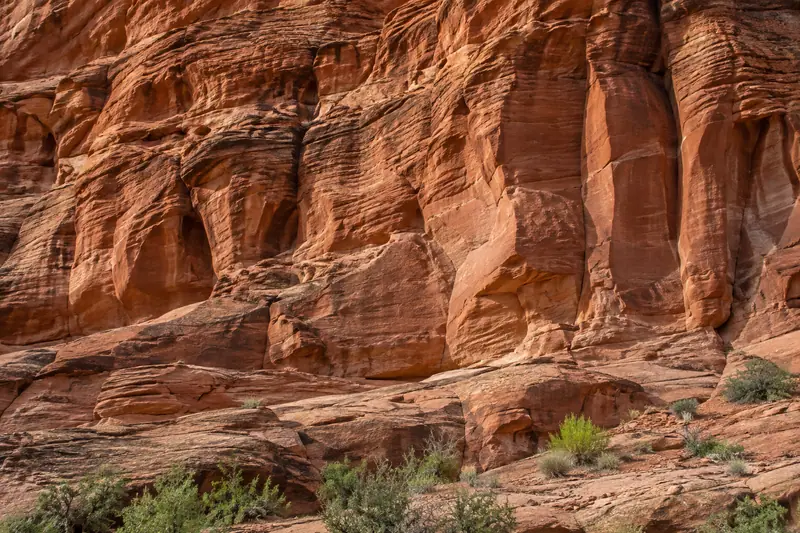
Diaoyu Mountain forms a peninsula about 2.5 square kilometres in area, created where the Jialing and Qu (渠江) rivers meet and bend east of Hechuan; a Danxia-landform outcrop near its southern summit overlooks the Jialing River. According to local tradition, the mountain is named for a giant deity who is said to have fished in the river here to save the local people from famine.
The fortress is divided into an inner and an outer city; the outer city walls were built of dressed stone along the cliff edges. Inside are fields and a year-round spring, Shiguan Spring (始关泉), while arable land also extends along the surrounding slopes. The city had eight gates, including the Huguo (护国门), Qinghua (青华门) and Zhengxi (正西门) gates.
What to look for
- Huguo Gate and surviving walls: the hill’s defensive edge.
- Rock-cut reclining Buddha: a late Tang or early Song carving within the site.
Location & getting there
Getting to Fishing Town Fortress
Approach the archaeological park by road along Diaoyucheng Avenue in Hechuan. Use the fortress entrance as the destination; the separately located Diaoyu Fortress History and Culture Museum on Yiwu Avenue is not the hilltop site.
Combine your visit
A suggested sequence through the documented features.
-
Huguo Gate
Examine the defensive entrance against the steep terrain.
-
Inner fortress remains
Look for the documented administrative and settlement traces.
-
Reclining Buddha
Compare the religious carving with the surrounding military landscape.
This is an editorial sequence. Check local access and required road or boat transfers; it does not promise a walking route or common ticket.
Find Fishing Town Fortress
钓鱼城 · 合川
The pin marks the area, not the entrance.
More places nearby
Approximate straight-line distances between map pins, not travel distances.
Jinyun Mountain 缙云山
20 km awayJinyun Mountain rises above Beibei in a protected landscape of subtropical evergreen forest. The visitor area combines wooded paths, peaks such as Shizi and Xianglu, and the long-established Jinyun Temple. A route beginning at…
View guide →Chongqing Natural History Museum 重庆自然博物馆
22 km awayChongqing Natural History Museum in Beibei explores the relationship between the Earth, life and the local landscape. Dinosaur skeletons give the fossil galleries a strong visual focus, while animal specimens and geological…
View guide →Laitan Ancient Town 涞滩古镇
25 km awayLaitan is a walled settlement north-east of Hechuan whose streets lead to Erfo Temple. The town’s defensive enclosure and the temple’s religious spaces give a visit two distinct subjects. Follow the public streets through the…
View guide →Sources & visit information
The sources below support the place-specific description and arrival information. Suggested combinations are editorial planning ideas; confirm current opening, entry arrangements and transport services for your date.
- whlyw.cq.gov.cn ↗
- Hechuan ↗
- Chinese Wikipedia: 钓鱼城遗址 (revision 92451405, 2026-04-28) ↗
- English Wikipedia: Diaoyucheng (revision 1369051394, 2026-08-12) ↗
Visitor information adapted and edited from Wikivoyage contributors, “Hechuan” · CC BY-SA 4.0. Source revision 5289084.
Background paragraphs translated and condensed from Wikipedia contributors, "钓鱼城遗址", Chinese Wikipedia · CC BY-SA 4.0. Source revision 92451405.
Background paragraphs condensed from Wikipedia contributors, "Diaoyucheng", English Wikipedia · CC BY-SA 4.0. Source revision 1369051394.