


Get to know Putuo District
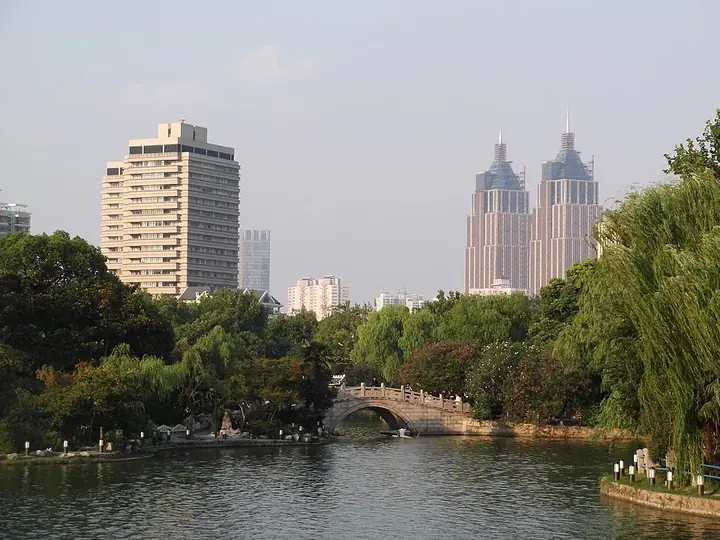
Photo adjustments
Full frame retained; proportionally resized and converted to WebP. No retouching or changes to the photographed subject. Card displays may crop the view.
- Administrative area
- District · 市辖区
- Part of
- Shanghai
- Chinese name
- 普陀区
- Local areas
- District guide
Area & population
- Area in the source
- 55.47 km²
- Population · 2020 Census
- 1,239,800
Source: cited geographic source, as of the dates shown.
History
The Shanghai government calls Putuo a birthplace of China's modern national industry and of the workers' movement led by the Communist Party. The brothers Sun Duoxin (孙多鑫) and Sun Duosen (孙多森) opened Shanghai's first machine flour mill, the Fufeng mill (阜丰面粉厂), here, and the chemist Wu Yunchu (吴蕴初) founded the Tianchu monosodium glutamate factory (天厨味精厂). In May 1925 the worker Gu Zhenghong (顾正红) was killed resisting Japanese capitalists, and his death set off the May Thirtieth Movement. The martial artist Lu Songgao (卢嵩高) came to Shanghai in the early 1920s and taught in Putuo, where Lu-style Xinyi boxing (卢氏心意拳) took shape in the 1930s and 1940s.
Far older is the Yuan-dynasty sluice gate at Zhidanyuan (志丹苑), found in 2001 some 7 to 12 metres below ground and fully exposed in 2006. It was named one of China's ten major archaeological discoveries of 2006 and became a national key cultural relics site in 2013; the city government calls it the largest, best-built and most complete Yuan sluice gate excavated in China.
What to see
The Jade Buddha Temple (玉佛禅寺) was founded in 1882 and is known for its Burmese jade Buddhas; its present buildings were begun in 1918 after the temple moved from Jiangwan (江湾) to Anyuan Road (安远路) and finished in 1928. A five-year restoration from 2014 moved the Mahavira Hall about 30 metres north and added a Guanyin Hall between it and the Hall of Heavenly Kings.
Along the Suzhou Creek, the Shanghai Textile Museum (上海纺织博物馆) occupies the old Shenxin No. 9 Textile Mill (申新纺织第九厂), successor to the Shanghai Machine Weaving Bureau founded in 1878, and the Suzhou Creek Industrial Civilisation Exhibition Hall (苏州河工业文明展示馆) opened in 2014 in the former Shanghai No. 1 Spectacles Factory. The Gu Zhenghong Memorial (顾正红纪念馆) includes the spot where he died, and a hall near the south bank recalls the Huxi Workers' Half-Day School (沪西工人半日学校). East China Normal University's museum, founded in 1952, has galleries of ancient coins, historic relics, biology and folk culture.
Food and local products
Zhenru mutton (真如羊肉) made its name in the Qianlong reign more than two hundred years ago; at its height one street of old Zhenru (真如) had over thirty mutton restaurants. The Zhao family garden (赵家花园) has been known for its chrysanthemums since the Qianlong reign, and the family's flower-growing has passed down to a ninth generation.
Highlights
- Jade Buddha Temple 玉佛禅寺: Founded in 1882 around Burmese jade Buddhas; present buildings completed on Anyuan Road in 1928.
- Yuan-Dynasty Sluice Gate Museum 上海元代水闸遗址博物馆: Yuan sluice gate found in 2001, 7 to 12 metres underground; national key cultural relics site since 2013.
- Shanghai Textile Museum 上海纺织博物馆: On the south bank of the Suzhou Creek in the former Shenxin No. 9 Textile Mill.
- Gu Zhenghong Memorial 顾正红纪念馆: Marks the 1925 killing that set off the May Thirtieth Movement.
- Zhenru mutton 真如羊肉: Known since the Qianlong reign; once served by over thirty restaurants on one Zhenru street.
Sources for this guide
普陀区_上海市人民政府 · Shanghai Municipal People's Government
普陀区 (上海市) - 维基百科,自由的百科全书 · Wikipedia (Chinese) · CC BY-SA 4.0
汇思想 _ 平移让路、拆迁叫停,沪西老商业区域改造老建筑竟有这么多波折 · Wenhui Daily
Original English written from the listed sources and checked sentence by sentence against quoted extracts by a separate reviewer. Updated 2026-09-25.
Explore Putuo District
Core places to explore, with English and Chinese names.
Places to explore around Putuo District
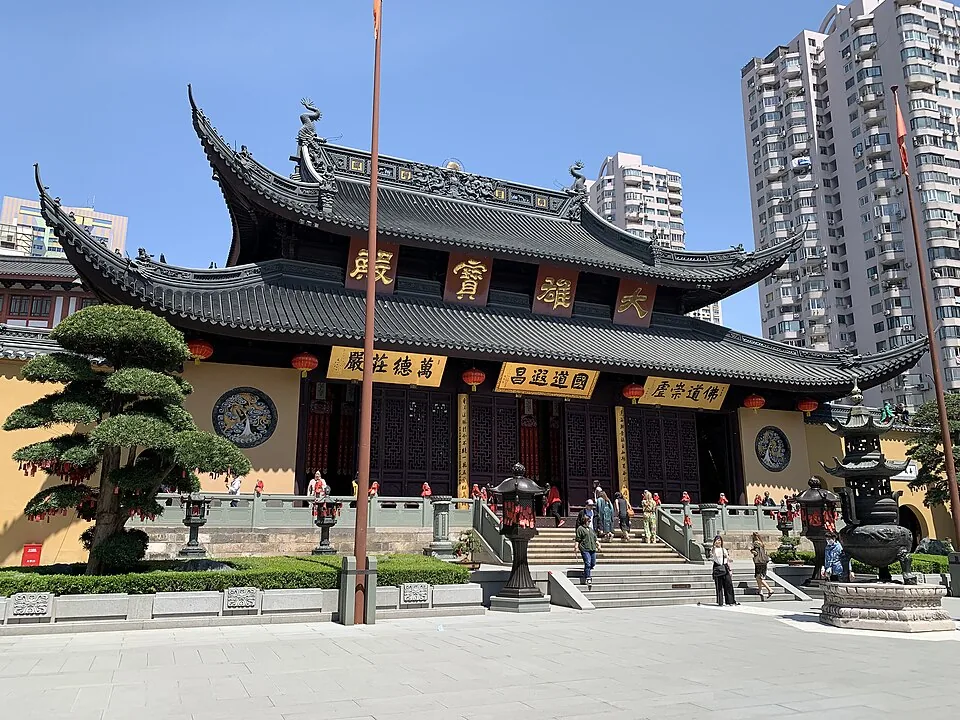 Mahavira Hall at Jade Buddha Temple, Shanghai. Photo: 2024-04-24 10:47:45.
Jade Buddha Temple玉佛禅寺
The Jade Buddha Temple takes its name from jade Buddha figures brought to Shanghai from Myanmar in the nineteenth century. The original group includes a seated figure and a smaller reclining Buddha.
Read the place guide → 1000 Trees beside Suzhou Creek in Shanghai, photographed in October 2024.
1000 Trees天安千树
1000 Trees is a terraced commercial complex beside Suzhou Creek in Putuo. Designed by Thomas Heatherwick, it draws on mountain forms and the idea of hanging gardens.
Read the place guide → An industrial lane inside Shanghai's M50 Creative Park, March 2017.
M50 Arts CommunityM50创意园
M50 takes its name from 50 Moganshan Road, on a bend of Suzhou Creek in Putuo. The art district reuses an ensemble of industrial buildings from different decades of the twentieth century.
Read the place guide → Yuan-dynasty sluice remains inside Shanghai Water Gate Museum · 上海元代水闸遗址博物馆内原址水闸 Photograph date recorded by the source: 19 July 2013, 14:24:13.
Yuan-Dynasty Sluice Gate Museum上海元代水闸遗址博物馆
The Yuan-Dynasty Sluice Gate Museum preserves an excavated water-control structure from medieval Shanghai. Sluices along the Wusong River, now known as Suzhou Creek, formed part of the effort to manage flooding.
Read the place guide →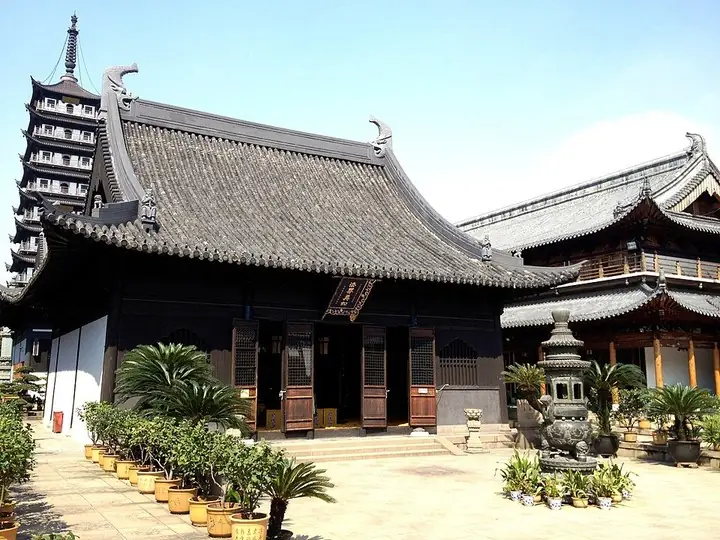 Main hall of Zhenru Temple, Shanghai · 上海真如寺大殿 Photograph date recorded by the source: 26 September 2013, 13:48:04.
Zhenru Temple真如寺
Zhenru Temple is a historic Buddhist precinct in Putuo, with origins traced to the Yuan period. A pagoda, prayer wheels, stele and a riverside colonnade give the visit several distinct visual elements.
Read the place guide →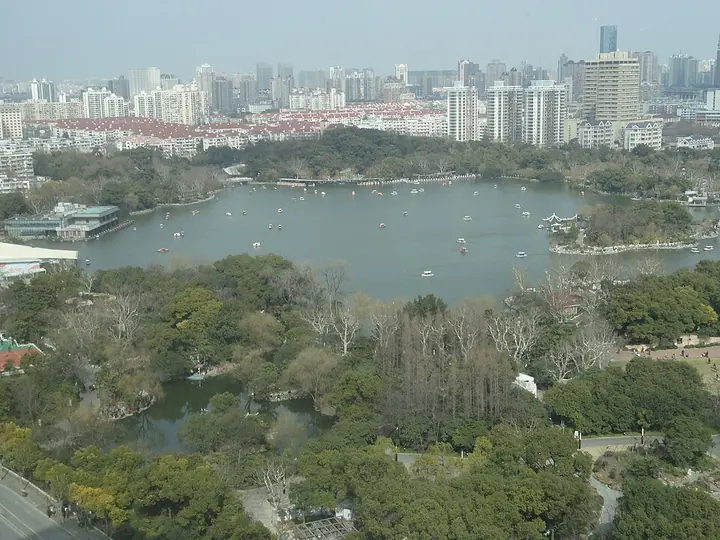 Elevated view of Changfeng Park lake and grounds, Shanghai · 上海长风公园湖区俯瞰 Photograph date recorded by the source: 16 February 2013, 01:27.
Changfeng Park长风公园
Changfeng Park is organized around the artificial Yinchu Lake and Tiebi Hill in western Shanghai. The landscaped park was developed in the 1950s as a substantial public green space in Putuo.
Read the place guide →Plan your visit
Getting there
Putuo District is about 7 km in a straight line from central Shanghai. Search for 普陀区 in a map app to find stations and your accommodation.
Where to stay →Build your route
Jade Buddha Temple and 1000 Trees are less than 1 km apart. The linked place guides have entrance and visit details.
Continue with Shanghai →More in Shanghai
Sources & geographic information
Administrative names and parent areas: Official geographic directory · Reference date 2026-09-06.
Some facts checked against 普陀区 (上海市) — Wikipedia contributors, CC BY-SA 4.0.
Photo: Jade Buddha Temple · Chainwit. · CC BY 4.0. Converted to WebP and resized without changing the subject or cropping the source frame.
_Mahavira_Hall,_Jade_Buddha_Temple,_Shanghai_-_img_04.jpg)
Photo: 1000 Trees · Codas · CC BY-SA 4.0. Wikimedia thumbnail; fitted to the ranking-card frame.

Photo: M50 Arts Community · MNXANL · CC BY-SA 4.0. Proportionally resized and converted to WebP without cropping, retouching or changing the photographed subject.

Photo: Yuan-Dynasty Sluice Gate Museum · Coolmanjackey · Coolmanjackey — 上海元代水闸.jpg — CC BY-SA 3.0 · CC BY-SA 3.0. The exact downloaded source bytes are separately retained and hashed. Prepared JPEG is proportionally reduced to a maximum 720-pixel long edge; full frame retained, no subject alteration. Final website rendition: full frame retained, proportionally resized to at most 720 pixels and converted to WebP. No additional retouching or subject alteration. Card displays may crop the view.

Photo: Zhenru Temple · Ukmist · Ukmist — 真如寺大殿.JPG — CC BY-SA 3.0 · CC BY-SA 3.0. The exact downloaded source bytes are separately retained and hashed. Prepared JPEG is proportionally reduced to a maximum 720-pixel long edge; full frame retained, no subject alteration. Final website rendition: full frame retained, proportionally resized to at most 720 pixels and converted to WebP. No additional retouching or subject alteration. Card displays may crop the view.

Photo: Changfeng Park · Roddy Austin from Irvington, New York, U.S.A. · Roddy Austin from Irvington, New York, U.S.A. — View_of_Changfeng_Park_from_the_Marriott_Hotel.jpg — CC BY 2.0 · CC BY 2.0. Full frame retained; proportionally resized and converted to WebP. No retouching or changes to the photographed subject. Card displays may crop the view.

Map data © OpenStreetMap contributors. Pins mark approximate centres, not entrances or boundaries.