


Get to know Kinmen County

Photo adjustments
Full frame retained; proportionally resized and converted to WebP. No retouching or changes to the photographed subject. Card displays may crop the view.
- Administrative area
- County / city · 縣市
- Part of
- Taiwan
- Chinese name
- 金門縣
- Local areas
- 6 local areas
Area & population
- Area in the source
- 150.46 km²
- Administrative seat
- Jincheng (Chincheng, Kincheng)
Source: cited geographic source, as of the dates shown.
The county consists of the major island of Kinmen along with several surrounding islets, as well as Wuqiu Township remotely located 133 km (83 mi) northeast from the rest of the county. Kinmen is one of two counties that constitute Fuchien Province; the other is Lienchiang County (Matsu).
Culture
The people of Kinmen see themselves as Kinmenese, Mínnánrén/Mǐnnánrén (people of Southern Fujian), or Chinese. They identify as citizens of the Republic of China but not so much as Taiwanese. Kinmen's strong Chinese identity was forged during the period of the ROC's military confrontation with the People's Republic of China (1949–1992) when Kinmen was under military administration. In the 1980s, as the militarization decreased and martial law was ended on Taiwan, the Taiwan independence movement and efforts in de-Sinicization grew in strength on Taiwan. To Kinmenese, however, these developments were viewed with concern and there was a feeling that "Taiwan didn't identify with Kinmen". Many worried that Taiwanese de jure independence from China would lead to the severing of ties with Kinmen. These concerns play a strong role in Kinmenese politics as well. Legally speaking, Kinmenese people are not Taiwanese either and have a unique identity from that of the Taiwanese. "Taiwanization" is sometimes perceived as a threat to the cultural identity of the Kinmenese people.
Tourism
Because of its military importance, development on the island was extremely limited. Only by 2003, Kinmen opened up itself to tourists from Fujian in Mainland China. It is now a popular weekend tourist destination for Taiwanese and is known for its quiet villages, old-style architecture and beaches. Chinese and Taiwanese tour groups also spend a short time touring the island whilst transiting between the ferry and the airport, as an intermediate stop between China and Taiwan. Large parts of Kinmen form the Kinmen National Park which highlights military fortifications and structures, historical dwellings and natural scenery.
The year 2014 recorded the highest number of passengers traveling by ferry between Kinmen and Fujian ports for as many as 1.5 million people. Since 1 January 2015, Chinese mainland tourists were no longer required to apply for Exit and Entry Permit in advance for visits to Kinmen, Penghu and Matsu Islands. Instead, they can apply for it upon arrival at a cost of NT$600.
Explore Kinmen County
Core places to explore, with English and Chinese names.
Places to explore around Kinmen County
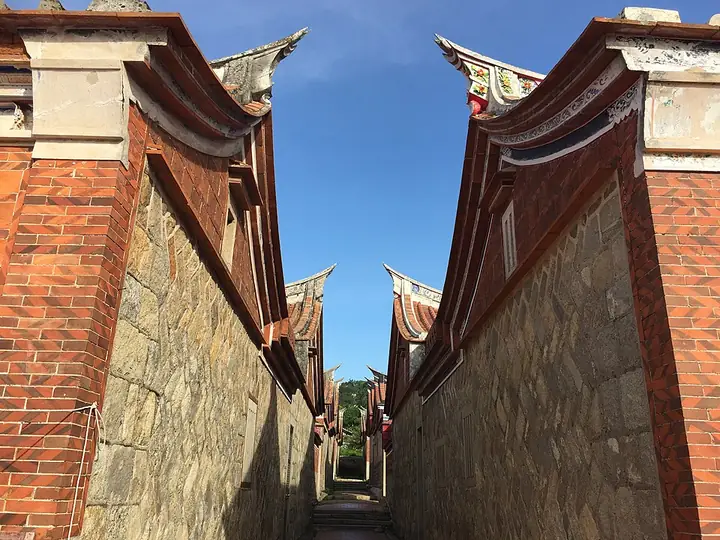 A lane in Shanhou village within Kinmen National Park ·
 Local life & food
Kinmen County local specialties
金門縣特色美食 · 10 specialties to discover
 Cantonese-Style Congee 广东粥
Cantonese-Style Congee (广东粥) is the breakfast congee of Kinmen (金门): rice cooked with a pork-bone stock for hours until the grains all but dissolve into a smooth, thick base with almost no visible rice.
Read the dish guide →
Photo adjustments
Full frame retained; proportionally resized and converted to WebP. No retouching or changes to the photographed subject. Card displays may crop the view.
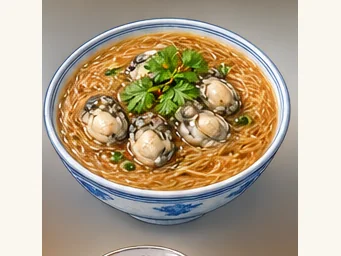 Oyster thin-noodle soup 蚵仔麵線AI illustration · AI 示意图
The texture is silky and spoonable, with soft oysters and more resilient intestine if included. Vinegar cuts through the rich base.
Source ↗Read the dish guide →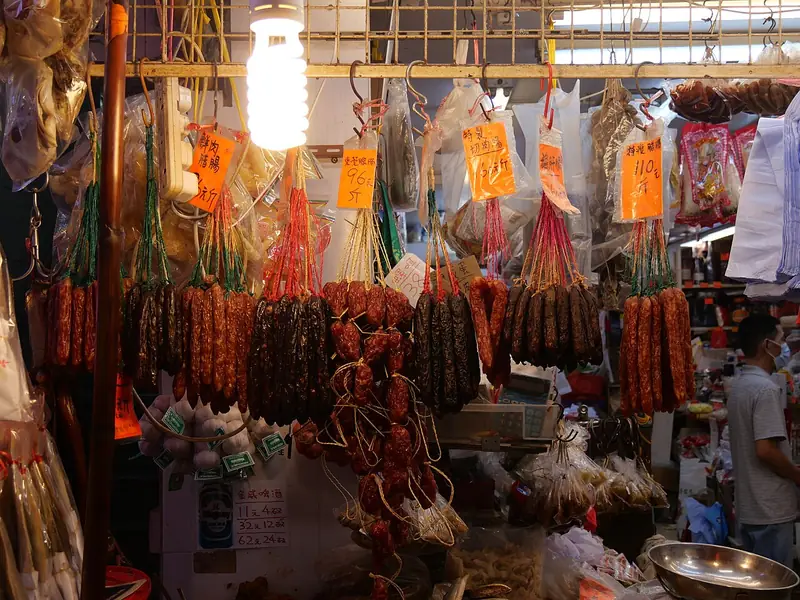 Sorghum Liquor Sausage 高粱香肠Reference photo of a similar dish · 同类菜品参考照片
Sorghum Liquor Sausage (高粱香肠) is listed among the local specialties of Kinmen County, Taiwan. It is grouped here with cured meats & roast-shop dishes; retain the complete Chinese name when comparing local menus.
Read the dish guide →
Photo adjustments
Full frame retained; EXIF orientation normalized, proportionally resized to at most 800 pixels and converted to WebP. No generated pixels or subject changes. Cards may crop the display.
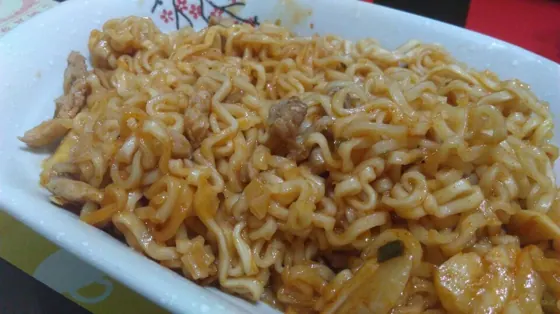 Stir-Fried Instant Noodles 炒泡面
Stir-Fried Instant Noodles (炒泡面) are a Kinmen (金門) food associated with soldiers' meals and memories of the islands' military years. Instant noodles are stir-fried with egg, meat and vegetables.
Source ↗Read the dish guide →
 Fujian-Style Baked Pastry 闽式烧饼Reference photo of a similar dish · 同类菜品参考照片
Minshi Shaobing (闽式烧饼) is a baked pastry found on Shamai Old Street (沙美老街) in Kinmen (金门).
Read the dish guide →
Photo adjustments
Full frame retained; EXIF orientation normalized, proportionally resized to at most 800 pixels and converted to WebP. No generated pixels or subject changes. Cards may crop the display.
 Pan-Fried Potstickers 锅贴
Pan-Fried Potstickers (锅贴) in Kinmen (金門) include a documented version at Chenggong Potsticker Restaurant (成功鍋貼館) in Chenggong Village (成功村).
Source ↗Read the dish guide →.jpg)
Photo adjustments
Full frame retained; proportionally resized and converted to WebP. No retouching or changes to the photographed subject. Card displays may crop the view.
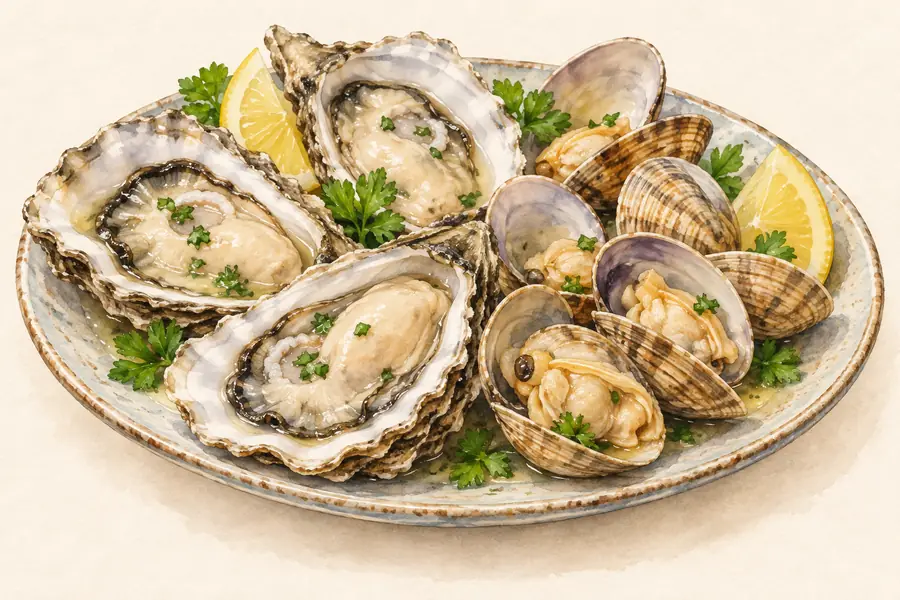 Deep-Fried Oyster Fritters 炸海蚵AI illustration · AI 示意图(仅供参考,非实拍)
Deep-Fried Oyster Fritters (炸海蚵) is listed among the local specialties of Kinmen County, Taiwan. 炸 describes frying.
Read the dish guide → Pig Trotters with Taro 芋头猪脚
Pig Trotters with Taro (芋头猪脚) is listed among the local specialties of Kinmen County, Taiwan. The name includes 猪 (pork), 芋 (taro).
Read the dish guide →Photo adjustments
EXIF orientation normalized; resized without changing aspect ratio; converted to WebP. No subject edits.
All dish names · 全部菜名 (10)
- Cantonese-Style Congee · 广东粥
- Oyster thin-noodle soup · 蚵仔麵線
- Sorghum Liquor Sausage · 高粱香肠
- Stir-Fried Instant Noodles · 炒泡面
- Fujian-Style Baked Pastry · 闽式烧饼
- Pan-Fried Potstickers · 锅贴
- Deep-Fried Oyster Fritters · 炸海蚵
- Pig Trotters with Taro · 芋头猪脚
- Kinmen Lees-Fed Beef · 酒糟牛肉
- Sorghum Liquor Braised Beef · 高粱酒炖牛肉
More dishes from across Taiwan are in the Taiwan food guide.
Townships, districts & local cities in Kinmen County
6 areas belong directly to Kinmen County.
6 areas
Jincheng Township金城鎮
Jincheng Township is an urban township on the southwestern corner of the island of Kinmen. It is the county seat of Kinmen County, Fuchien Province, Taiwan.
Explore the area →TownshipJinsha Township金沙鎮
Jinsha Township (Kinsha) is an urban township in the north-eastern corner of Greater Kinmen Island, Kinmen County, Fuchien, Taiwan. It is in the Taiwan Strait, on the coast of mainland China.
Explore the area →TownshipJinhu Township金湖鎮
Jinhu Township is an urban township of Kinmen, Fuchien, Taiwan. It is in the Taiwan Strait, on the coast of mainland China. Jinhu Township is the largest township in Kinmen County.
Explore the area →Rural townshipJinning Township金寧鄉
Jinning Township is a rural township in Kinmen. It is in the Taiwan Strait, on the coast of mainland China. It has a population of 34,569 (February 2023) and an area of 29.8540 km² (11.5267 sq mi).
Explore the area →Show fewer areas
Lieyu Township烈嶼鄉
Lieyu Township (Liehyu; Chinese: 烈嶼鄉; pinyin: Lièyǔ Xiāng; Pe̍h-ōe-jī: Lia̍t-sū Hiong) is a rural township in Kinmen County, Taiwan.
Explore the area →Rural townshipWuqiu Township烏坵鄉
Wuqiu (Wuchiu, Wuciou, Ockseu) (Puxian Min: Ou-chhiu, Hakka: Vû-hiu-hiông) is a rural township of Kinmen County, Taiwan made up of a group of islands in the Taiwan Strait comprising two major islands, Daqiu…
Explore the area →No areas match this name.
Plan your visit
Getting there
Search for 金門縣 in a map app to find stations and your accommodation.
Where to stay →Build your route
Start with Kinmen National Park. The linked place guides have entrance and visit details.
Continue with Taiwan →More in Taiwan
Sources & geographic information
Administrative names and parent areas: Official geographic directory · Reference date 2026-09-06.
Background text adapted from Kinmen — Wikipedia contributors, under CC BY-SA 4.0. Text has been shortened and reorganized; source revision 1369943051.
Photo: Kinmen National Park · Yenping Lee · CC BY-SA 4.0. Full-frame source proportionally resized and converted to WebP for display. No subject alteration. Source-supplied marks and edits remain; cards may crop the view.

Map data © OpenStreetMap contributors. Pins mark approximate centres, not entrances or boundaries.