

Baoshan red-braised river catfish 宝山红烧鮰鱼
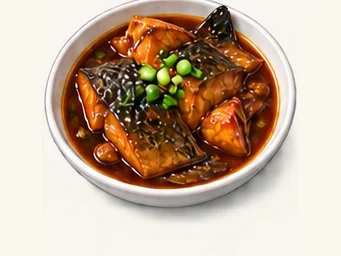
A Baoshan-associated Shanghai classic, red-braised hui fish is cooked slowly until its fish pieces stay intact and a glossy, date-red sauce thickens around them. The local heritage method alternates brief high-heat cooking with a much longer gentle braise; serve it to share, with plain rice for the rich sauce.
What the name means
Hui fish (鮰鱼) is a Chinese common name used for the longsnout catfish, Leiocassis longirostris, also called jiangtuan (江团). The Yangtze Estuary Wetland Station’s species record lists these names and records the fish in the Yangtze among other Chinese rivers. “Red-braised” describes the seasoned, soy-based cooking style; it does not mean the fish is fried crisp.
Baoshan red-braised hui fish is a locally documented expression of Shanghai’s broader red-braised fish dish, not a guarantee that every restaurant using the name follows one fixed formula. Baoshan District’s culture and tourism bureau lists the Baoshan hui-fish cooking technique as an intangible-heritage project and names Huang Caigen as a representative inheritor. The city government’s Baoshan feature traces the present craft to the old Hexing Restaurant on Wusong’s old street.
How it is cooked and what arrives at the table
The district account calls the sequence “liang du san men” (两笃三焖). It describes more than half an hour of cooking, with two brief periods over high heat—about two or three minutes each—and most of the remaining time under gentler heat. This careful alternation is intended to keep the fish pieces whole while making the flesh soft and fine; gelatin from the fish belly thickens the sauce naturally. The source does not publish a full technical recipe, so the shorthand should not be treated as one universally measured restaurant procedure.
A 2025 report in Xinmin Evening News describes one practitioner’s version as a 40–50-minute preparation, with caramelised sugar colour, soy sauce, pork fat and a total of 17 seasonings. It says the reduced sauce turns glossy, sticky and date-red while the fish remains soft without falling apart. The report does not list all 17 seasonings. Its account and the district’s shorter “more than half an hour” description are different documented descriptions, not grounds for promising one exact cooking time or ingredient list at every restaurant.
Expect substantial portions of tender, pale fish under a dark reddish-brown glaze. The aroma is savoury and soy-rich, with a rounded sweetness in the reported traditional style; the sauce clings to each piece rather than pooling like a thin broth. The prized contrast is intact pieces with yielding flesh and a naturally thick, slightly gelatinous sauce. Wuhan Academy of Agricultural Sciences describes longsnout catfish generally as tender and relatively low in bones, but fish still has bones: check each bite rather than assuming a boneless serving.
Ordering and eating
For a shared meal, order plain rice alongside the fish rather than treating it as soup or a crisp-fried entrée. Put a piece on your own plate, ease it apart with chopsticks, and take a little of the rich sauce with the rice. Ask the restaurant which fish it uses, whether the fish is served in pieces or whole, and whether the portion is priced by weight. Those are useful venue-specific checks, not claims that every current menu follows the heritage version.
The district’s heritage description identifies wild hui fish from the Yangtze estuary as the preferred raw material for the Baoshan tradition. That historical or heritage specification does not prove the origin or species of fish served today at any particular restaurant. Farmed longsnout catfish is also produced, according to Wuhan Academy of Agricultural Sciences. Ask the restaurant about its actual sourcing if provenance matters.
Fish is an essential ingredient. One documented traditional version includes soy sauce and pork fat, and the full seasoning formula varies or may be adjusted for contemporary preferences. Ask about cooking wine, stock, soy, added sugar and pork fat for dietary or allergy reasons; the dish name alone is not a complete ingredient or allergen declaration.
More dishes to compare
Explore related local specialties and compare their names, preparation notes and ordering guidance.
Red-braised pork belly 红烧肉 →
Pork belly is cut into chunks and slowly braised with soy sauce, sugar and aromatics until the sauce reduces. Shanghai-style versions often give noticeable weight to sweetness and a glossy finish. The lean meat becomes tender while the fat turns soft and yielding. Sweetness, salt and rich pork flavor should remain in balance.
Sizzling shredded eel 响油鳝糊 →
Eel is cooked and cut into fine strips, then combined with a seasoned sauce. Hot oil is poured over aromatics near serving time, producing the characteristic sizzling finish. The eel is tender and slippery, with a rich savory coating. Garlic, scallion and white pepper often give the final aroma its lift.
Sources & reading
Recipes and servings vary between kitchens.