


Get to know Baoshan District
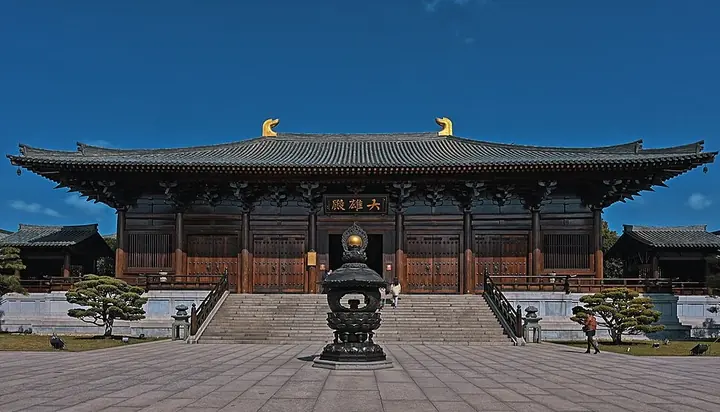
- Administrative area
- District · 市辖区
- Part of
- Shanghai
- Chinese name
- 宝山区
- Local areas
- District guide
Area & population
- Area
- 424.58 km²
- Population · 2020 Census
- 2,235,218
Source: English Wikipedia, as of the dates shown.
Baoshan lies in northern Shanghai, with the Yangtze estuary to its northeast and the Huangpu River along its eastern side. Wenzaobang runs across the district and divides it into northern and southern parts. The district government reported 2.2682 million permanent residents in 2025; the current administrative listing comprises three subdistricts and nine towns. These facts describe a large, lived-in district, not a sightseeing circuit.
Plan around distinct clusters and check the exact map pin before setting out. The riverfront in the east is a different outing from the inland park and cultural stops. Do not combine them into one walking itinerary simply because they share the Baoshan name.
The eastern riverfront: port views, wetlands and new landmarks
A 2026 Shanghai municipal recommendation starts at Wusongkou International Cruise Terminal and continues to Wusong Paotaiwan Park, Baoshan Riverside (Shanghai Haishang World), the Long Beach Observation Tower and Long Beach Concert Hall. It treats the port as a view from the riverside, rather than suggesting visitors enter a working terminal. At Paotaiwan, use the park paths to take in wetland vegetation and estuary scenery; the site also recalls the former coastal batteries that gave it its name.
The published one-day route recommends a car between stops. It gives Metro Line 3 to Songbin Road followed by a taxi or bus as an approach option, and estimates the taxi legs at 15–20 minutes each; traffic and access arrangements can change. The same 2026 route lists the park as free. It names the observation tower and concert hall as later stops, but their admission and performance arrangements are separate—check the operator before going.
For a more explicitly historical indoor visit, the district government also lists the Shanghai Songhu Resistance War Memorial Hall, whose exhibitions cover the two battles of Shanghai and the fourteen-year War of Resistance. Treat it as its own museum visit, not as an assumed stop inside the wetland park; the official material reviewed here did not establish a standard opening schedule or ticket policy.
Inland outings: choose a park or a museum day
Gucun Park (顾村公园) is an extensive country park of about 430 hectares, combining water, wetlands, plant communities and open landscape. Cherry blossom season is its best-known draw, but a visit outside the festival can still be framed as a long park walk. Checked on 21 October 2026, the operator lists the address as 4788 Hutai Road and regular opening hours as 6:00 a.m.–6:00 p.m. Its posted standard fares are RMB 20 for adults, RMB 10 for full-time students at undergraduate level or below, and RMB 16 for visitors aged 60–64 with valid ID; ticket sales run 6:00 a.m.–4:30 p.m. Seasonal events may alter access, so recheck the park’s notices.
The Shanghai Museum of Glass (上海玻璃博物馆), at 685 Changjiang West Road, offers a separate indoor visit centered on glass as material, technology and art. Checked on 21 October 2026, its official visitor page lists general admission at RMB 60, 10:00 a.m.–5:00 p.m., and closure on Mondays except public holidays. That ticket lets a visitor choose one of four venues—the main museum, Kids Museum of Glass, Maze or Contemporary Art Hall—with other combinations available by paying the difference. Check the museum’s mini-program for discounts and any changes before travelling.
Luodian: look for living heritage, not a permanent show
Luodian’s Dragon Boat Festival boat-rowing custom is a nationally listed item of folk heritage associated with Baoshan. The heritage record describes flat-bottomed boats adapted to narrow local waterways, with dragon heads carved from a single block of camphor wood; it also records ceremonial steps and a multi-day festival tradition. This is a seasonal custom, not a daily attraction with guaranteed performances. Look for an announced local festival programme if you want to see it in practice.
How to organize a Baoshan visit
Use Wusongkou and Paotaiwan for a riverfront day; choose Gucun Park when open-air landscape is the priority; choose the Glass Museum for an indoor, design-led visit; and reserve Luodian for a festival-focused visit. These are different parts of the district, so select one area at a time and use the named address or destination in your map app. The sources reviewed confirmed Gucun’s street address and the municipal riverfront route, but not reliable station exits or gate-by-gate directions for every venue. Check each operator’s latest notice, especially for holiday changes and the estuary science museum inside the park.
Guide sources
- Baoshan District profile and cultural-tourism guide
- Shanghai administrative division codes, July 27, 2026
- Baoshan riverfront route from Wusongkou, May 25, 2026
- Gucun Park admission and ticket information
- Gucun Park opening hours
- Wusong Paotaiwan National Wetland Park
- Dragon Boat Festival custom in Luodian
- Shanghai Museum of Glass visitor information
Explore Baoshan District
Core places to explore, with English and Chinese names.
Places to explore around Baoshan District
 Glass artwork 《折》, photographed at the museum in summer 2016. This archival close-up is illustrative rather than a guarantee that the work is currently on display. Photo: 来斤小仓鼠吧 (Let's have a little hamster.) · CC BY-SA 4.0
Shanghai Museum of Glass上海玻璃博物馆
Set amid the retained fabric of a former glass factory, Shanghai Museum of Glass links the history and making of glass with contemporary art. The Park's CNY 60 general ticket selects one of four venues; the glass-blowing theatre and hands-on sessions are separate, timed experiences, so check their schedules before building a visit around them.
Read the place guide → AI illustration · AI 示意图(仅供参考,非该地点实拍)
Wusong Paotaiwan Wetland Park吴淞炮台湾湿地公园
On Shanghai’s northern waterfront in Baoshan, Wusong Paotaiwan Wetland Park pairs riverside wetland paths with reminders of the area’s coastal-defence past. Come for a slower walk beside the Yangtze estuary, then add the separate Yangtze River Estuary Science and Technology Museum if its opening arrangements suit your day.
Read the place guide →Local life & food
Baoshan District local specialties
宝山区特色美食 · 3 specialties to discover
 Baoshan red-braised river catfish 宝山红烧鮰鱼AI illustration · AI 示意图
A Baoshan-associated Shanghai classic, red-braised hui fish is cooked slowly until its fish pieces stay intact and a glossy, date-red sauce thickens around them. The local heritage method alternates brief high-heat cooking with a much longer gentle braise; serve it to share, with plain rice for the rich sauce.
Source ↗Read the dish guide → Luodian fish balls 罗店鱼圆AI illustration · AI 示意图
Luodian fish balls (罗店鱼圆) are Baoshan's tender, springy fish balls, usually served hot in soup. Local recipes differ, so ask what fish and seasonings are in the batch; try them with greens or in wonton or noodle soup.
Source ↗Read the dish guide → Luojing Sixi steamed cake 罗泾四喜风糕AI dish illustration / AI 菜品示意图
A fluffy, lightly sweet rice cake from Luojing in Shanghai’s Baoshan District, steamed from a sifted mixture of local japonica and glutinous rice. Its name links it to auspicious family occasions, and its airy, non-sticky texture differs from denser regional rice cakes.
Source ↗Read the dish guide →More dishes from across Shanghai are in the Shanghai food guide.
Plan your visit
Getting there
Baoshan District is about 20 km (straight-line distance) from central Shanghai. Search for 宝山区 in a map app to find stations and your accommodation.
Where to stay →Build your route
Shanghai Museum of Glass and Wusong Paotaiwan Wetland Park are about 7 km apart (straight-line distance). The linked place guides have entrance and visit details.
Continue with Shanghai →More in Shanghai
Sources & geographic information
Administrative names and parent areas: Official geographic directory (dmfw.mca.gov.cn) · Reference date 2026-09-06.
Background text adapted from Baoshan, Shanghai — Wikipedia contributors, under CC BY-SA 4.0. Text has been shortened and reorganized; source revision 1362316830.
Map data © OpenStreetMap contributors. Pins mark approximate centres, not entrances or boundaries.
Image credits & notes (1)
- The Mahavira Hall of Baoshan Temple in Baoshan District, Shanghai. Photo: 2021-05-27 15:35:42.Photo: Nyarlathotep1001 · CC BY-SA 4.0Resized for the web; the photo itself has not been edited. Thumbnails may show a cropped view.
