

Chengdu maocai mixed spicy bowl 成都冒菜
Maocai is a Chengdu-associated, kitchen-cooked bowl of selected vegetables, tofu and proteins served in seasoned broth. Choose a mix of textures, ask how the shop prices ingredients and how hot its broth is, and eat it freshly cooked rather than as a table-side hotpot.
Tap any red Chinese text to hear it in Mandarin.
What to expect
The word mao (冒) describes cooking ingredients in hot, seasoned liquid and serving the finished selection together. Unlike hotpot, where diners cook raw items at the table, a maocai kitchen prepares the bowl for you. Published descriptions list meat, soy products, vegetables, seafood and mushrooms among possible ingredients; the exact selection belongs to each shop, not to a single citywide recipe.
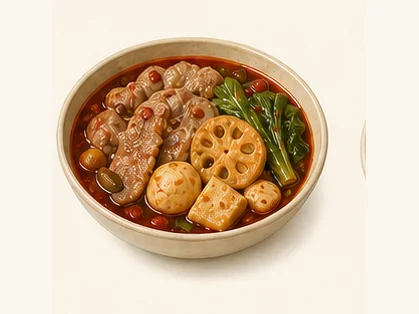
A red, chilli-forward broth can look glossy and orange-red, with savoury spice and a peppery, sometimes numbing finish. Greens and bean sprouts soften; lotus-root slices can keep a crisp bite; tofu and other porous ingredients take up the broth, while meat or seafood adds a firmer, tender or springy contrast. Chengdu descriptions also mention finishing the bowl with broth, scallion, coriander and fermented black beans. These are useful cues to look for, not a guarantee that every shop uses the same base or garnish.
How to order and eat it
Point to the ingredients you want or show 成都冒菜 Chéngdū màocài. Before ordering, ask whether items are priced by weight or portion, whether rice is separate, what the broth contains, and whether the chilli and numbing-pepper level can be adjusted. A vegetable-only selection is not proof that the soup is vegetarian: shared stock, animal fat, sauces and cooking equipment may still contain animal ingredients. Ask directly about meat stock, beef fat, seafood, soy, peanuts or other allergens relevant to you.
Some published Chengdu guidance describes dipping cooked ingredients in a separate dry chilli seasoning (gan die, 干碟). Treat it as an optional style rather than a universal accompaniment; ask the restaurant what it serves. Eat the pieces with rice if offered or desired. Broth richness and whether it is intended to be sipped vary by shop, so ask before drinking it.
Practical tips
Maocai is strongly associated with Chengdu and belongs to the wider Sichuan food scene; the available sources support that association but do not establish one uncontested invention story or a single canonical recipe. It offers a convenient way to sample several ingredients in one cooked-to-order bowl, rather than a communal pot whose cooking is part of the meal.
Where to eat it
You can find Chengdu maocai mixed spicy bowl all over Chengdu, so there is no need to seek out one particular restaurant. To find one near you, search for “成都冒菜” in Meituan (美团) or Amap (高德地图) and check recent reviews, distance and opening hours.
More dishes to compare
Explore related local specialties and compare their names, preparation notes and ordering guidance.
Songpan traditional hotpot 松潘土火锅 →
Meat, vegetables and other accompaniments are arranged in a traditional metal pot and heated together in broth. Some ingredients may be cooked in advance before the communal serving stage. The broth grows richer as the layers warm, while vegetables and noodles absorb meat juices.
Lezhi barbecue 乐至烤肉 →
Small pieces of meat and vegetables are threaded onto skewers and grilled, with chili and aromatic seasoning applied during cooking. Different ingredients need different times over the heat. The appeal is browned edges, smoky aroma and concentrated spice, contrasted with juicy interiors or crisp vegetables.
Sources & reading
Recipes and servings vary between kitchens.