

Bishan Rabbit Dishes 璧山兔
Bishan rabbit is a family of rabbit dishes associated with Bishan District, Chongqing, rather than one fixed recipe. From gently poached, cold-dressed rabbit to chili-rich braises and hot-pot-style bowls, the district’s cooks make it in many forms; individual kitchens set their own seasoning and heat.
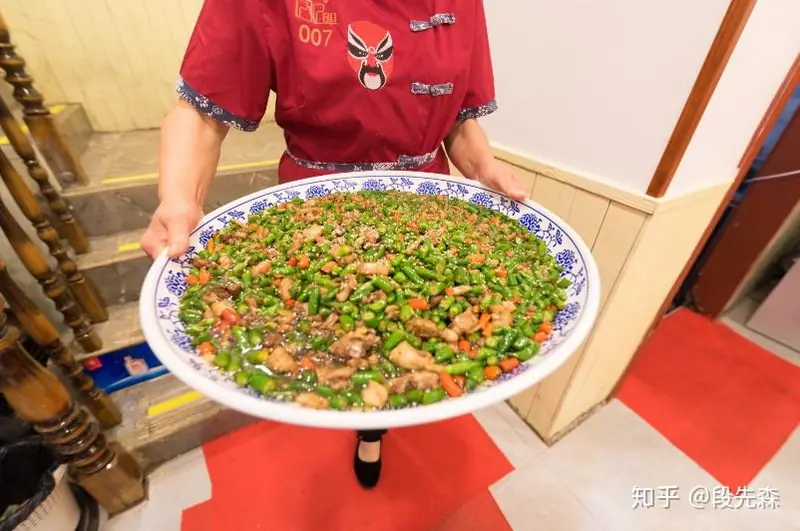
Image notes
Resized for the web; the photo itself has not been edited.
A district food, not a single formula
Bishan rabbit takes its name from Bishan District in western Chongqing. A local newspaper describes rabbit cooking there as a broad family that became known across the Chongqing–Sichuan region and beyond. It is best understood as a place-associated tradition with many restaurant and household expressions, not as a dish with one citywide recipe.
One well-documented example is Tang rabbit (唐兔), whose signature preparation is white-cut rabbit (白砍兔). A published recipe from a Bishan restaurant calls for a young rabbit briefly poached with ginger, scallion and baijiu, then cooled and cut. Its particular method specifies gentle cooking at about 70°C for roughly 15 minutes. The meat is dressed with a mixture of red chili oil, soy sauce, garlic, ginger, vinegar, sugar, sesame oil and scallion, with crisp fried peanuts for contrast. This is one named kitchen’s formula, not a rule for every Bishan rabbit.
Expect a balance of clean, tender rabbit meat and a savory dressing, with chili warmth, aromatic ginger and garlic, a little vinegar-sugar lift and the crunch of peanuts in that version. Other preparations change the balance: the local newspaper lists red-braised rabbit, pepper and pickled-chili versions, cold-dressed rabbit, and broth-based or hot-pot styles such as water-boiled and “jumping-water” rabbit. Some dishes emphasize a bright chili-fragrant sauce; others let rabbit sit in a spicy broth. The names and seasoning vary by kitchen, so ask what a particular menu means rather than assuming every bowl will taste alike.
Local roots and modern variety
A 2023 Chongqing newspaper retrospective points to Han-period tomb reliefs found in Bishan that depict raising, slaughtering and roasting rabbits. Those images are evidence of local rabbit-eating practices, not proof that today’s named Bishan rabbit recipes are two thousand years old. The same account distinguishes older white-cut rabbit from the growth of hot rabbit dishes at roadside restaurants after the reform era, as cooks developed a much wider menu.
At the table, share several styles if you are dining with a group. White-cut rabbit lets you focus on the meat and its dipping or poured-on sauce; a broth or braise makes the chili and aromatics more prominent. Rabbit is commonly served in bone-in pieces, so eat carefully. Useful phrases are 璧山兔 (Bìshān tù), 白砍兔 (báikǎn tù), and 可以少辣吗?(Kěyǐ shǎo là ma? — Could you make it less spicy?).
Where to eat it
You can find Bishan Rabbit Dishes all over Chongqing, so there is no need to seek out one particular restaurant. To find one near you, search for “璧山兔” in Meituan (美团) or Amap (高德地图) and check recent reviews, distance and opening hours.