

Kaizhou Basket-Steamed Mutton 开州羊肉格格
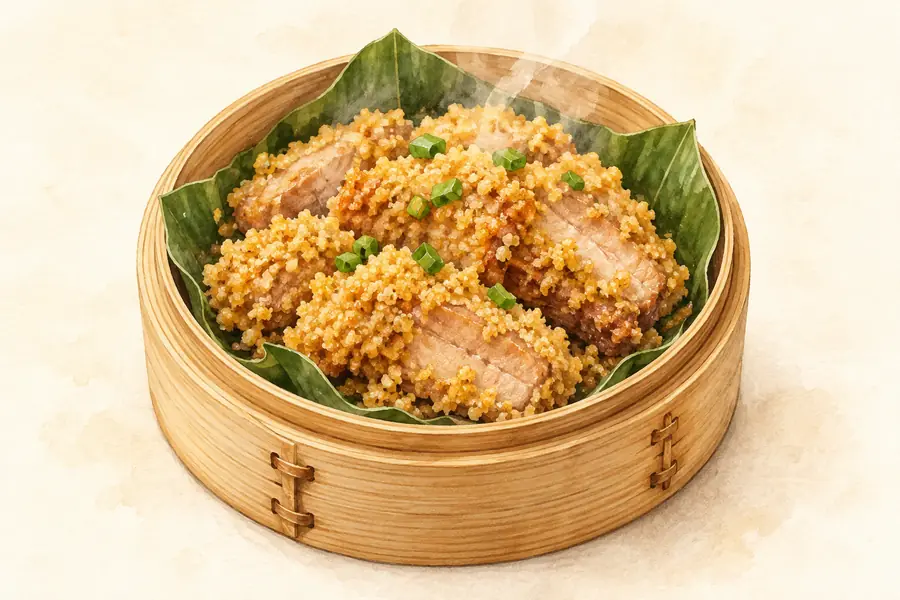
Kaizhou lamb gege is a northeastern Chongqing tradition of rice-coated lamb steamed in small bamboo baskets, with local methods varying and Wanzhou now especially associated with gege restaurants.
Tap any red Chinese text to hear it in Mandarin.
开州羊肉格格 (Kaizhou yangrou gege) is a northeastern Chongqing specialty, not a dish to treat as ubiquitous across the whole municipality. Its history is shared with neighboring northeastern Chongqing; Wanzhou is now the place most strongly associated with gege restaurants, while an account of old Kaixian County—today’s Kaizhou—records a local mutton-gege tradition as well.
What goes into a gege
A gege is a small bamboo steamer, not a fixed recipe. In the northeastern Chongqing version described by Chongqing Morning Post writer Tao Ling, small pieces of lamb are seasoned with salt, chopped chili, ginger and doubanjiang (豆瓣酱), then coated in coarse rice meal. The meal is made from toasted rice with a little glutinous rice and Sichuan peppercorns, ground rather coarsely. Sweet potato, taro or potato may sit underneath to catch the meat juices. These are a documented household-style method, not mandatory ingredients in every Kaizhou kitchen; seasoning and the vegetable base vary.
The tightly stacked, palm-sized bamboo baskets steam the coated lamb over strong heat. Toasted grain gives the outside a gently nubby, soft-sticky coating; the lamb stays savory and moist, while chili and ginger bring warmth and doubanjiang adds a fermented, salty depth. Bamboo can contribute a faint woody aroma. Expect differences in chili heat, seasoning and meat texture from one cook to another. Some shops steam other meats—such as pork intestine or ribs—in separate baskets, and Kaizhou’s related “big mixed steaming” (大混蒸) is a broader, larger-format assortment of meats and vegetables rather than another name for a single lamb gege.
How to eat it
Eat it hot, straight from its little basket, with rice or a simple soup if served. A Chongqing Morning Post account describes an older Kaixian preference for lamb just after the steamer began to drip, when it was cooked through but still had some bite; the writer calls this “滴笼水” (dī lóng shuǐ). Treat that as a remembered local custom, not a required doneness or a promise about how restaurants serve it now.
For a visitor, the useful distinction is geographic: look for this tradition in Kaizhou and the wider northeastern Chongqing food culture, but do not assume every restaurant elsewhere in Chongqing serves it. Wanzhou has the more prominent contemporary “gege” restaurant identity, and the small bamboo basket format is shared across the region.