


Get to know Wanzhou District
- Administrative area
- District · 市辖区
- Part of
- Chongqing
- Chinese name
- 万州区
- Local areas
- District guide
Area & population
- Area
- 3,457.00 km²
- Population · 2013
- 1,753,500
Source: English Wikipedia, as of the dates shown.
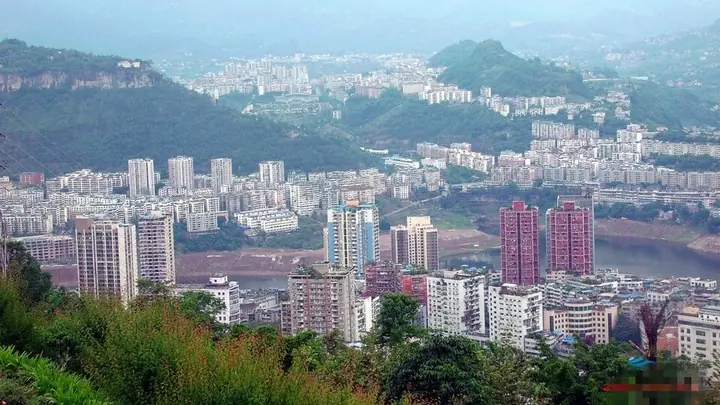
Wanzhou is one of Chongqing’s current districts, but it is not part of the municipality’s central urban core: it lies in the Three Gorges reservoir region, roughly 225 km from central Chongqing in a straight line. Think of it as a regional city and a large rural district, not as a single attraction or a quick extension of downtown Chongqing. Its crowded hillsides, broad reservoir reach and riverside promenades reflect the major transformation brought by the Three Gorges project; Wanzhou resettled 263,000 people, and much of its former urban area was inundated.
A district of distinct landscapes
Begin in the urban center, where the Yangtze and the reservoir shape a stepped city. The waterfront promenade is for an unhurried walk, views across the water and ordinary evening life; the slope behind it quickly leads into older commercial streets and hillside neighborhoods. At Taibai Rock and the old-city side, look for the historical layers of a former river port rather than expecting a preserved, continuous ancient town. The 1930s Xishan Clock Tower (西山钟楼), in Xishan Park, is one of the landmarks associated with that port-era city. Access to individual heritage structures can change during conservation work, so treat the public park and exterior city views as the dependable outing unless current notices confirm interior access.
For a more curated history walk, Tianchengcheng Cultural and Tourism Quarter (天生城文旅街区) sits below the Tiancheng site (天生城遗址). The district’s account describes reconstructed old-town lanes, displays about the Song–Mongol-era mountain stronghold, and local performance and food settings. Walk the streets and interpretive areas at a relaxed pace; it is a contemporary cultural quarter built around a real archaeological and defensive-history site, not the untouched medieval settlement itself. A visit to the Chongqing Three Gorges Migration Memorial Museum (重庆三峡移民纪念馆) gives the reservoir landscape its human context: its subject is the large-scale relocation associated with the Three Gorges project. The museum’s own visitor page currently states free admission and Tuesday–Sunday opening, with Monday closure; holiday schedules may differ, so check its latest notice before setting out.
The wider district is a separate excursion, not a walk from downtown. Wanzhou Grand Waterfall (万州大瀑布) is in Ganning (甘宁镇), outside the urban center; the broad cascade and river-cut grottoes are the draw. Allow for an out-and-back visit and confirm the scenic area’s current opening and ticket arrangements before departure. In TaiLong (太龙镇), the small citrus-focused countryside tourism area described by the district combines river views with seasonal red-orange orchards; fruit picking is seasonal and should not be assumed available on every visit.
Make a visit that fits the scale
Give the central waterfront, a historic/cultural stop and the museum their own time, and reserve another half-day or day for Ganning’s waterfall if it is open and transport works for your schedule. The district is long and mountainous, so combining a downtown stroll with a distant rural site requires planned transport rather than an improvised walk. In public spaces, share the promenade with residents and avoid close photographs of people without consent.
Wanzhou has no metro line. Long-distance arrivals use Wanzhou North (万州北站) for high-speed rail, Wanzhou Railway Station (万州站) for conventional rail services, and Wanzhou Wuqiao Airport (万州五桥机场) for air travel; these are separate facilities, not interchangeable station names. Long-distance coach and river-port facilities also serve the wider region, but a port’s existence does not mean a sightseeing cruise departs on a regular daily timetable. From any arrival point, choose a hotel or a specific attraction as the destination; “Wanzhou District” has no single visitor entrance or legal taxi drop-off. For Ganning, use the scenic-area name 万州大瀑布群旅游区 as the Chinese destination and confirm the current entrance with the operator. There is no verified metro exit or single bus route that can serve the whole district; confirm a current local bus stop/route for the exact venue, and check both legs of any coach, boat or rural outing before committing.
For a taxi or ride-hail, enter the venue or hotel’s full Chinese name and its current published address, and use its signed public passenger approach—not a rail platform, bus bay, loading area or restricted curb—as the drop-off. This district-level guide does not assign one taxi address to every Wanzhou visit. No scheduled cruise departure, return sailing, fare or rural bus timetable is promised here.
Eating and everyday Wanzhou
Wanzhou grilled fish (万州烤鱼) is a recognizable local specialty, best understood as a shared, sauce-finished river-fish dish rather than a single standardized recipe: grilled fish arrives in a shallow pan with vegetables, and the table simmers it in a chosen broth or seasoning. Chilli heat, numbing spice, pickled or fermented notes, fish species and vegetable selection vary between cooks. Wanzhou gege (万州格格) refers to small basket-steamed dishes, often ordered by filling; minced-pork, beef, mutton and offal versions are among the variations. In town, eating in a lively food street is a way to experience the local dining scene, but individual stalls and opening hours change. Useful ordering words: 烤鱼 (grilled fish), 格格 (basket-steamed dish), 微辣 (mildly spicy), 不要花椒 (no Sichuan pepper).
The city’s public waterfront, neighborhood lanes and open cultural spaces are also part of the visit. District reporting describes weekend folk and variety performances at venues such as Nanpu Small Theatre, but programs and access can change; check the venue’s current announcement rather than assuming a performance on a particular date.
Guide sources
- Wanzhou District Government, Tourism Development Feature
- Xinhua, Wanzhou: A Confluence of Rivers and a Reservoir City
- Chongqing Three Gorges Migration Memorial Museum, Visitor Information
- Wanzhou District Government, Taxi Traffic Management Notice
- Wanzhou District Government, High-speed Rail North Station Management Center
- Xinhua, Chongqing administrative adjustment report
Explore Wanzhou District
Core places to explore, with English and Chinese names.
Places to explore around Wanzhou District
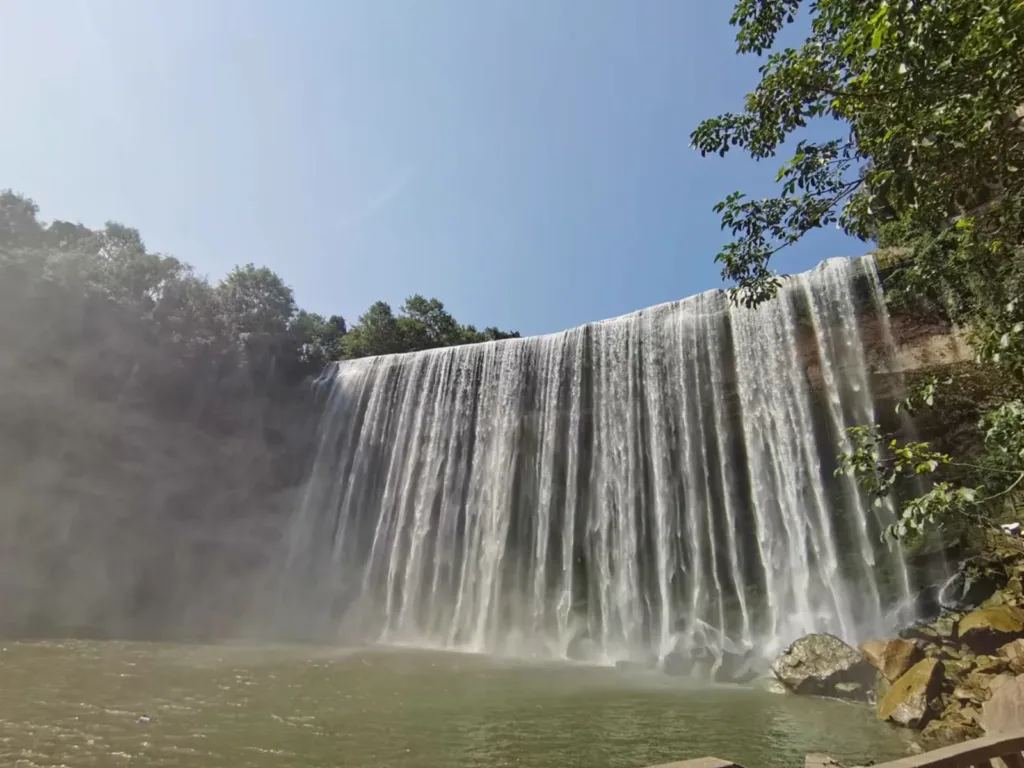 The wide, curtain-like drop of Wanzhou Waterfall, seen from close to its base. Photo: 261026CQ · CC BY-SA 4.0
Local life & food
Wanzhou District local specialties
万州区特色美食 · 7 specialties to discover
 Wanzhou roasted fish 万州烤鱼AI dish illustration · AI 菜品示意图
A whole fish is seasoned, roasted until its surface browns, then served in a hot, savory sauce with vegetables. Wanzhou roasted fish is a signature of Wanzhou in Chongqing, but its restaurant style has spread far beyond the district.
Source ↗Read the dish guide → Wanzhou Small Basket-Steamed Dishes 万州格格
In Wanzhou, small bamboo baskets hold spicy, steaming portions of lamb, pork ribs or pork intestine over tender potato and other root vegetables—a local, informal way to sample Chongqing’s northeastern food culture.
Read the dish guide →Image notes
Resized for the web; the photo itself has not been edited.
 Wanzhou Minced Meat Sauce Noodles 万州杂酱面AI illustration · AI 示意图(仅供参考,非实拍)
A Wanzhou-style bowl of wheat noodles topped with pork mince sauce, where broad-bean paste, soy sauce and chilli oil meet the numbing, savoury seasoning associated with the wider Chongqing noodle tradition.
Read the dish guide →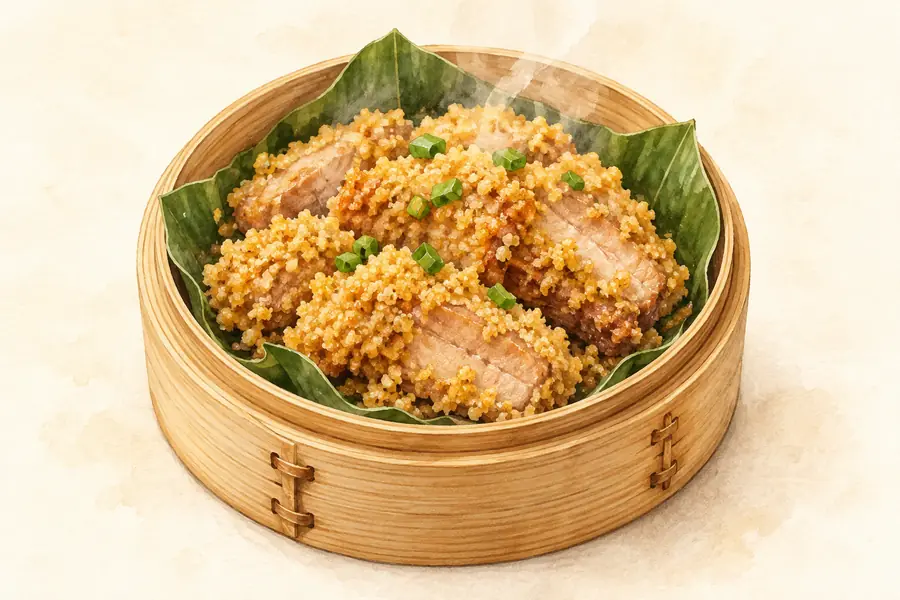 Wanzhou Basket-Steamed Mutton 万州羊肉格格AI illustration · AI 示意图(仅供参考,非实拍)
In Wanzhou, Chongqing, small portions of seasoned mutton are coated in rice meal and steamed in little bamboo baskets over a pot. This hearty, peppery dish is best understood as a Wanzhou specialty within a broader northeastern Chongqing and neighboring regional tradition.
Read the dish guide →Wanzhou Basket-Steamed Pork Intestines 万州肥肠格格AI illustration · AI 示意图(仅供参考,非实拍)
A Wanzhou-style small-basket steamed dish of seasoned pork intestine, rooted in the local 格格 tradition of Chongqing’s Wanzhou District.
Read the dish guide →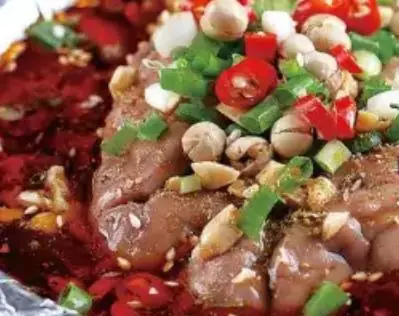 Wanzhou Grilled Pork Brain 万州烤脑花
A richly seasoned Chongqing-style charcoal snack built around pork brain, whose very soft, almost mousse-like texture contrasts with chili, Sichuan pepper and crisp toppings. The name is associated with Wanzhou in the supplied Chongqing food listing, but the documented grilled-brain style is shared across the wider Sichuan–Chongqing region rather than established as a Wanzhou-only recipe.
Read the dish guide →Image notes
Resized for the web; the photo itself has not been edited.
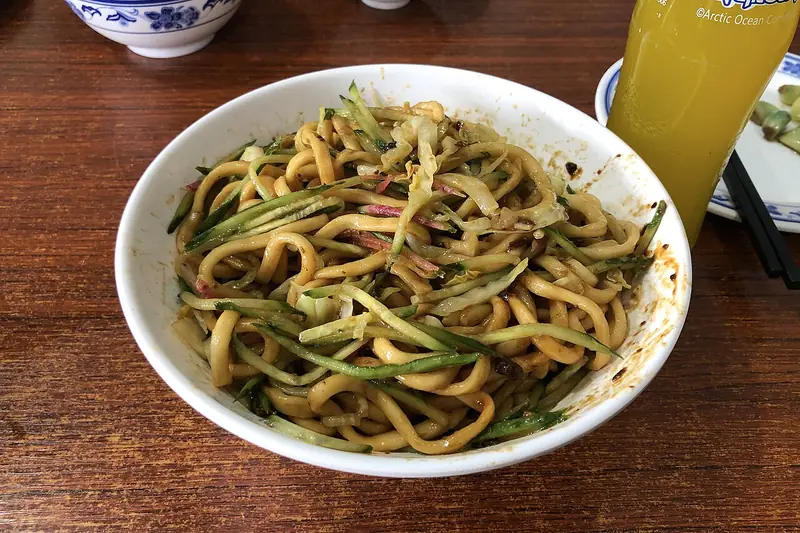 Wanzhou Zhajiang Noodles 万州炸酱面Reference photo of a similar dish · 同类菜品参考照片
A pork-sauce noodle associated with Wanzhou in Chongqing, this dry bowl is best understood through its savory topping and the ways individual cooks season it.
Read the dish guide →
Image notes
Resized for the web; the photo itself has not been edited. Thumbnails may show a cropped view.
More dishes from across Chongqing are in the Chongqing food guide.
Plan your visit
Getting there
Wanzhou District is about 225 km (straight-line distance) from central Chongqing. Search for 万州区 in a map app to find stations and your accommodation.
Where to stay →Build your route
Start with Wanzhou Waterfall. The linked place guides have entrance and visit details.
Continue with Chongqing →More in Chongqing
Sources & geographic information
Administrative names and parent areas: Official geographic directory (dmfw.mca.gov.cn) · Reference date 2026-09-06.
Background text adapted from Wanzhou, Chongqing — Wikipedia contributors, under CC BY-SA 4.0. Text has been shortened and reorganized; source revision 1336485148.
Map data © OpenStreetMap contributors. Pins mark approximate centres, not entrances or boundaries.
Image credits & notes (1)
- Wanzhou neighbourhoods seen from Taibai Rock in Wanzhou District, Chongqing. Photograph date recorded by the source: 11 May 2013 (original upload date).Photo: 图片上传者:吴显胜(China) · CC BY 3.0Resized for the web; the photo itself has not been edited. Thumbnails may show a cropped view.
