

Old-Style Chongqing Hotpot 老火锅
A communal Chongqing meal built around a richly aromatic, chili-red broth: diners cook tripe, sliced meats, tofu and vegetables at the table, then dip each bite in sesame oil and garlic.
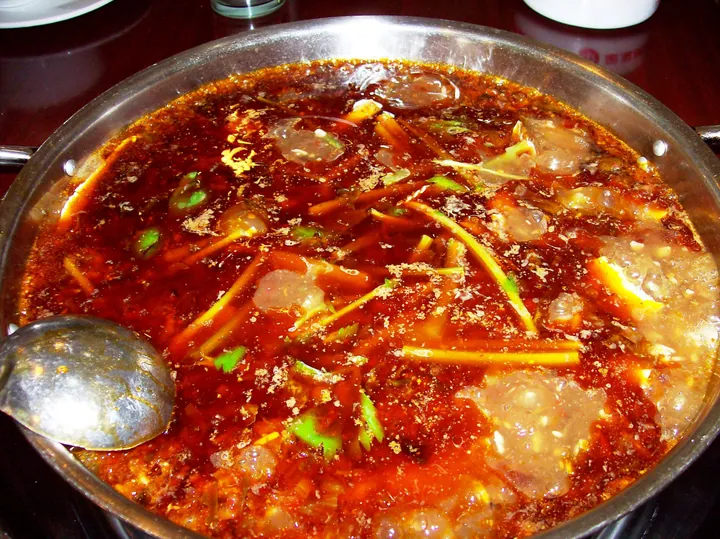
Chongqing hotpot is defined in the city’s 2026 industry-promotion regulation as a locally originated style whose soup base is stir-fried, simmered and seasoned with distinctive techniques, with numbing, spicy, fresh and fragrant flavors. “Old-style” (老火锅, lǎo huǒguō) is a useful menu description for the traditional, oil-rich mala approach, but it should not be read as a guarantee of one fixed recipe: broth, heat, ingredients and serving style vary by kitchen. Chongqing hotpot has close culinary kin across Sichuan and the wider region; its local identity is meaningful, but not every ingredient or hotpot technique is exclusive to Chongqing.
A classic red base commonly combines rendered beef tallow with dried chilies, Sichuan peppercorns and doubanjiang (豆瓣酱, fermented broad-bean chili paste). Cooks fry the seasonings in the fat, then simmer the base with stock; ginger, garlic, fermented black beans, sugar and other spices may contribute savory depth. As it boils, the fat carries the seasonings across the surface and gives the broth its glossy red sheen. The aroma is toasted, peppery and savory; the first taste brings chili heat, while Sichuan pepper adds a tingling, numbing sensation. Tallow lends a rounded richness, though the exact level of oil and heat varies. Some restaurants offer lighter oil-based, clear, mushroom or divided broths alongside the classic red pot.
Choose a mix of textures rather than treating one ingredient list as compulsory. Beef tripe (毛肚, máodù) and duck intestines are crisp-chewy when briefly cooked; thin-sliced beef, other offal, tofu, bean-curd skin, mushrooms, leafy greens, lotus root and potato are common choices. Add items in small batches so the broth returns to a simmer. Delicate foods need less time than thicker pieces, but cooking times depend on cut and kitchen practice; cook each ingredient through rather than relying on a memorized count. Tripe is often lifted and swished through the boiling broth, then eaten while springy. A sesame-oil dip with mashed garlic cools the chili’s edge and adds a nutty, pungent contrast.
Hotpot is a shared, unhurried meal: diners order ingredients for the table and cook them as they go. A divided or nine-compartment pot may separate broths or help organize different ingredients, but neither format is essential to the dish. Ask the restaurant what its mildness options mean, since spice scales are not standardized. If you prefer less heat, request a milder broth or a divided pot; a clear or mushroom side is a common alternative. There is no single restaurant, address or arrival route for this citywide food tradition, so choose a currently operating restaurant that suits your neighborhood and needs.
Sources & reading
Image credits & notes (1)
- Close-up of a Chongqing hotpot (重庆火锅) broth, red with chili oil and Sichuan peppercorns · 重庆火锅,红油辣汤,撒满花椒Photo: Hawyih · Public domain · taken 2007-05-30Resized for the web; the photo itself has not been edited. Thumbnails may show a cropped view.
