

Chongqing xiaomian 重庆小面
Chongqing xiaomian is an everyday wheat-noodle bowl built around a fragrant, spicy-numbing seasoning base. Order it plain or with toppings such as peas and minced-meat sauce; shops vary between broth and dry-mixed servings.
Tap any red Chinese text to hear it in Mandarin.
A bowl built from its seasoning
“Small” (小面) describes the simple, everyday style, not a rule about portion size. Its clearest basic form is a plain, spicy noodle bowl associated with Chongqing. The cooked noodles are combined with a pre-seasoned bowl base, then finished to order. The seasoning varies by kitchen, but commonly layers red chili oil with Sichuan pepper, soy sauce, garlic and ginger; scallions and other aromatics add freshness. Some bowls include vinegar, sesame oil, peanuts or preserved vegetables. The result can be glossy and red, savory and aromatic, with chili heat followed by the tingling, numbing effect of peppercorn.
Fresh wheat alkaline noodles are a traditional choice: their springy, slippery bite carries the dressing well. A shop may serve them in broth or toss them more dryly so the sauce clings directly to the strands. A red-looking bowl is not a reliable measure of heat, and adding broth does not necessarily make it mild. Blanched leafy greens and crunchy peanuts or preserved vegetables can contrast with the soft noodles, but ingredients and textures differ from one bowl to another.
Plain noodles and topping variations
The plain version is often called 素面 (sùmiàn). “Plain” here means without a meat topping, not necessarily vegetarian: lard or meat stock may still be used in the base, so ask the shop if that matters to you.
Toppings turn the bowl into named variations rather than a single fixed citywide recipe. 豌杂面 (wānzámiàn) pairs soft yellow peas with 杂酱 (zájiàng), a savory minced-meat sauce. Other shops offer additions such as beef, pork or intestines. The topping changes the bowl’s richness and texture; it does not replace the characteristic seasoned noodle base.
How to order and eat it
You can show 重庆小面 Chóngqìng xiǎomiàn when ordering. To reduce the burn, ask for 少辣 (less chili); to reduce the numbing sensation, ask separately for 少麻 (less Sichuan pepper). Ask whether the serving is 汤面 (with broth) or 干溜 (dry-mixed), and name a topping such as 豌杂 wānzá if you want one. Shop terminology, seasoning strength and available toppings vary, so these requests are useful starting points rather than guarantees of a standardized recipe.
Mix the bowl from the bottom before eating: the most concentrated sauce often settles underneath. Taste first, then add vinegar or extra chili only if offered and wanted. A plain bowl can work as breakfast or a quick meal; peas or meat make it more substantial. Chongqing reporting describes small neighborhood noodle shops as part of the city’s everyday eating rhythm, especially in the morning.
More dishes to compare
Explore related local specialties and compare their names, preparation notes and ordering guidance.
Qijiang rice noodles 綦江米粉 →
Flat, thin rice noodles are warmed in broth and finished with savory toppings. Fuhuan, Ganshui and other Qijiang-area traditions differ in the noodle making and accompanying soup. The noodles are smooth and tender, with a soft rice flavor that lets the broth and topping determine the bowl's richness.
Chongqing hotpot 重庆火锅 →
Diners cook selected meats, offal, tofu and vegetables in a shared bubbling pot. Chongqing's well-known red broths use chili and Sichuan pepper, while other broth options are also available. The experience combines chili heat, peppercorn tingle and rich aromatics, with texture determined by each ingredient and its cooking time.
Sources & reading
Recipes and servings vary between kitchens.
Image credits & notes (1)
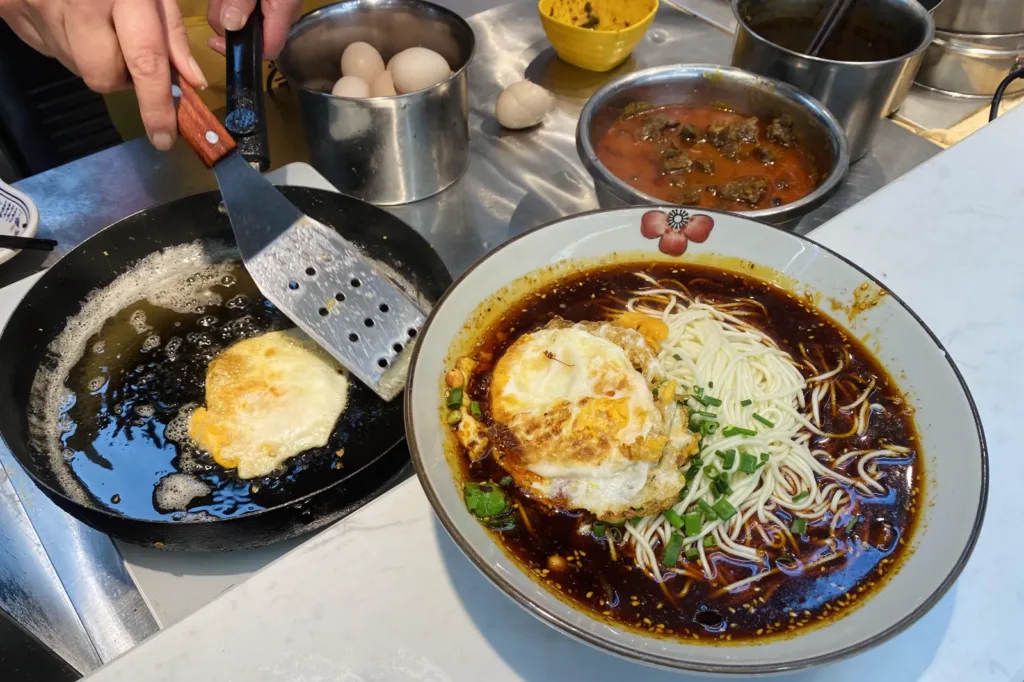
- One maker’s egg-topped bowl of Chongqing xiaomian; fried egg is a topping variation, not a universal standard. Photo: 王桁霽Photo: CC BY-SA 4.0