

Crab-and-pork soup dumplings 蟹粉小笼
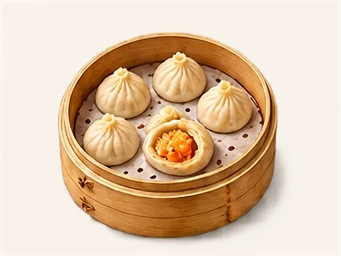
Shanghai’s 蟹粉小笼 (crab-and-pork soup dumplings) puts crab meat and/or roe together with pork and hot, gelatin-rich broth inside a thin steamed wheat wrapper. The filling, crab proportion and seasoning vary by kitchen; think of it as one branch of Shanghai’s wider xiaolong tradition, not a single fixed recipe.
Tap any red Chinese text to hear it in Mandarin.
What the name means
Show 蟹粉小笼 (xièfěn xiǎolóng) when ordering. Xiaolong means “small basket” and refers to the little steamer; in Shanghai, xiaolong mantou is a filled bun, not the plain, risen bread many English speakers associate with “mantou.” The word xièfěn means finely picked crab meat and, in food names, may include crab roe or paste as well. A menu name alone does not promise a standard crab-to-pork ratio.
The reference point is a small pleated dumpling with a thin, usually unleavened wheat skin, a savoury pork filling and a pocket of hot soup. Shanghai’s officially documented Nanxiang xiaolong craft uses refined wheat flour, pork and pork-skin jelly; crab xiaolong is listed among variants developed later, rather than as the one defining Nanxiang formula. The jelly sets when cool, then melts in the steamer and becomes broth inside the wrapper.
What goes into the dumpling
Wrapper. Wheat dough is rolled into a thin round, then gathered into pleats over the filling. The Nanxiang method is known for careful hand-shaping and a tightly gathered top. The official heritage description gives one craft lineage, not a size or pleat-count rule for every Shanghai shop.
Pork and soup. Pork supplies the savoury, rounded centre; pork-skin jelly is mixed into the filling so that steaming releases liquid around the meat. In the Nanxiang heritage record, pork leg is the named meat for the documented style. Crab-filled versions may retain a pork base, but the proportions and added seasonings are house choices.
Crab. Crab meat brings delicate, sweet-saline strands; roe or crab paste contributes a deeper, richer and often more golden note. Some menus combine crab with pork, while specialist lists have also offered crab-only and crab-with-shrimp versions. Those examples show how far the filling can vary; they are not a guarantee of what any restaurant serves now.
How it tastes and feels
A well-made dumpling should arrive intact, with a supple skin that is thin enough to show a little of the filling but strong enough to hold the hot broth. Expect a savoury, pork-rich aroma beneath the more marine scent of crab. Where roe is generous, the filling and soup can look warmer yellow-orange and feel more oily and concentrated; versions with more crab meat may be lighter and more delicately sweet. The outer skin stays soft and slightly elastic, the meat tender, and the broth the hottest, most immediate part of the bite. Exact colour and intensity depend on the crab and recipe.
Shanghai reporting has framed crab-filled xiaolong as a pairing within the city’s broader crab-eating culture, especially around the autumn crab season. That is useful cultural context, not a promise that a restaurant uses a particular crab species or offers the dish only in one season.
How to eat it
The broth can be extremely hot just after steaming. Set one dumpling in a soup spoon, hold it by the gathered top with chopsticks, and give it a moment. If the skin is intact, make a small opening at the side so steam can escape; sip the broth carefully, then eat the filling and skin, or take them together from the spoon. The spoon catches any soup that leaks and keeps the dumpling from collapsing between chopsticks.
Black rice vinegar is a common counterpoint to the rich filling, and some shops serve ginger with it. Start with a little on the spoon or in a small dipping dish rather than pouring it over the whole basket: vinegar sharpens the crab’s sweetness, while ginger adds a warm, clean edge. These are serving options, not a required seasoning. Check how many dumplings are in a basket and whether the menu means crab-and-pork, crab-only or another combination; prices and portions are shop-specific.
Shanghai connection, without a single-origin claim
The best-supported local link is the broader xiaolong tradition. The Nanxiang preparation craft is listed as a national intangible cultural heritage project, reported from Jiading, and Shanghai’s municipal commerce commission included 蟹粉小笼 in a 2021 city food campaign. The latter was a dated public-vote and platform-rating selection, not proof that crab-filled dumplings originated in Shanghai or are exclusive to it.
A Nanxiang restaurant brand claims that xiaolongbao began in Nanxiang, and local reporting traces the Nanxiang craft through Shanghai shops. These are relevant to the city’s food story, but they do not establish one uncontested origin for every soup dumpling or for the crab-filled variant. For a visitor, the useful distinction is simpler: 蟹粉小笼 is a Shanghai-associated crab variation in a wider Jiangnan family of soup dumplings, with each kitchen’s filling worth checking on its own terms.
Dietary note
This dish contains crustacean and usually pork; the wrapper is wheat-based and contains gluten. The broth may come from pork-skin jelly. Ask the restaurant about the exact filling and cooking process if you avoid any of these ingredients. Shared steamers and kitchen equipment can create cross-contact, so a menu label alone is not an allergy or dietary guarantee.
More dishes to compare
Explore related local specialties and compare their names, preparation notes and ordering guidance.
Pork and vegetable wontons 荠菜鲜肉馄饨 →
Minced pork is mixed with chopped shepherd's purse and wrapped in thin wheat skins, then boiled and served in broth. The greens contribute more than decoration: they are part of the filling itself. The wonton is tender and savory, with a grassy, slightly earthy vegetable note that lightens the pork. Wrapper thickness varies by shop.
Quick-fried river shrimp 油爆河虾 →
Small river shrimp are cooked rapidly in hot oil and finished with a concentrated sweet-savory sauce. The shells stay on, allowing the surface to become crisp and hold the glaze. The dish combines sweet shrimp flesh, brittle shell and a glossy, salty-sweet coating. Smaller shrimp tend to be easier to eat whole.
Sources & reading
Recipes and servings vary between kitchens.
- Shanghai Municipal Commission of Commerce: 2021 Shanghai Meituan Scream Dishes
- National Intangible Cultural Heritage: Traditional Dough Food Craft, Nanxiang Xiaolong Mantou
- Shanghai Xiaolongbao Culinary Explainer
- Michelin Guide: Shanghai Xiaolongbao Shops
- Jiefang Daily / Shanghai Observer: Nanxiang Xiaolong and Crab Season
- Nanxiang Mantou Dian: Nanxiang Story