

Quick-fried river shrimp 油爆河虾
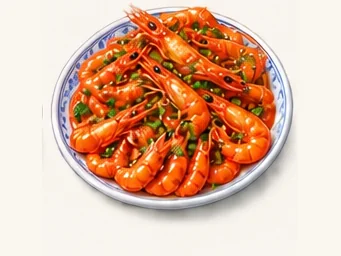
Shanghai-style you bao xia is a hot plate of river shrimp fried with their shells on, then quickly coated in a glossy, savory-sweet sauce. Expect a bright red-orange finish, aromatic ginger and soy, and tender shrimp beneath the shells; recipes differ in shrimp size, frying method and seasoning.
Tap any red Chinese text to hear it in Mandarin.
What you are ordering
Show 油爆河虾 (yóubào héxiā) or 油爆虾 (yóubào xiā). Both names refer here to the same Shanghai-associated dish, not two separate preparations. It is usually served as whole, shell-on shrimp rather than peeled shrimp in a pale sauce. Shanghai’s Huangpu District Government describes oil-fried shrimp as a classic local benbang dish, and a Shanghai cooking feature also includes it among Shanghai-style recipes. That supports its local association, not a claim that the dish originated only in Shanghai.
Ingredients and cooking
The defining ingredient is river shrimp, commonly cooked whole with the shell and often the head left on. Shrimp size is not fixed: Lao Zheng Xing’s chef recommends fresh, evenly sized, thin-shelled river shrimp, while published recipes use everything from smaller river shrimp to medium-sized shrimp.
The basic idea is to cook the shrimp rapidly in hot oil, then toss them briefly with a concentrated sauce so it clings to the shell instead of pooling underneath. At Lao Zheng Xing, the district government’s 2026 account describes a three-second fry followed by a fast reduction of sugar and soy sauce in a hot wok. A home recipe uses ginger, garlic and scallion, then adds cooking wine, soy, salt and sugar after frying the river shrimp. Another documented version fries the shrimp twice and finishes them with scallion, ginger, Shaoxing wine, chicken broth, sugar, black vinegar and sesame oil. These are examples of different kitchens, not a single mandatory recipe.
What it looks and tastes like
Look for whole shrimp with a glossy red to orange-red coating. The sauce is typically salty-savoury with a sweet edge; ginger, scallion and hot oil give the dish its cooked, fragrant aroma. The Huangpu account describes Lao Zheng Xing’s version as crisp outside and tender within. The balance depends on size and cooking time: properly quick-cooked meat stays juicy, while overcooked shrimp can turn firm and dry. Sauce may cling lightly or form a more substantial glaze.
The shell contributes aroma and seasoning. Some small, crisp shells may be eaten, but shell texture and diners’ preference vary; you do not have to eat them. Start with one shrimp, let it cool enough to handle, and peel it if that is more comfortable. When sharing, use a side plate for discarded shells.
Ordering and dietary notes
Ask whether the kitchen is using river shrimp and whether its version is especially crisp or saucy. If shell handling matters, ask whether the shrimp can be prepared peeled; the traditional presentation is generally whole and shell-on, so that may not be possible. Seasonings also vary: soy sauce, cooking wine, sugar and aromatics are common in the examples reviewed, while some recipes add stock, vinegar or sesame oil.
Shrimp is a crustacean allergen. Ask the restaurant about the specific sauce and cooking liquid if you need to avoid soy, wheat, alcohol or animal stock; recipes differ, and the dish name alone does not establish what is in a particular plate.
More dishes to compare
Explore related local specialties and compare their names, preparation notes and ordering guidance.
Pork chop with rice cakes 排骨年糕 →
A seasoned pork chop is cooked, often with a fried coating, and served with soft rice cakes and a savory-sweet sauce. Both elements are prepared to retain their distinct textures. The meat offers browned edges and a firm bite, while the rice cakes are sticky, elastic and good at holding sauce.
Crab-and-pork soup dumplings 蟹粉小笼 →
Crab meat or roe is mixed with pork and a broth-setting component, enclosed in thin pleated wrappers and steamed. Heating turns the broth component liquid inside the dumpling. The filling is rich, savory and distinctly crab-scented, with a tender wrapper holding a very hot center. The crab-to-pork balance affects intensity and price.
Sources & reading
Recipes and servings vary between kitchens.