

Crab-shell-shaped sesame pastries 蟹壳黄
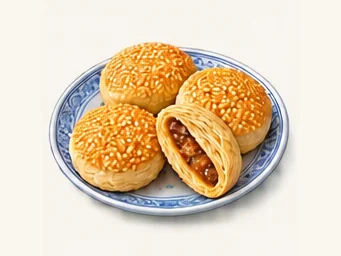
A Shanghai-associated small baked pastry, 蟹壳黄 is named for its rounded, golden, crab-shell-like appearance, not for a required crab filling. Its sesame-topped, flaky dough may enclose savoury or sweet fillings; ask what is inside before ordering.
Tap any red Chinese text to hear it in Mandarin.
A small pastry with a misleading name
蟹壳黄 (xiè ké huáng, literally “crab-shell yellow”) is a small, round, baked pastry with a sesame-coated surface. Its name points to the shape and browned colour, not to a standard crab filling. Crab or shrimp may appear in some savoury versions, but many fillings contain no seafood at all.
The pastry is strongly associated with Shanghai. A 2010 China Culture account says it was already popular in Shanghai teahouses in the early twentieth century. That is evidence of an early Shanghai connection, not proof that it originated there: a 2024 regional newspaper account describes 蟹壳黄 as found across the Jiangnan area and Anhui, and says its place of origin remains unsettled.
What goes into it
Descriptions of the Shanghai-style pastry use wheat-flour dough made with oil; a local account describes a leavened dough worked with a separate oil pastry dough. Small portions are filled, shaped into squat rounds, coated with sesame and baked. The dough method creates a crisp, flaky shell rather than the crumb of a plain bread roll. Exact proportions and fats differ by maker, so there is no single fixed recipe to expect in every shop.
The filling is the main variation. Savoury examples may use scallion oil, pork, crab or shrimp. Sweet ones may contain sugar, rose, sweetened bean paste or jujube paste. These are documented possibilities, not a checklist that every bakery stocks. A specialist crab-filled version can contain actual crab, but the pastry’s name by itself does not tell you the filling.
Colour, aroma and texture
Look for a small domed or flattened-round pastry with a golden to deeper brown crust and a dense scatter of sesame seeds. The toasted seeds give the first nutty aroma. A savoury filling can add the fragrance of scallion oil or cooked meat; sweet fillings shift the aroma toward sugar, rose or bean paste.
The exterior should break into fine, crisp flakes, with a more tender, filled centre. The balance varies: a savoury pork pastry may taste richer, while a sugar or bean-paste filling is sweeter. Do not assume that all pieces are identical in size, shape or seasoning.
How to order and eat it
Show the characters 蟹壳黄 and ask 里面是什么馅? (Lǐmiàn shì shénme xiàn? — “What filling is inside?”). If you avoid animal products, ask whether the dough or filling uses lard, pork, meat stock, crab or shrimp; “sweet” does not by itself mean vegetarian. Wheat and sesame are characteristic ingredients, and some fillings contain shellfish. Ask the seller about the particular batch and any cross-contact if you have an allergy.
If freshly baked pieces are available, eating one while still warm is a practical way to enjoy the flaky crust at its crispest. Hold it over a plate or open palm: a local report notes that the pastry can shed flakes as it is eaten. There is no need to break it open ceremonially; take a small bite first, then decide whether you want another piece of the same filling.
More dishes to compare
Explore related local specialties and compare their names, preparation notes and ordering guidance.
Butterfly pastry 蝴蝶酥 →
Laminated pastry is folded into a double spiral, cut into slices and baked so the layers open into a butterfly shape. Sugar on the surface caramelizes during baking. The pastry breaks into thin, crisp flakes with a buttery aroma and sweet, toasted edges. Humidity quickly softens that delicate structure.
Crisp noodles with topping 两面黄 →
Cooked noodles are browned on both sides into a crisp bed, then covered with a hot savory topping and sauce. The topping softens parts of the noodles while leaving other sections crunchy. This creates the central contrast: brittle browned strands, chewy softened noodles and moist vegetables or meat above.
Sources & reading
Recipes and servings vary between kitchens.